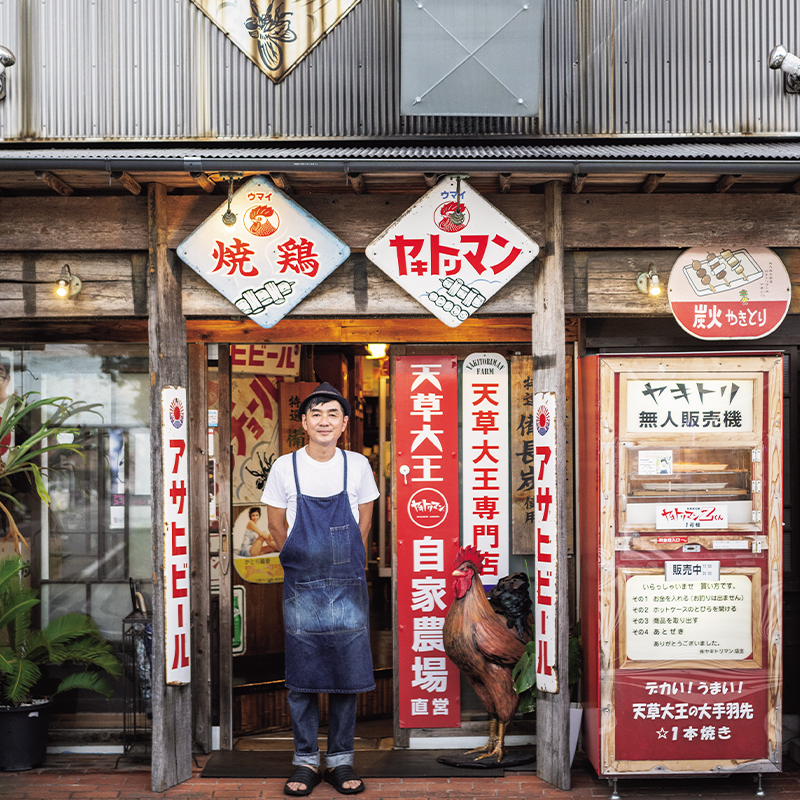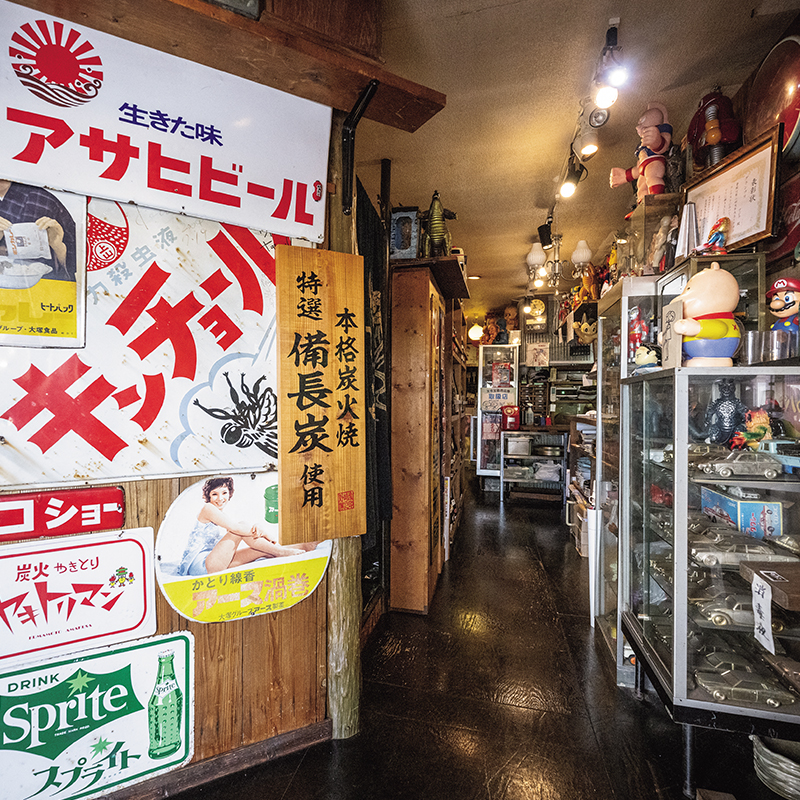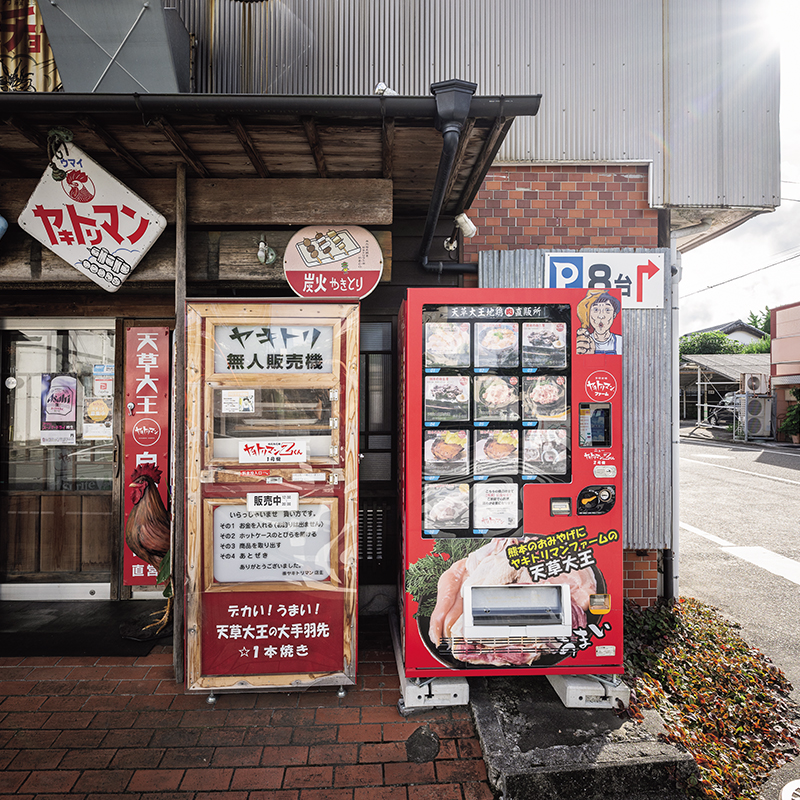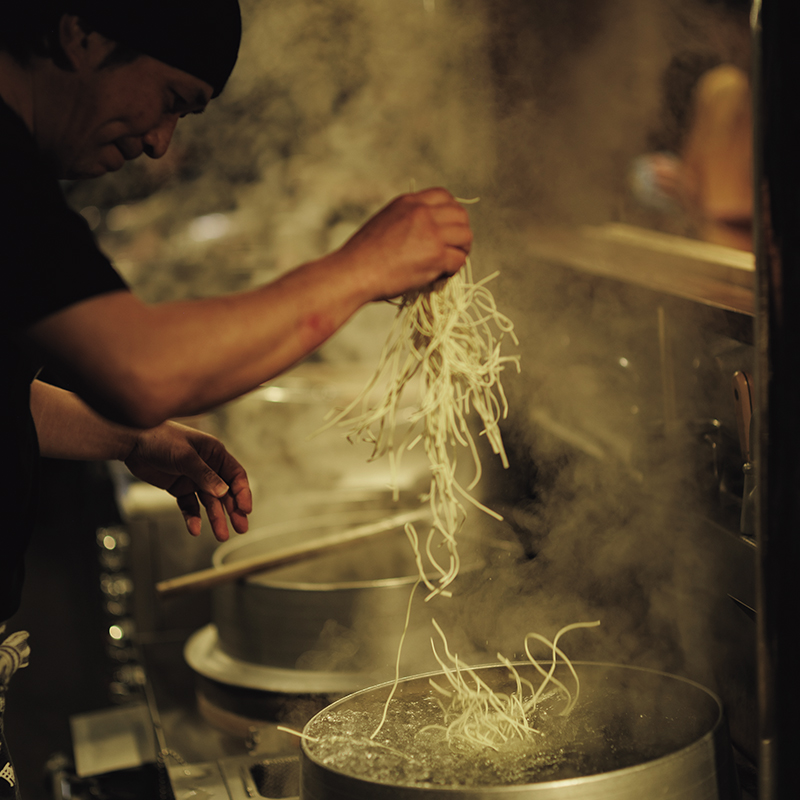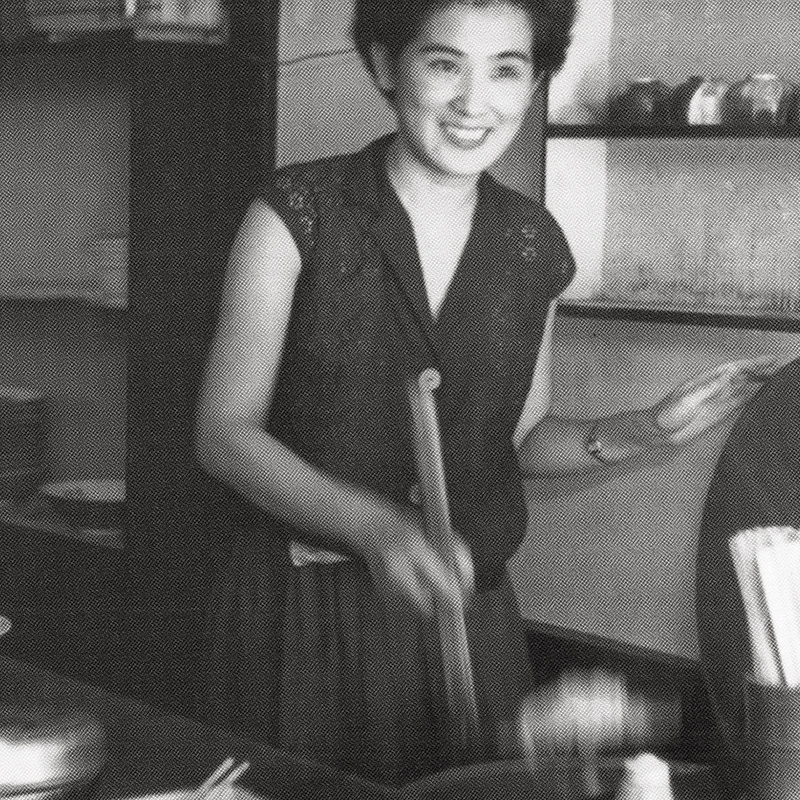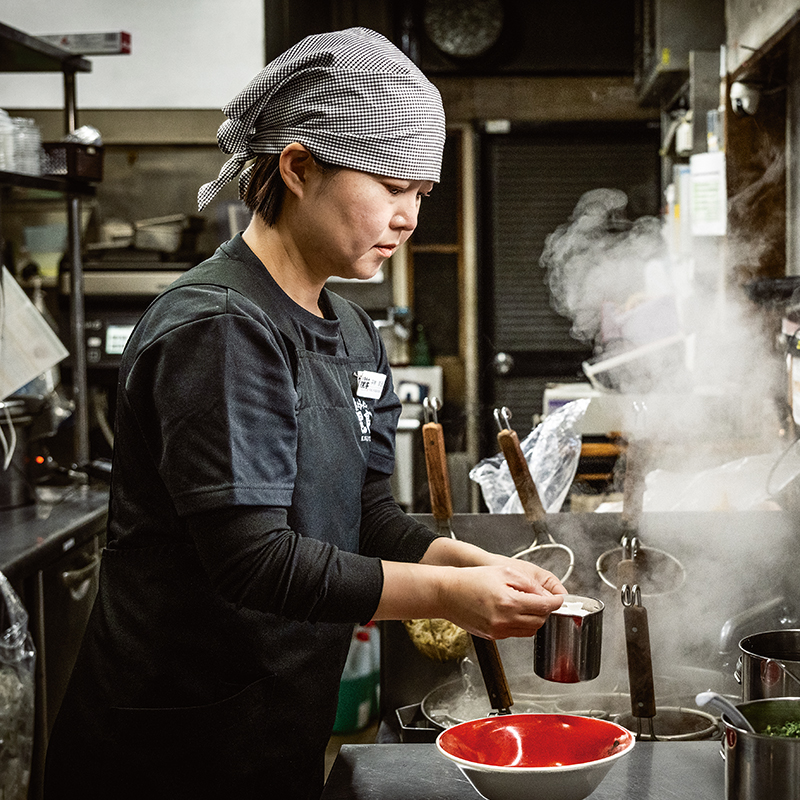



The legendary local chicken, Amakusa Daio.
What exactly does a life-changing flavor taste like?
More than ten years ago, a single grilled skewer determined the life path of one man.
I wanted to re-experience a flavor of that magnitude. Driven solely by that desire, I visited Amakusa.
We spoke with Mr. Yuji Taguchi, who operates an Amakusa Daio poultry farm and its directly managed yakitori restaurant, “Yakitoriman.”
It was so delicious that I thought, “It’s a waste to swallow it.”
Mr. Taguchi’s encounter with Amakusa Daio was more than ten years ago. After leaving his corporate job at the age of 30, Mr. Taguchi started a yakitori food stall, but when his son, who was entering adolescence, told him that “a food stall is embarrassing,” it prompted him to open a permanent restaurant. Driven by a desire to add local heritage chicken to his menu, he had been sourcing and testing local chicken from various regions. “When I encountered Amakusa Daio, it was a shock. I thought it was a waste to swallow it.” From that point on, Mr. Taguchi became increasingly captivated by Amakusa Daio.
“The first thing I ate was an Amakusa Daio skewer,” he told us. The “sot-l’y-laisse” (chicken oyster) at the base of the thigh, and the “furisode” (shoulder) between the wingette and the breast, are both rare cuts where only one skewer’s worth can be harvested from a single bird. We were treated to the very skewers that had left such a deep impression on Mr. Taguchi. The clean, odorless fat that bursts juicily in your mouth, along with a pleasant chewiness. The unmistakable “taste of the meat,” packed with umami, is completely irresistible, making you want to eat another one right away. Furthermore, Amakusa’s natural sea salt, “Chiisana Umi” (Small Ocean), pairs beautifully to bring out the umami, and the charcoal for the grill is Bincho-tan, which roasts the chicken to a crisp and fragrant finish—a level of thoroughness that pays meticulous attention to the finest details. “Even more delicious than the skewer from back then.” Such is the devotion that fills Mr. Taguchi’s craft.
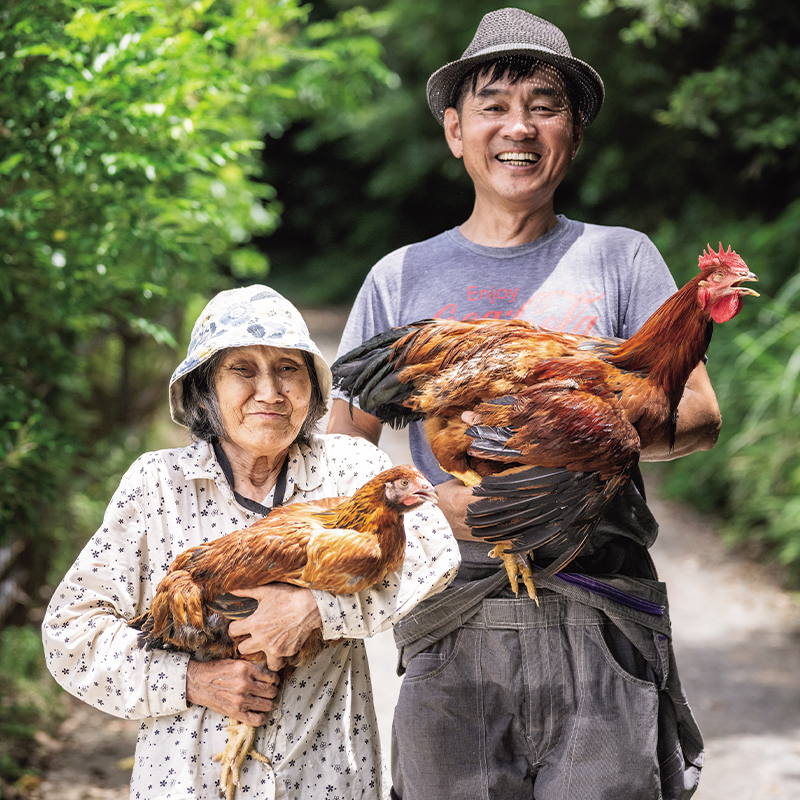
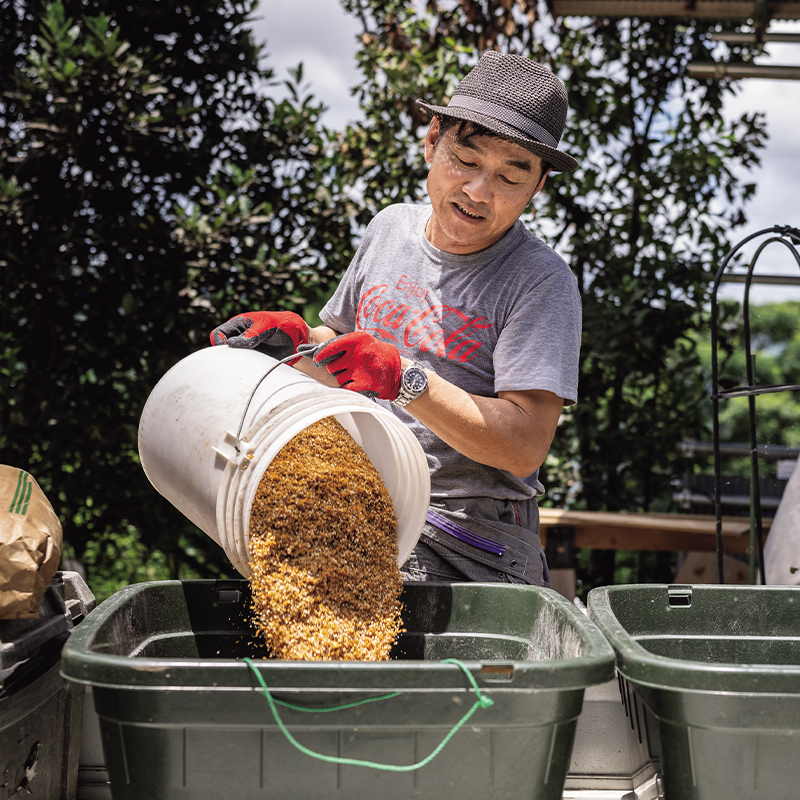
Mr. Yuji Taguchi (right) and his mother, Hiroko.
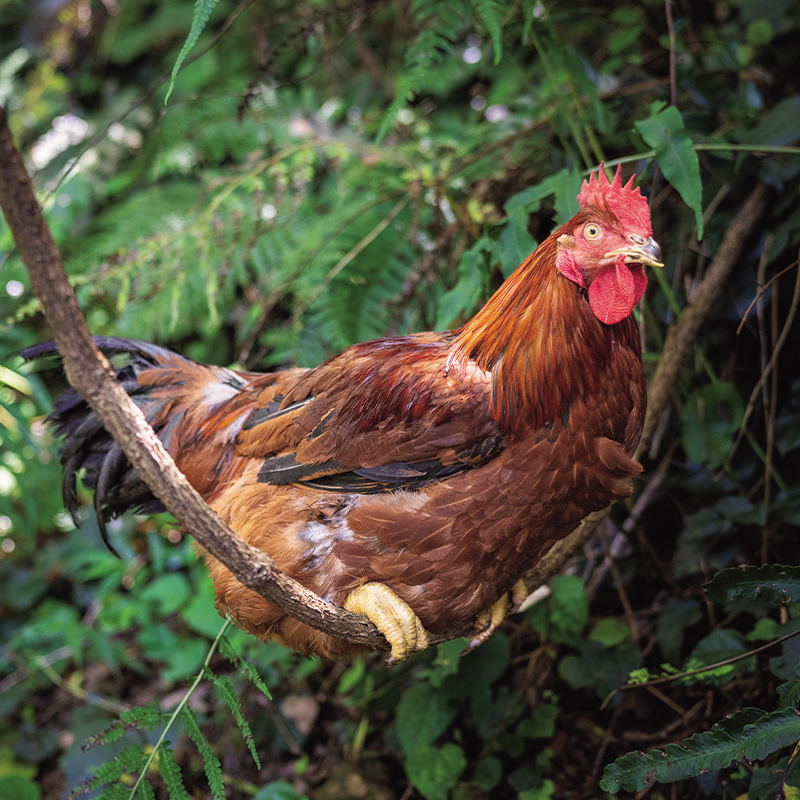
An Amakusa Daio at around 120 days old.
It is glossy and well-built.
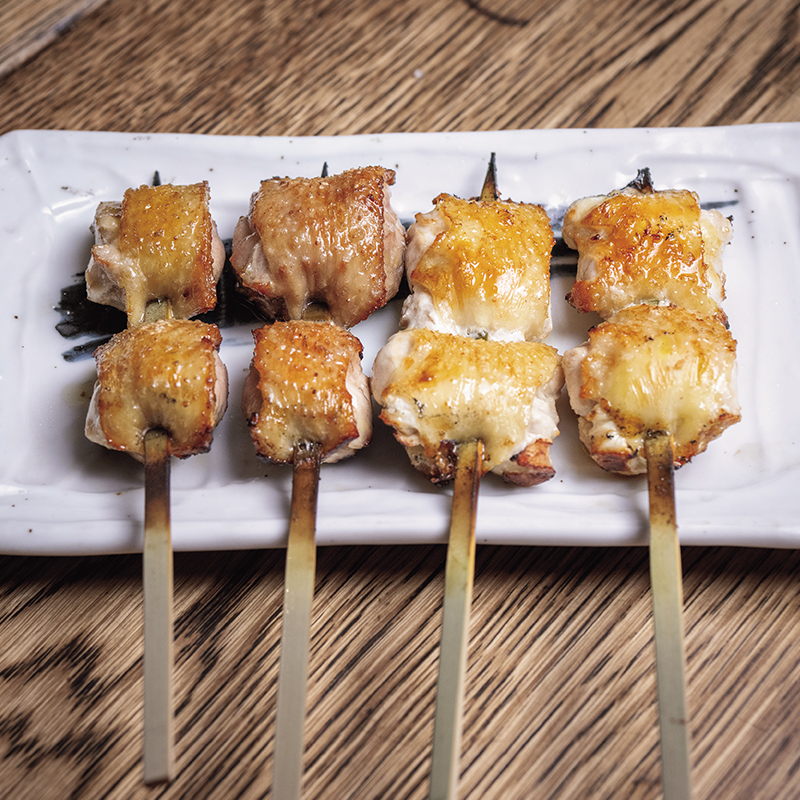
Rare cuts of “furisode” (shoulder) and “sot-l’y-laisse” (chicken oyster)
330 yen each (tax included)
A legendary, premium meat breed that gained popularity in mizutaki hot pot.
Amakusa Daio was distributed as a premium ingredient during the Meiji and Taisho periods. Due to the excellence of its broth, it was mainly shipped to Hakata as an ingredient for mizutaki hot pot, which was a luxury item at the time. Entering the Showa period, demand ceased due to the impact of the depression, leading to its extinction, but it was successfully restored in 2004 by relying on historical documents and paintings. Today, the skewers that captivated Mr. Taguchi, as well as the delicious broth that people of the Meiji period must have savored, can be enjoyed at several restaurants in Amakusa.
The yakitori izakaya “Yakitoriman,” run by Mr. Taguchi, is one of them. While the mizutaki and ramen are also very delicious at this establishment, if you want to savor the broth, the oyako-don (chicken and egg bowl) is, above all, a must-eat. It features Amakusa Daio thigh meat lightly seared over charcoal, free-range eggs, and Amakusa Daio chicken bone broth simmered for eight hours. To complete the dish, Akazake, a traditional local sake passed down in Kumamoto, and Kyushu’s natural whole-soybean soy sauce are added. Not to mention the fragrant thigh meat with its distinct presence, the Amakusa-grown Koshihikari rice, soaked in the chicken bone broth and runny egg, is truly exceptional. It is a flavor that surpasses any oyako-don or tamago-kake-gohan (egg on rice) that the author has ever eaten.
“It has only been 20 years since the Amakusa Daio was restored. By having someone who knows both breeding and cooking, we can make it something that lasts for 100 years and is passed down to future generations. I felt that I wanted to play that role.” And so, in 2016, about five years after he began sourcing Amakusa Daio, Mr. Taguchi finally started his own poultry farm.
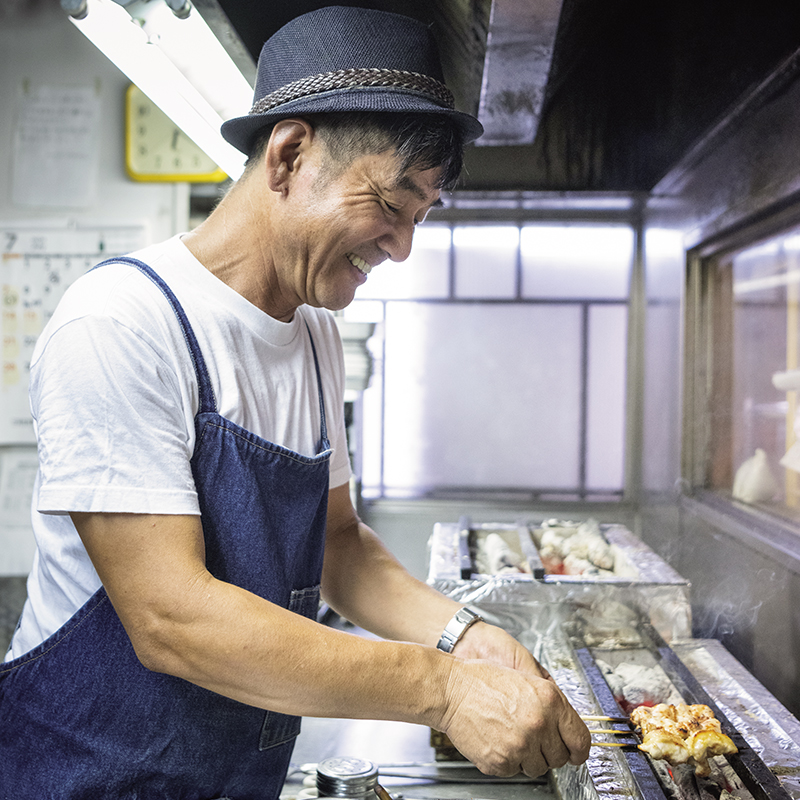
Grilled to a crisp with Amakusa Daio chicken fat.
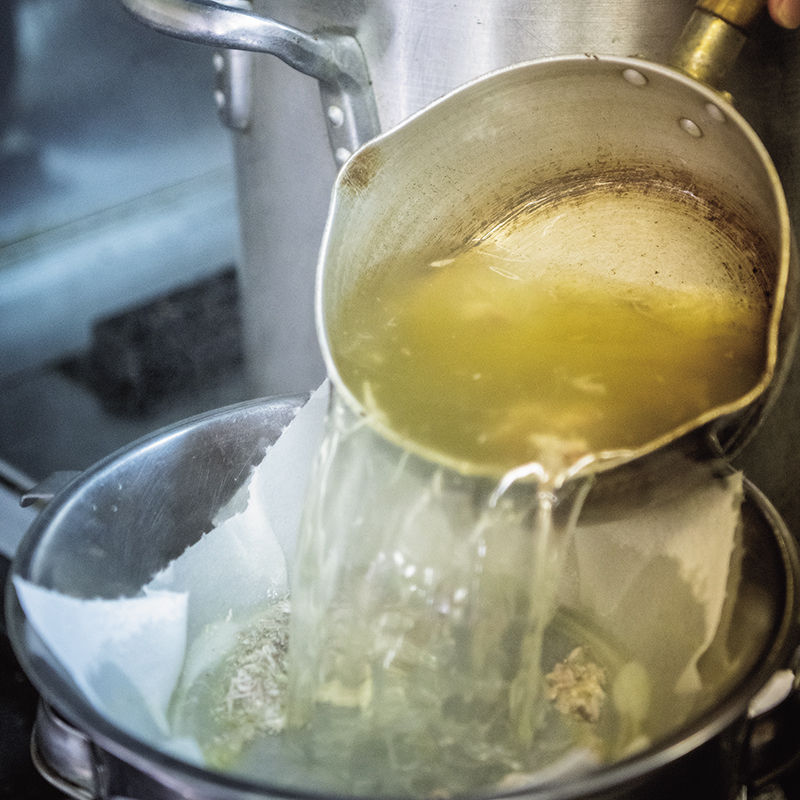
Glistening chicken bone broth simmered for eight hours.
The hands that raised the Amakusa Daio.
The significance of butchering and cooking with those very hands.
At Mr. Taguchi’s poultry farm, “Yakitoriman Farm,” 10,000 Amakusa Daio chickens are raised annually. Utilizing the terraced fields of his family home where mandarin oranges used to be cultivated, he built five chicken coops arranged on different levels according to the chickens’ days of growth. The way they are raised during their chick stage is crucial; those coops are kept dimly lit, and by keeping the room temperature high to raise their body temperature, their immunity is enhanced. Furthermore, during the first week, they are fed a large amount of food to strengthen their stomachs so they can support their bodies as they grow larger. What Mr. Taguchi is mindful of is reportedly “raising them gently.” In this, there was a perspective unique to Mr. Taguchi, who raises and butchers the Amakusa Daio himself.
While being shown the chicks, I noticed that the Carpenters’ “Rainy Days and Mondays” was playing softly in the chicken coop. When I asked, “Do you like them?” he replied, “Of course, I love music too, but I’m playing it for the chicks. If you let them listen to gentle songs, they grow into chickens with a gentle disposition,” he told us, as if sharing a treasured secret.
Mr. Taguchi says that his first failure after starting poultry farming was raising restless, rowdy chickens. They pecked at each other fiercely, damaging the quality of their meat. On the other hand, the gentle chickens that could not make it to the top of the flock’s hierarchy could not get enough food and grew thin. Apparently, this becomes distinctively clear when butchering them at the restaurant. “I butcher them while observing the details, checking whether the meat is damaged or if there is too little fat. I eat it myself, and I see the customers’ reactions firsthand, then apply that to the breeding process. It’s a continuous cycle of that,” says Mr. Taguchi. It is precisely because he handles both the breeding and the cooking with his own hands that his understanding deepens, realizing, “So if I raise them like this, they taste like that.”
Staying true to what you love.
An insatiable spirit of inquiry.
When deciding on suppliers or building his poultry farm, Mr. Taguchi reportedly visited various other poultry farms to listen to their stories and learn from them. “Even now, I watch YouTube and look at information online, and if it seems useful, I try it out right away,” he laughs. It has been eight years since he began wearing two hats, running both the izakaya and the poultry farm. In 2022, he won the Gold Prize in the “Taste Category” at the Amakusa Daio Competition. From morning until evening, he is at the poultry farm. Around 6:00 p.m., he arrives at the restaurant and stands in the kitchen until about 11:00 p.m. It must be exhausting, yet Mr. Taguchi somehow seemed to be enjoying himself. The reason for this was known by his son, who had been watching him from the closest vantage point.
While Mr. Taguchi is at the poultry farm, his now 37-year-old son takes charge of the kitchen and handles the prep work. While he was sharing his cooking tips, I also asked him about the time during his adolescence when he told his father that the food stall was “embarrassing.” At this, he gave a wry smile, saying that’s just how junior high schoolers are, and told us, “But now, I think the way he stays thoroughly true to what he loves is truly amazing.” Being passionately particular about what you love, and having the people around you watch over you. The next 100 years for Amakusa Daio may well be protected just like this—within a circle of people who support each other while enjoying the journey.
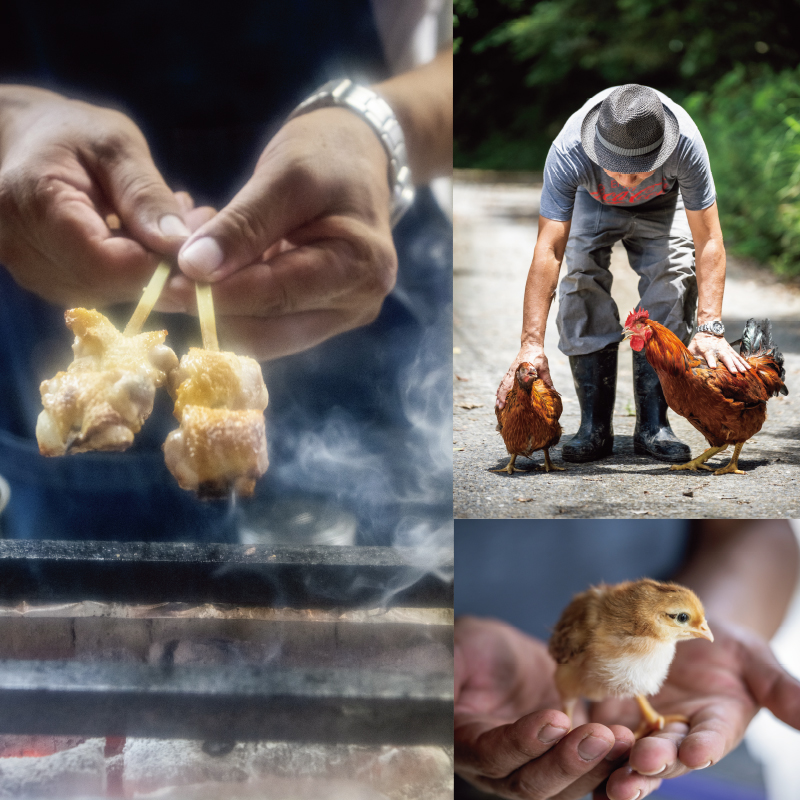
Two Faces of Day and Night
By day, he raises Amakusa Daio at the poultry farm, and by night, he stands in the kitchen to butcher them. Within the sights that come into view through doing so, there lie the hints to delicious chicken.
Savoring Amakusa Daio to the fullest.
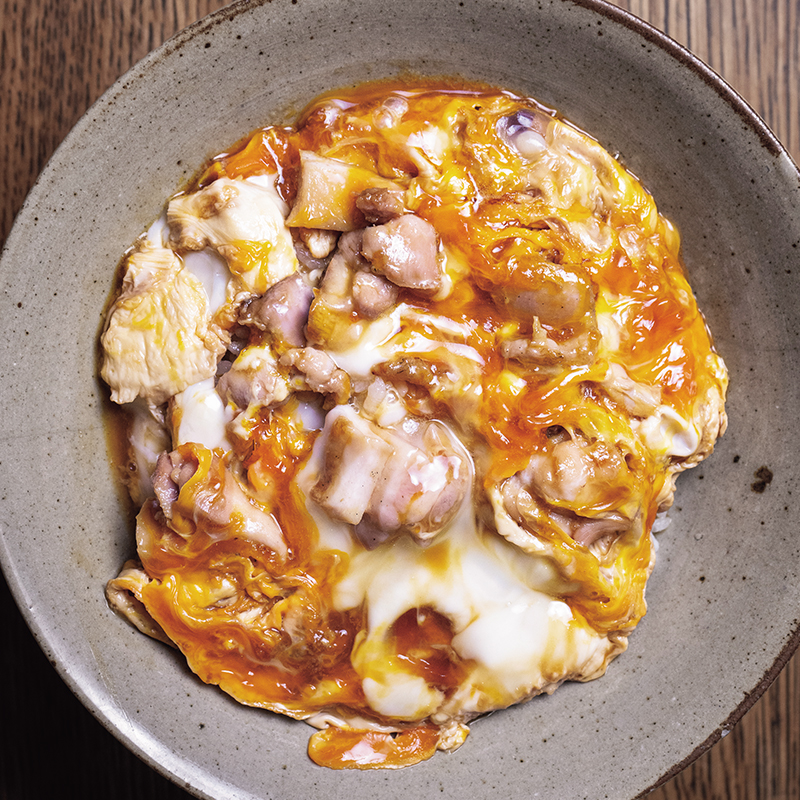
Amakusa Daio Oyako-don (Chicken and Egg Bowl)
1,320 yen (tax included)
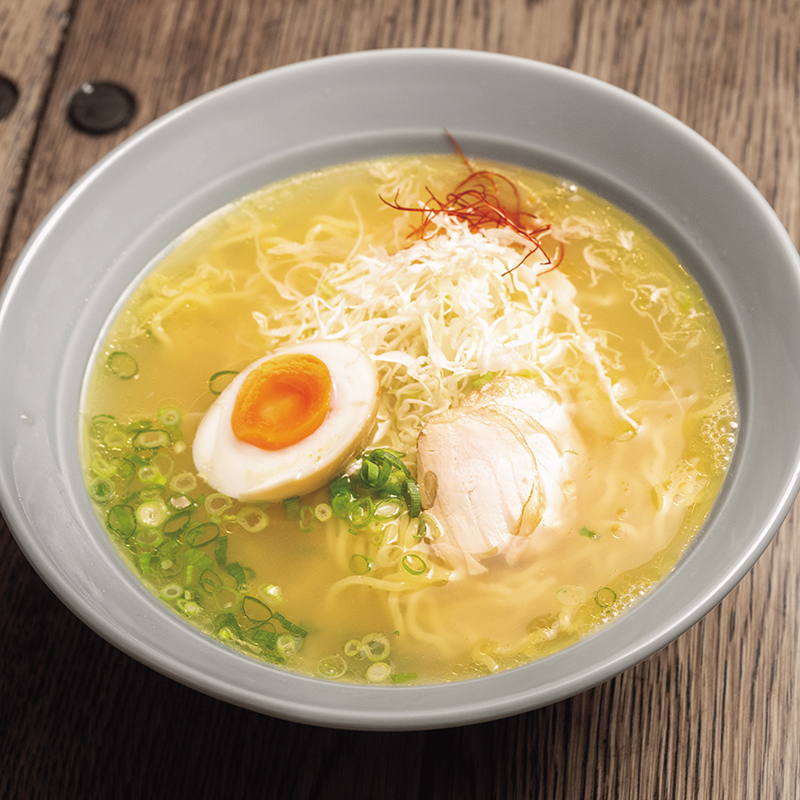
Amakusa Daio Local Chicken Salt Ramen
980 yen (tax included)
Featuring a broth made by simmering chicken bones for eight hours, charcoal-grilled or low-temperature cooked chashu, and free-range eggs, everything is homemade. It is perfect as a final bowl to wrap up your meal.
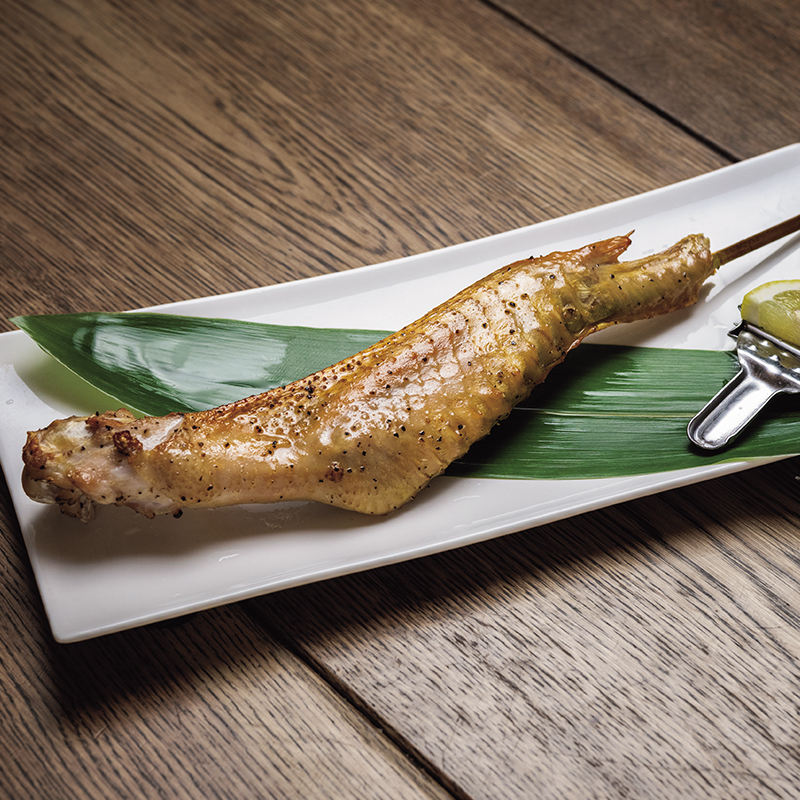
Amakusa Daio Grilled Whole Large Chicken Wing
605 yen (tax included)
A chicken wing whose size will overwhelm you. It is of a size where both the flavor of the meat and its resilience can be firmly felt, making it quite substantial.
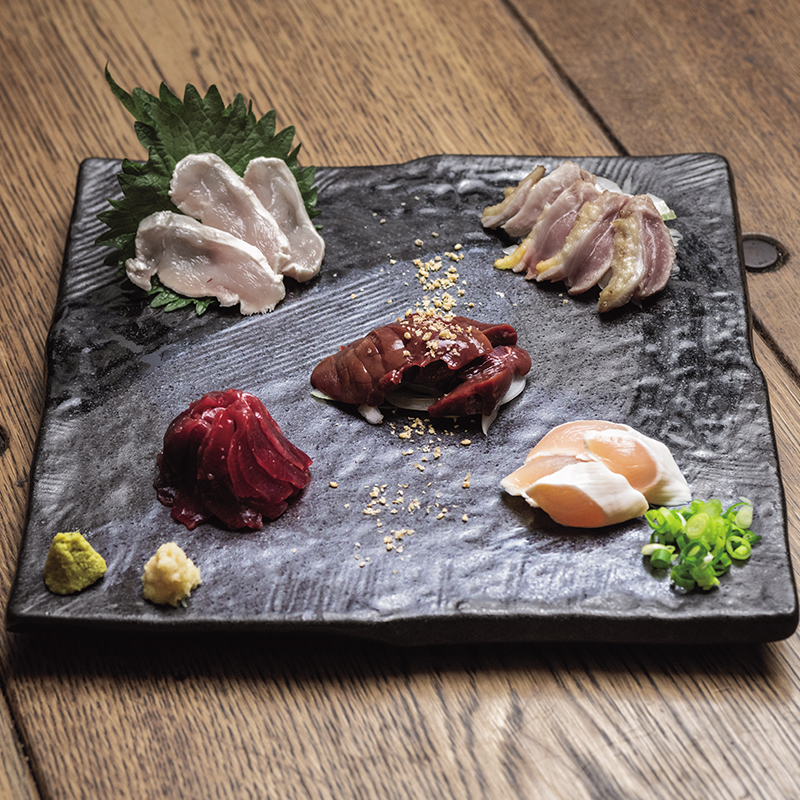
Daio Jidori Chicken Sashimi 5-Piece Platter
2,178 yen (tax included)
Breast meat, thigh meat, tenderloin, gizzard, and liver. With a freshness unique to a directly managed restaurant, you will be amazed by the clean, odorless liver.
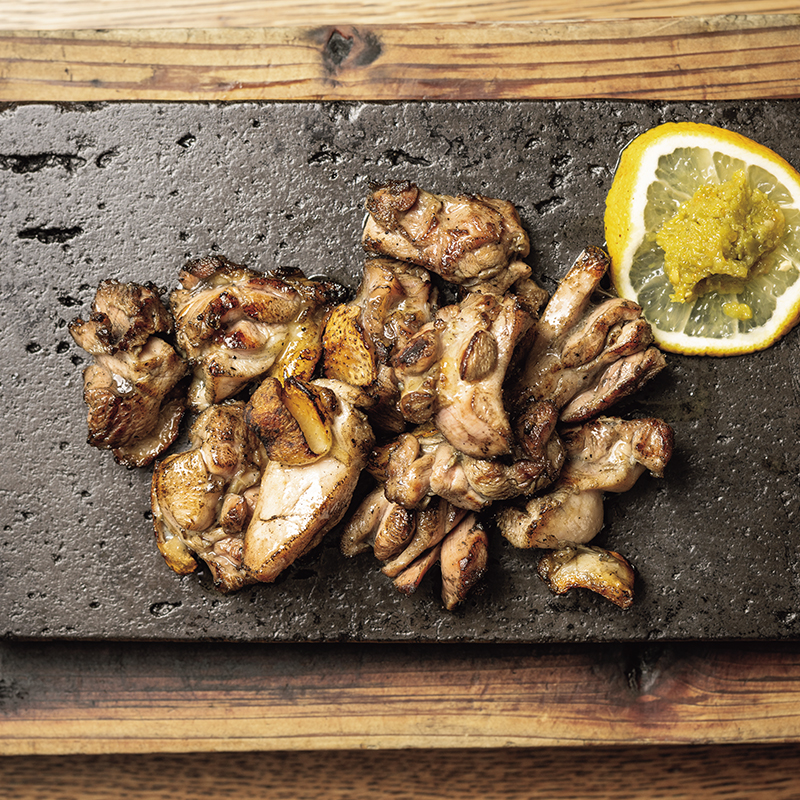
Charcoal-Grilled Thigh Meat (Medium)
1,518 yen (tax included)
Served on a custom lava plate crafted by a stonemason in Shimoura, Amakusa. This is the secret to grilling the meat to a plump and juicy finish using Amakusa Daio chicken fat.