


Kumamoto ramen is not just about tonkotsu pork bone broth.
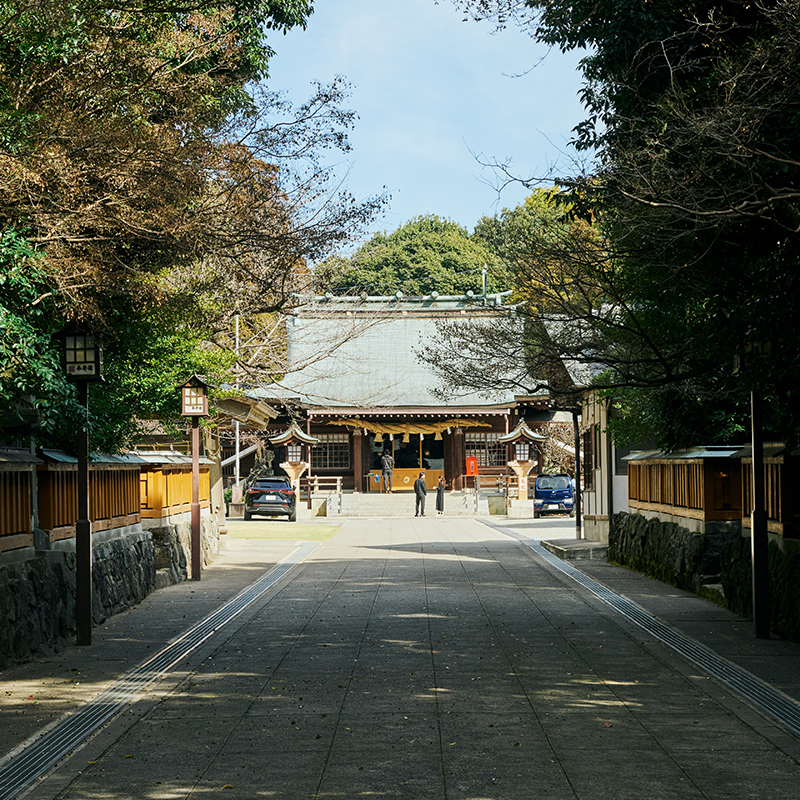
Located close to the oldest shrine in Kumamoto City, there is a ramen shop where you can fully savor the broth, crafted by an owner-chef who has walked the path of Japanese cuisine for 30 years.
We will also introduce the artwork and words received from Mr. Takeshi Matsunaga, a popular painter residing in Kumamoto, who loves the flavor and frequents the shop.
In Kengun-machi, a new renowned establishment is born.
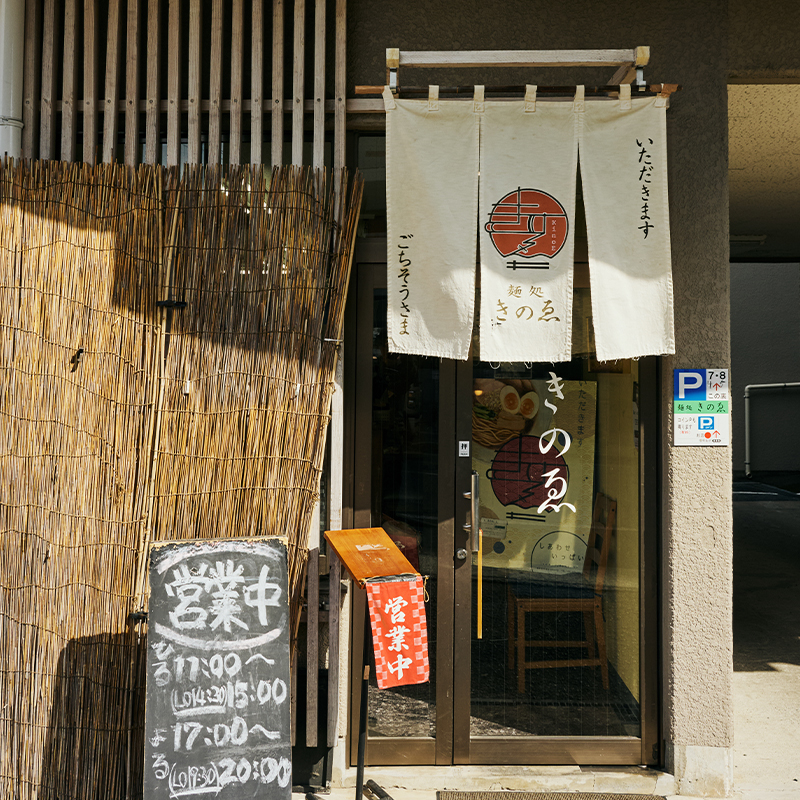
Do you know the ramen restaurant located a 5-minute walk from Kengunko-mae Station on the Kumamoto City Tram, right next to Kengun Shrine?
The name of the restaurant is “Mendokoro Kinoe.” Standing in that kitchen is Mr. Masaru Masuda, who has honed his skills as a chef of Japanese cuisine for many years. Influenced by his grandfather, who loved cooking, Mr. Masuda began preparing meals at home. Wanting to make Japanese cuisine that showcases local ingredients his profession, he began his training at a restaurant located in Higashi Ward, Kumamoto City. For 30 years since then, he has walked a single path dedicated entirely to Japanese cuisine.
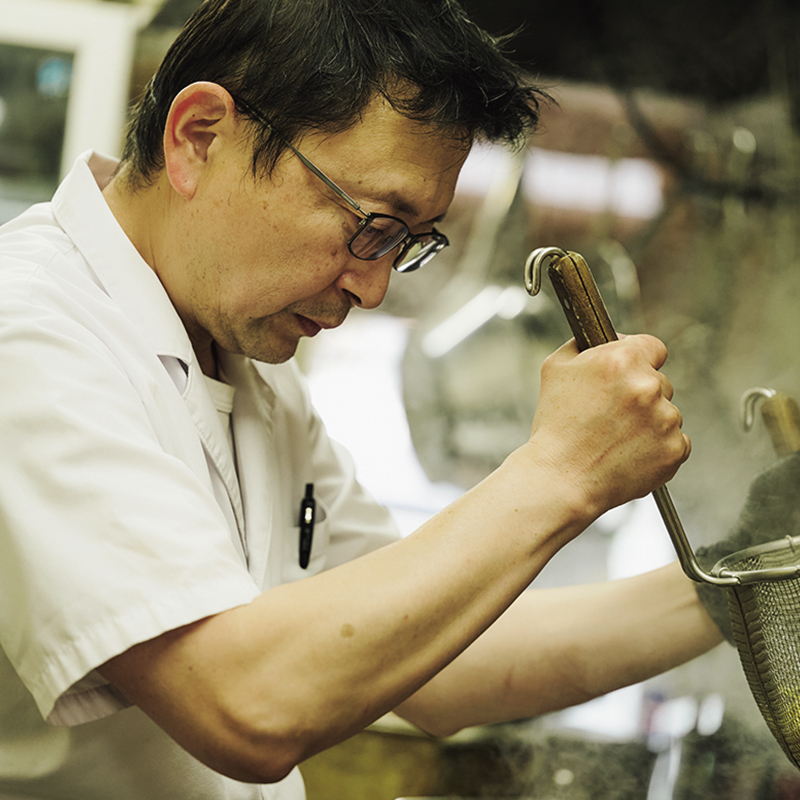
Mr. Masaru Masuda
Worked as a chef for 30 years at a Japanese restaurant in Higashi Ward, Kumamoto City. In December 2021, opened “Mendokoro Kinoe.”
However, in 2019, hit by the outbreak of the novel coronavirus, the number of visiting customers decreased significantly. Partly because there was talk about vacating the restaurant’s premises, Mr. Masuda searched for a business model that would suit the times. Since ramen shops were attracting customers even during the coronavirus pandemic, he decided to open one, and launched “Kinoe” in December 2021.
“When people think of ramen in Kumamoto, the soup is tonkotsu (pork bone broth). However, I believed there were those who were not fond of it, or who wanted to enjoy different flavors. For such people, I devised a soup based on chicken and vegetables.”
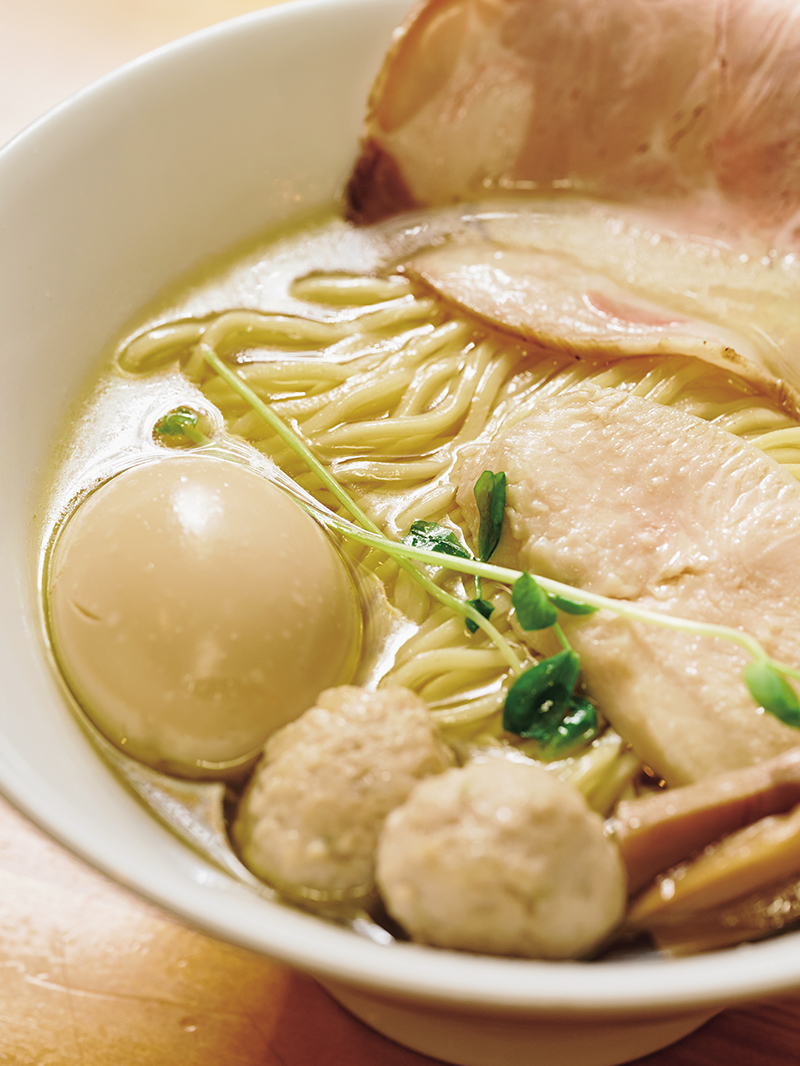
I tried the Special Shio (salt) Ramen, which is said to receive the most orders. The moment the ramen was brought before my eyes, I was so captivated by the clear soup that I couldn’t help but murmur, “Beautiful!” When you drink it, you taste not only the umami of the chicken but also multiple flavors. There is a joy in being able to imagine what might be inside. As you slurp the noodles, the smooth and slippery strands carry the soup into your mouth along with them; they go down your throat so smoothly that it feels as though your hand won’t stop eating.
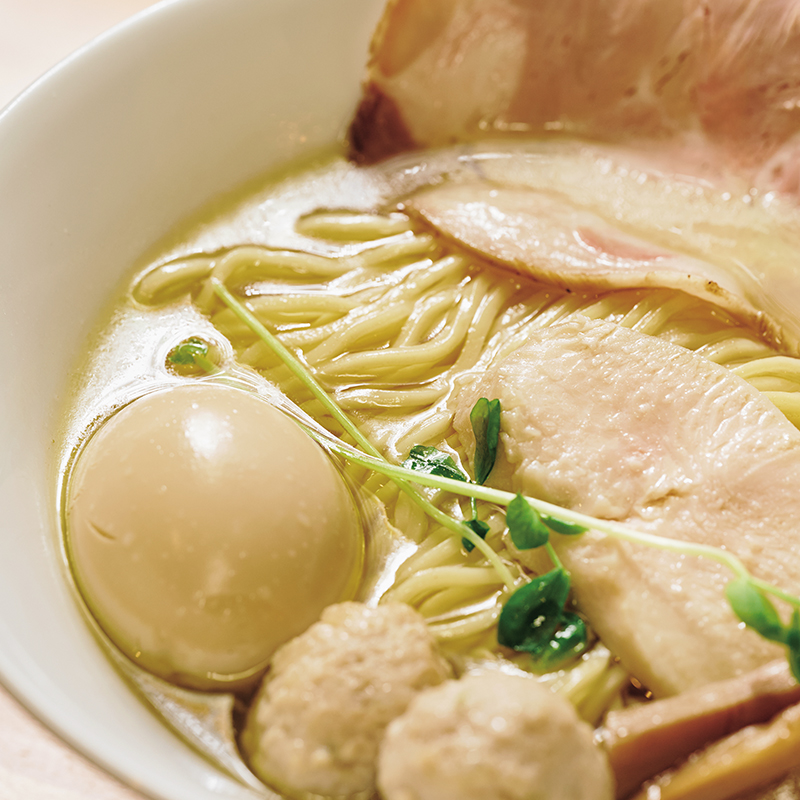
Special Shio Ramen: 1,200 yen (tax included)
The most popular ramen, topped with five ingredients: pork shoulder loin, chicken breast, chicken meatballs, a seasoned egg, and Itoshima menma (bamboo shoots).
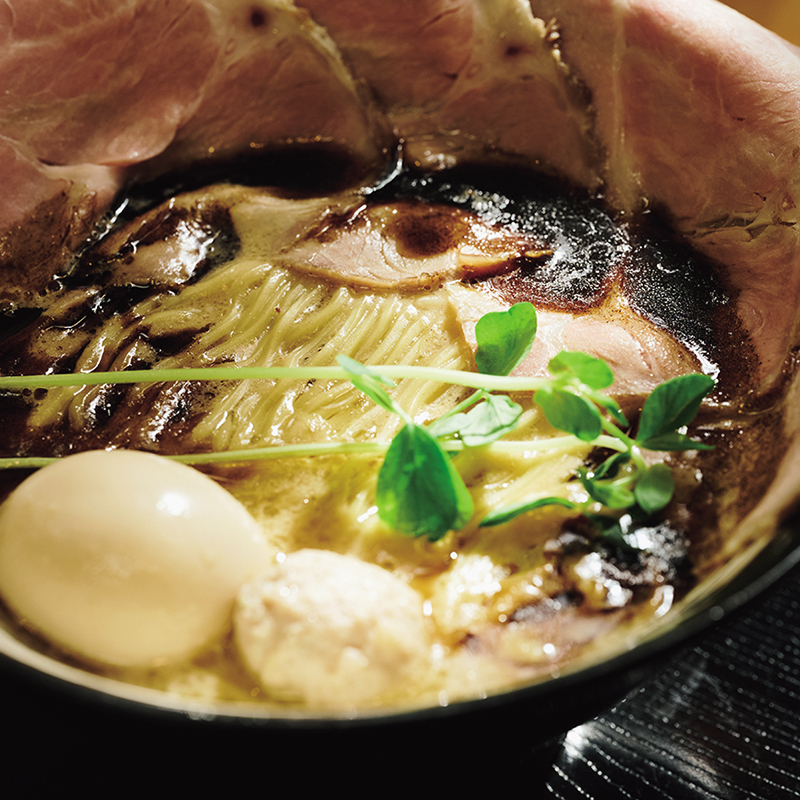
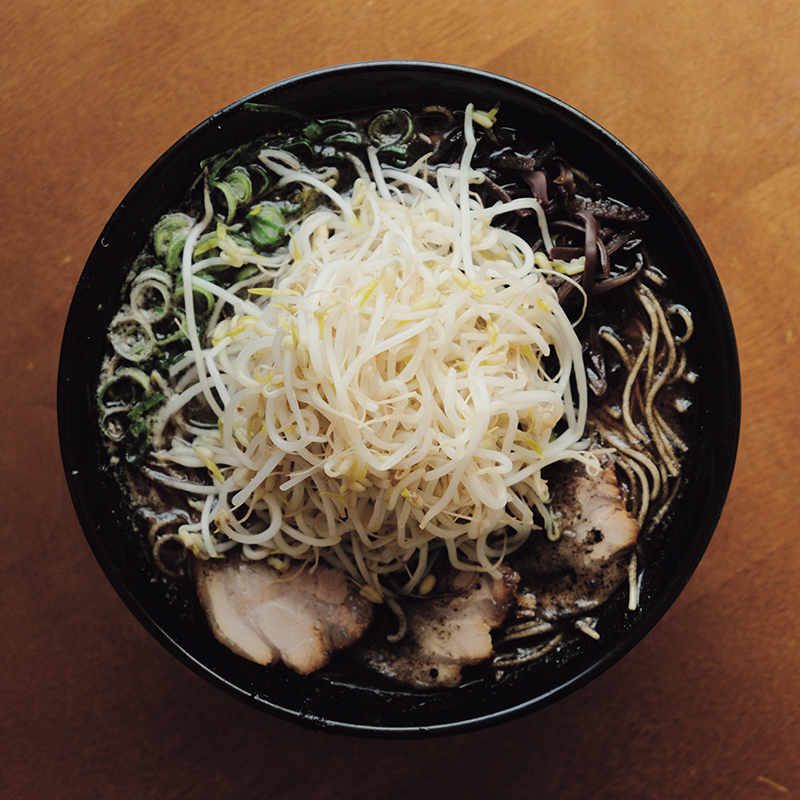
Tori Paitan: 1,200 yen (tax included)
In the cloudy, rich chicken soup, ma-yu (burnt garlic oil) typical of Kumamoto is a perfect match. It is also popular among female customers.
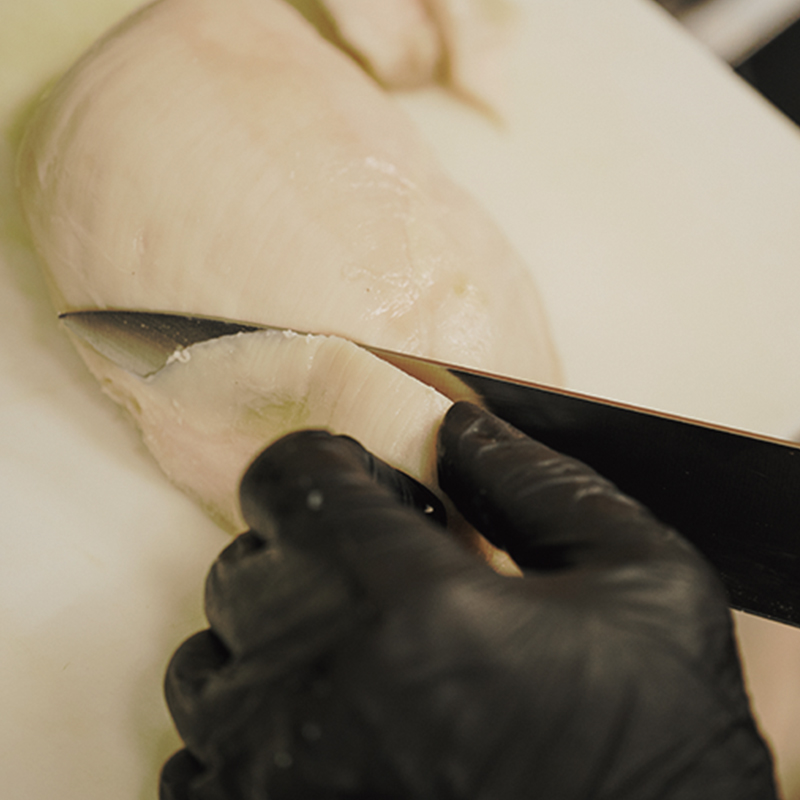
The “chicken breast” topping is, so to speak, chicken chashu.
It is cooked, becoming moist and tender.
When looking at the ingredients as well, there are two types of chashu: pork and chicken. The pork is tender yet firmly retains the flavor of the meat, while the chicken has a moist texture. “Since the way umami is released when heated differs between pork and chicken, I change how the heat is applied, cooking each at the optimal temperature and time,” says Mr. Masuda.
The chicken meatballs are also appealing. When you drink the soup after eating them, the ginger kneaded into the meatballs sharply pulls the complex umami together, creating yet another new flavor. In the blink of an eye, I finished eating the entire bowl.
The umami of vegetables, chicken, and seafood, all in a single bowl.
“In Japanese cuisine, we sometimes make dashi broth from vegetables. The same is true for French cuisine, but you can make it sufficiently delicious with just vegetables alone.” The clear soup of “Kinoe” was created by putting further time and effort into this dashi broth, which is already deeply flavorful on its own. Its base is a combination of a dashi broth made from 11 types of vegetables and chicken, and a dried ingredients dashi broth made from iriko (dried sardines), kombu (kelp), and shiitake mushrooms. To that, shijimi clams are added for the umami of shellfish, and by adding mixed dried fish flakes as a finishing touch for the umami of fish, it is crafted by layering these elements multiple times.
The vegetables that form the basis of the dashi broth are produced in Kumamoto Prefecture. “Since my family home is a farm, I use those vegetables as much as possible. Even for items not available at my family home, I choose those produced within the prefecture. Since the time I was a chef of Japanese cuisine, I have believed that eating what is harvested from the land in that same land—so-called local production for local consumption—is best. Even now, I naturally do so.”
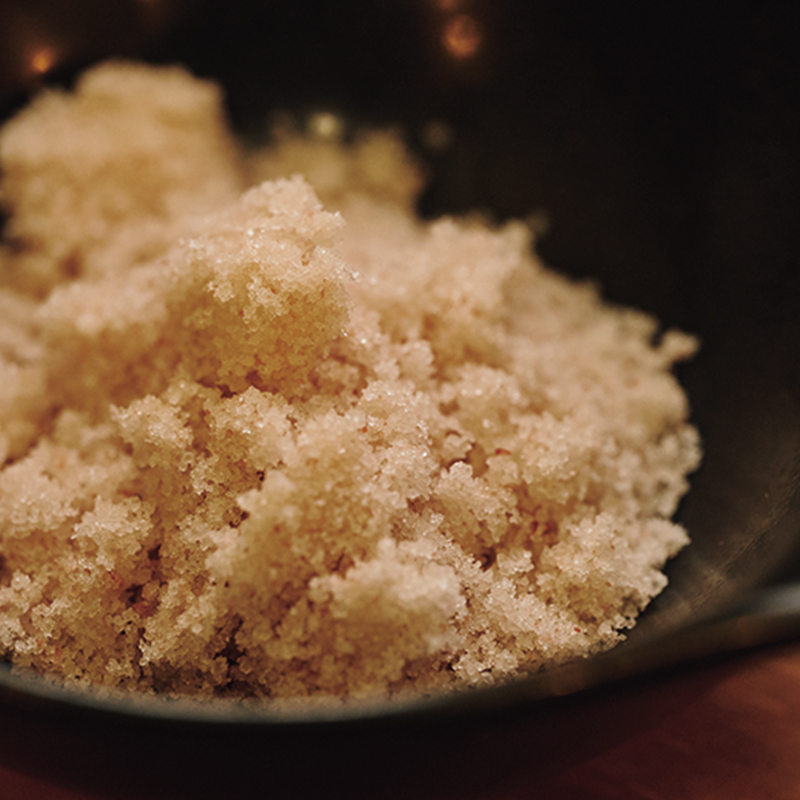
For the salt, which is the deciding factor of the flavor, five types of salt, starting with sun-dried salt from Amakusa, Kumamoto, are blended in a unique ratio.
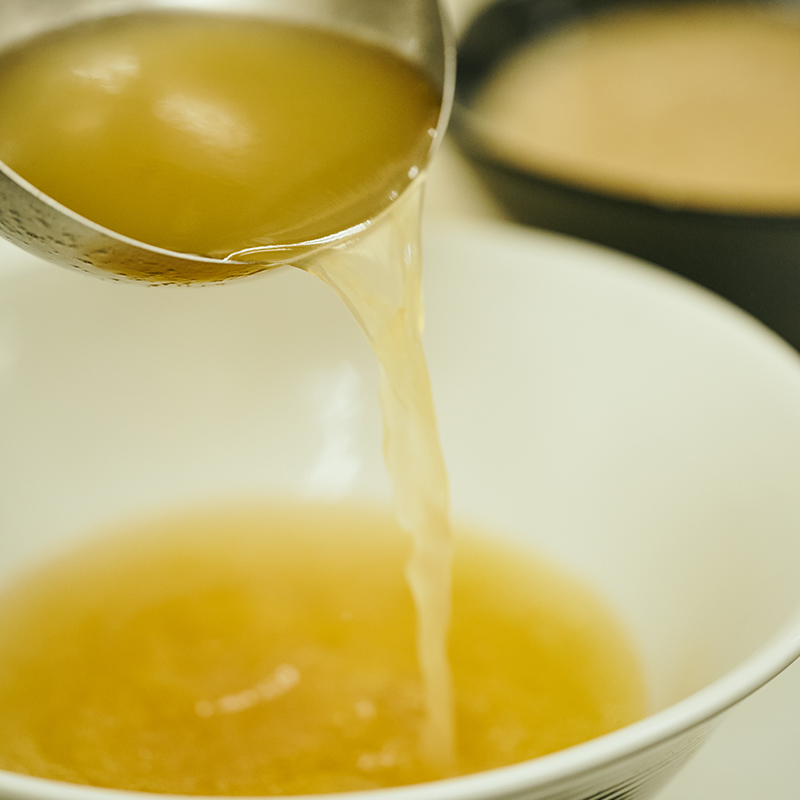
Dashi Ramen (Shio/Salt and Shoyu/Soy Sauce), which allows you to simply enjoy the clear soup and noodles, is also lined up on the menu.
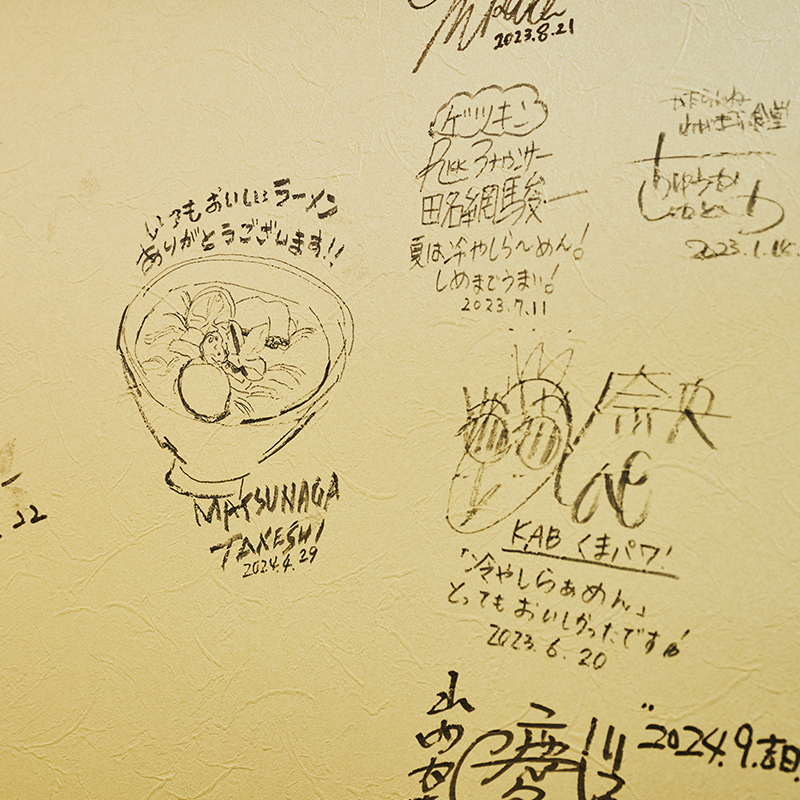
On the walls, autographs of celebrities who visited Kinoe and messages filled with love are lined up.
It changes every day.
That is the appeal of dashi broth.
There is something Mr. Masuda has consistently felt without change regarding the dashi broth that he continues to make every day.
“With dashi broth, there is never a day when the exact same thing is made. Even if you use the same ingredients, it becomes a different flavor depending on their condition on that day, the temperature, and other factors. I believe that is the very essence of what dashi broth is. I want our customers to enjoy the differences as well.”
No matter how many times you visit, it shows a different face each time. Please try enjoying for yourself as well the fascinating nature of such ramen infused with dashi broth.
Kumamoto’s popular painter, Mr. Takeshi Matsunaga’s love for “Kinoe”
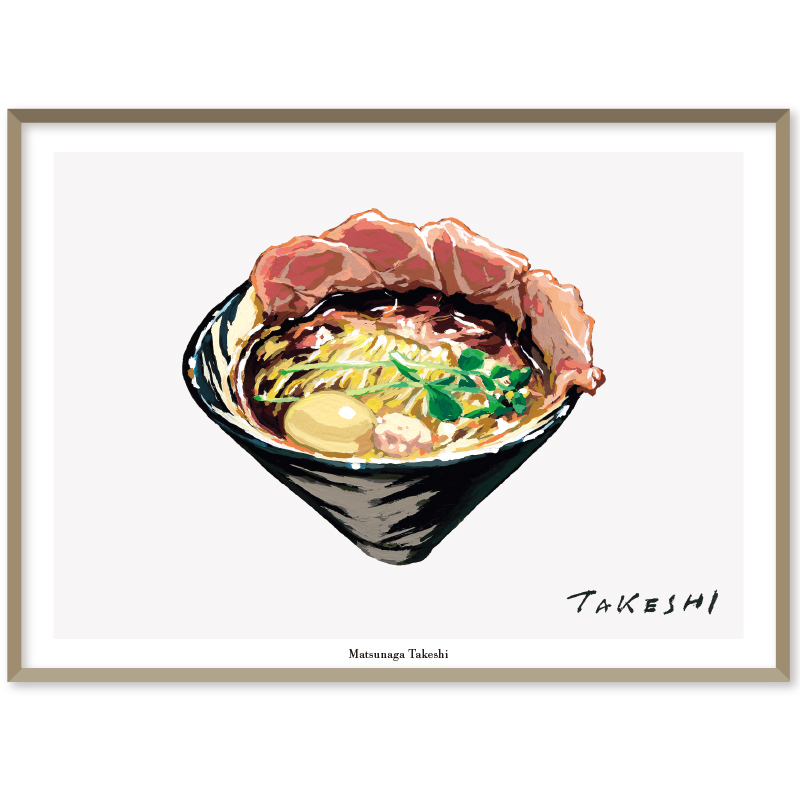
When you look around the interior of “Kinoe,” an impressive line drawing of ramen on the wall catches your eye. When you gaze at the signature, it was by Mr. Takeshi Matsunaga, a painter who is currently popular in Kumamoto. Thinking, “We want to see the ramen of ‘Kinoe’ painted in color by Mr. Matsunaga, who is a fan of this restaurant,” the editorial department made a request. Mr. Matsunaga, who received that request, expressed the appeal of “Kinoe” through paintings and words.
Mr. Matsunaga’s Comment:
“All types of ramen at ‘Kinoe’ are delicious, but the ramen that I especially like is the Tori Paitan Ramen. It contains plenty of ma-yu (burnt garlic oil) and garlic in the rich paitan soup, and with a slight acidity as well, it is a bowl that gives you energy. The toppings are all delicious too, and as you keep eating, the owner’s meticulousness is conveyed. I want everyone to eat this one-and-only Tori Paitan Ramen like no other.”
Mr. Takeshi Matsunaga
Born in Kumamoto Prefecture in 1985. Draws attention for his oil paintings that depict Kumamoto’s landscapes and still lifes with a powerful touch. In 2015, won awards in four categories at the “Kawaramachi Art Award.” In 2017, held his first solo exhibition at Nagasaki Shoten and Nagasaki Jiro Shoten (introduced in issue No. 12 of this magazine). His art books include “WHITE” (sold exclusively at the same bookstores).