


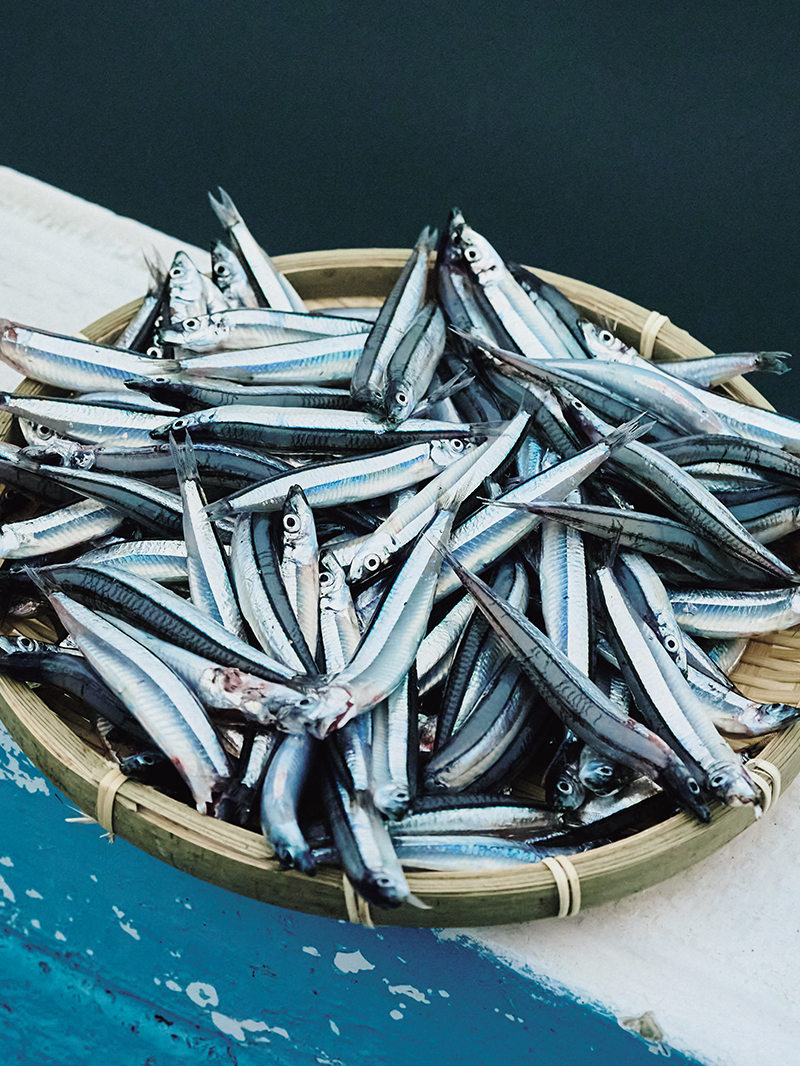
Are you familiar with “kibinago” (silver-stripe round herring), one of Amakusa’s summer specialties?
Kibinago is a fish commonly eaten in households across southern Kyushu.
It is in season twice a year. In the summer, right before the spawning period, you can savor “komochi kibinago,” which carry eggs in their bellies.
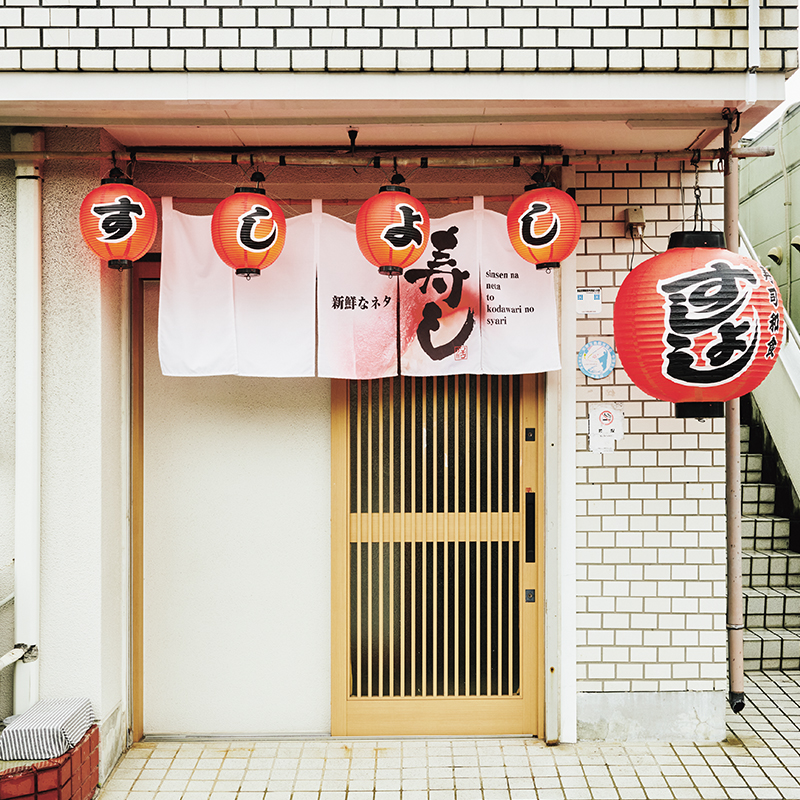
We will introduce its appeal and the current reality, as told by Toshihide Hata of “Sushiyoshi”—a sushi restaurant long loved in Ushibuka, Amakusa—and Kenichi Ikeda, a fisherman who specializes in kibinago fishing.
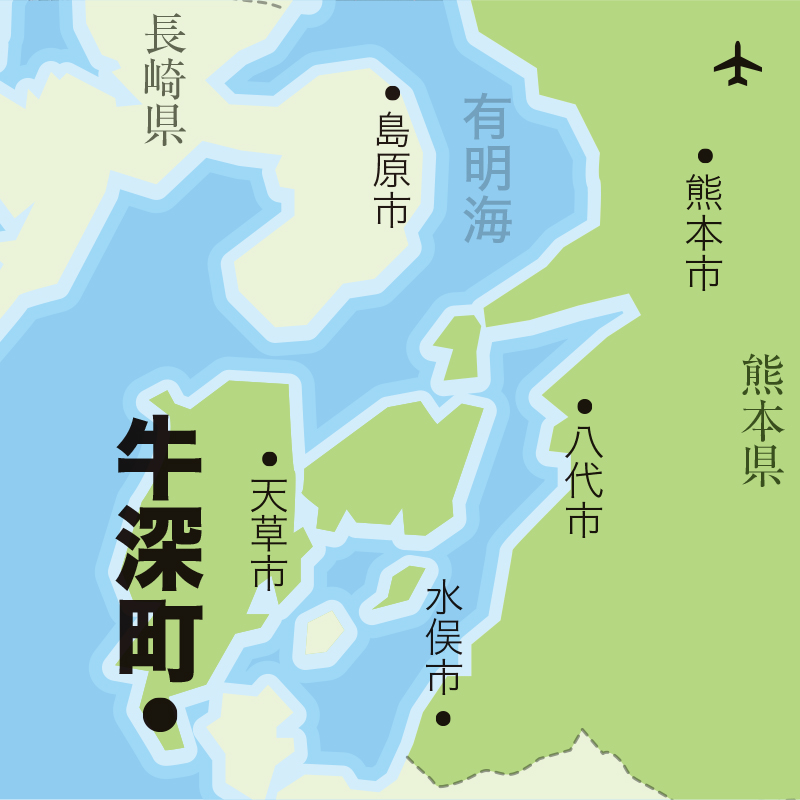
Ushibuka Town.
Asking a Sushi Chef
How to Enjoy “Kibinago.”
Ushibuka Town, located at the southernmost tip of Amakusa City, is a place where fishing has flourished since ancient times. It has the prefecture’s largest fishing port and is surrounded by the sea on three sides. With a deep, natural inlet, it has developed as an important fishing base for the Amakusa region, centering on offshore fishing.
Toshihide Hata, the owner of “Sushiyoshi”—a popular restaurant that has been open in the area for 30 years—told us, “Compared to those from other regions, the kibinago caught in Ushibuka are smaller and have firmer flesh. They have an excellent flavor, characterized by a light and refined taste. Since komochi kibinago (egg-bearing ones) are landed in summer, I recommend eating them as pusuyaki (grilled whole over a charcoal fire).” When you try the plump flesh prepared as pusuyaki, the light flavor of the white-fleshed fish spreads through your mouth.
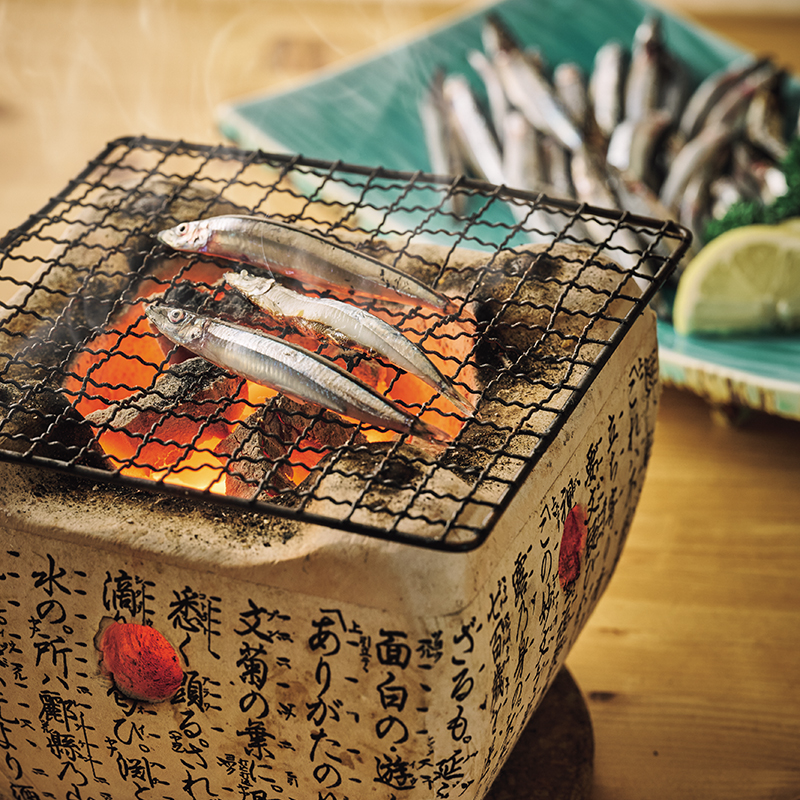
“Pusuyaki” Kibinago: 1,100 yen (including tax).
It is said that this name was given because when kibinago is grilled whole on a wire grill, it makes a “pusu” sound.
“Freshness is everything for kibinago. The flesh quickly turns red and spoils. However, in Ushibuka, because we can source what was caught that very day, you can eat it as sashimi. Conversely, when I feel the freshness is not good enough, I refrain from serving it as sashimi,” says Mr. Hata. “The appeal of Ushibuka is, above all, the ‘sea.’ Since we can source fresh, seasonal fish every day, starting with kibinago, I never compromise on freshness so that our guests can enjoy them.”
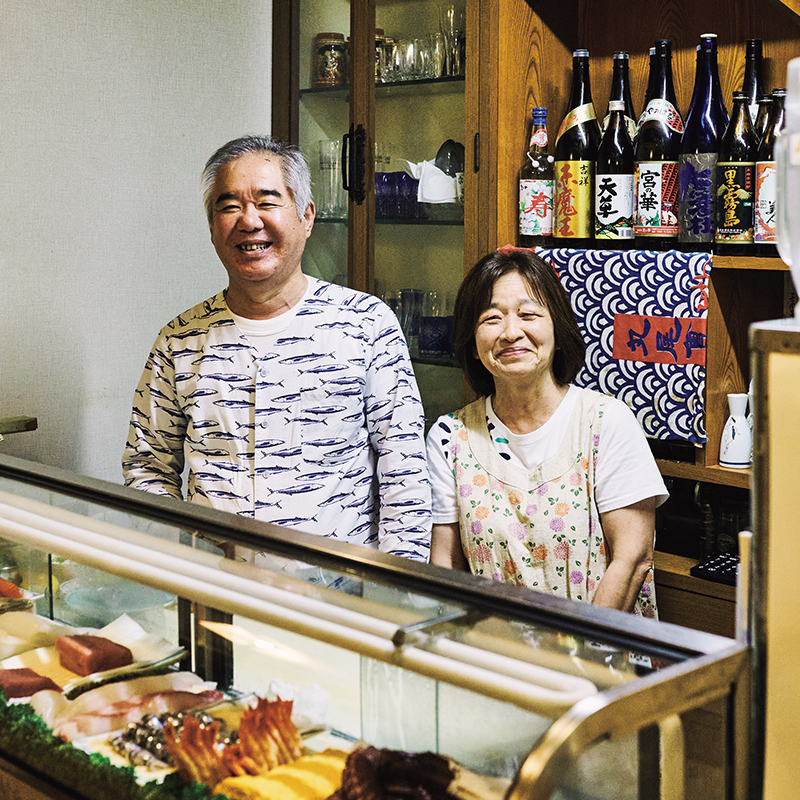
Opened in 1994. With the motto “Customers are a mirror reflecting oneself,” the couple places great importance on serving customers with a smile.
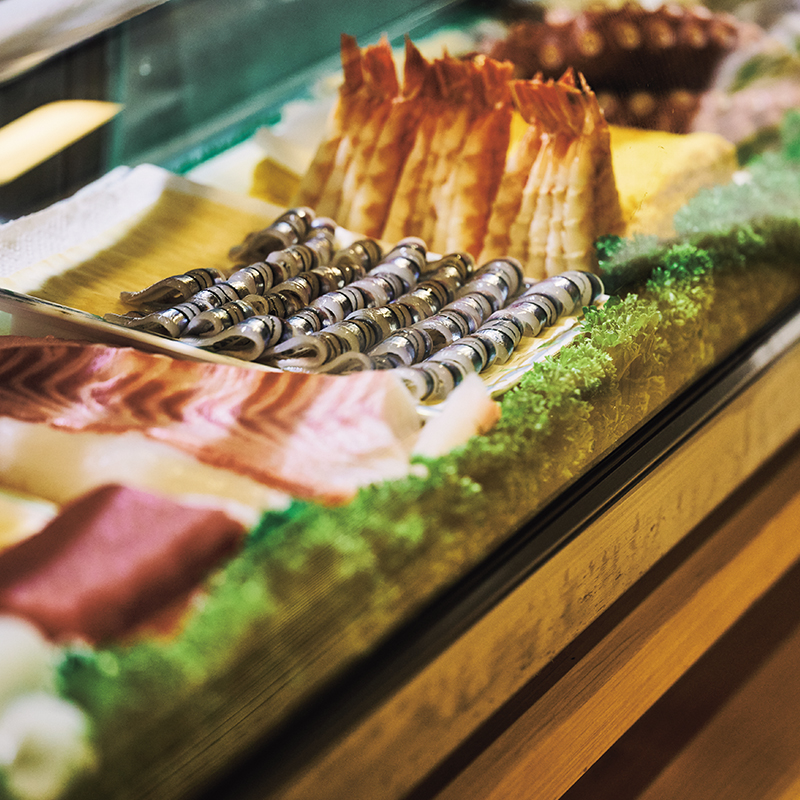
Only fish sourced on that day is used.
At “Sushiyoshi,” freshness is valued above all else.
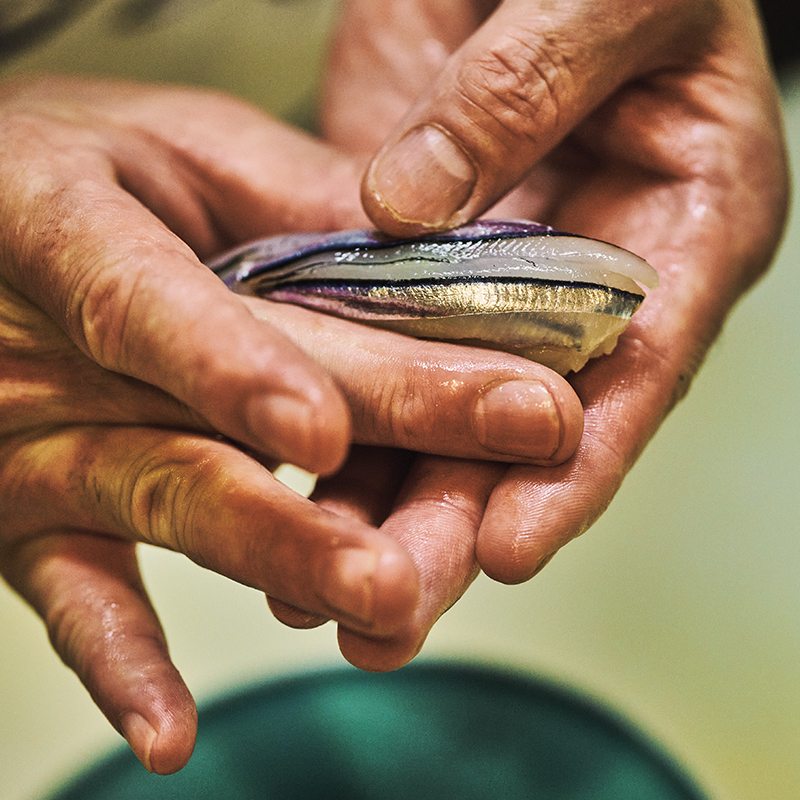
What is important in sushi is the temperature of the hands.
The sushi is shaped so that body heat does not transfer to the fish.
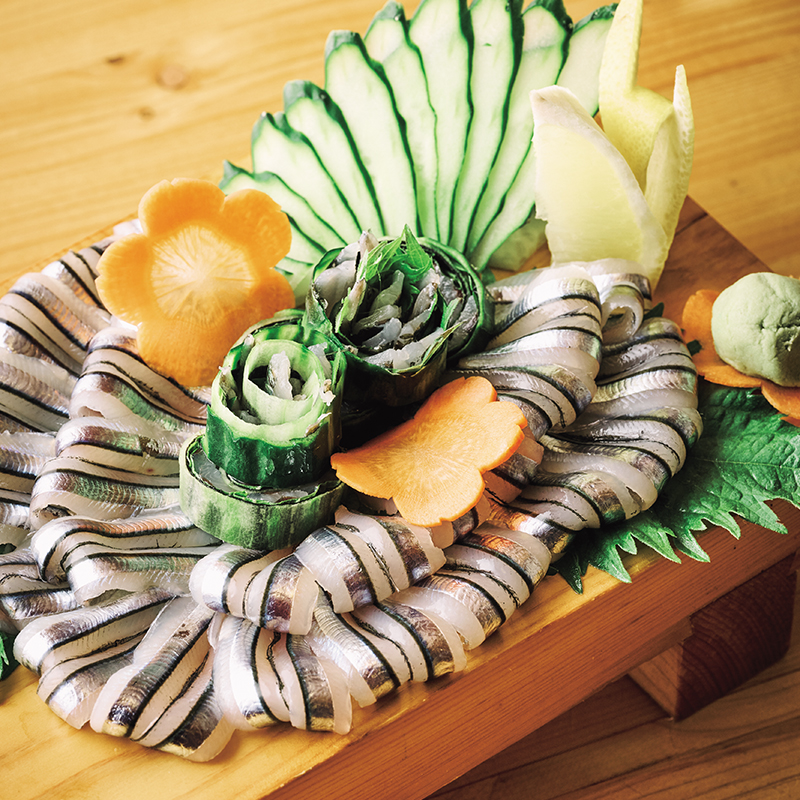
Kibinago Sashimi: 700 yen (including tax).
The flesh is plump and firm, with a light flavor. It pairs perfectly with Amakusa’s sweet soy sauce. It has none of the odor unique to raw fish and is delicious.
To ensure customers can enjoy the most delicious preparation for each season, the restaurant offers kibinago tempura, clear soup, pressed sushi, and rice bowls. “Because it comes into season twice a year, the recommended ways to eat it differ depending on the period. For the komochi kibinago from May to June, we have guests enjoy them as pusuyaki or tempura, savoring even the eggs carried in their bellies. From December to February, since the flesh is firm and fatty, I would like people to eat them as sashimi or sushi.” Savoring a “kibinago feast” at “Sushiyoshi,” a restaurant that knows Ushibuka’s kibinago inside out, is truly exceptional.
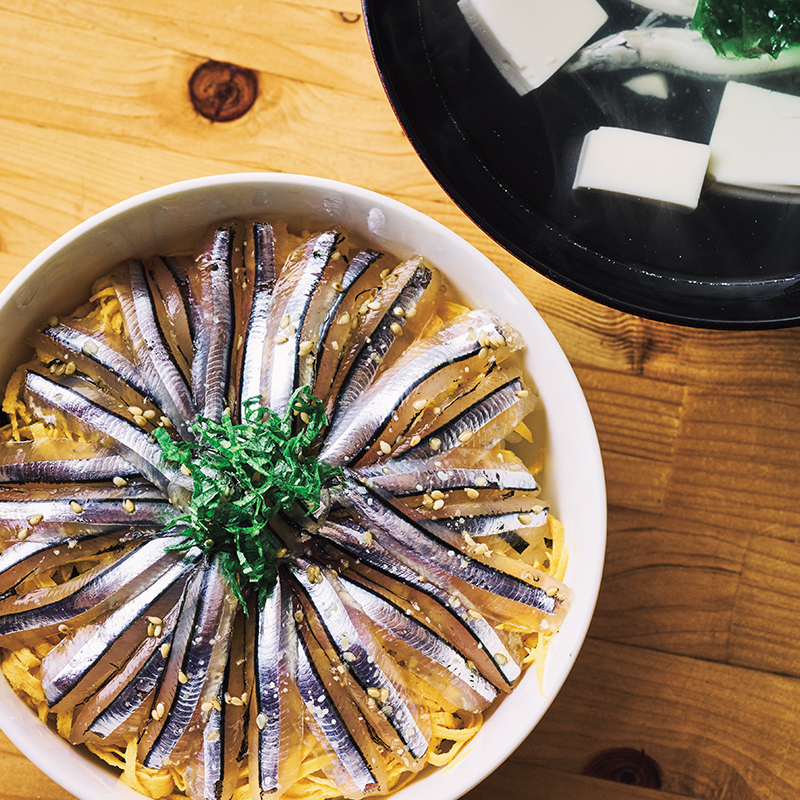
Kibinago Rice Bowl: 700 yen (including tax).
The sweet shredded egg gently envelops the flavor of the kibinago.
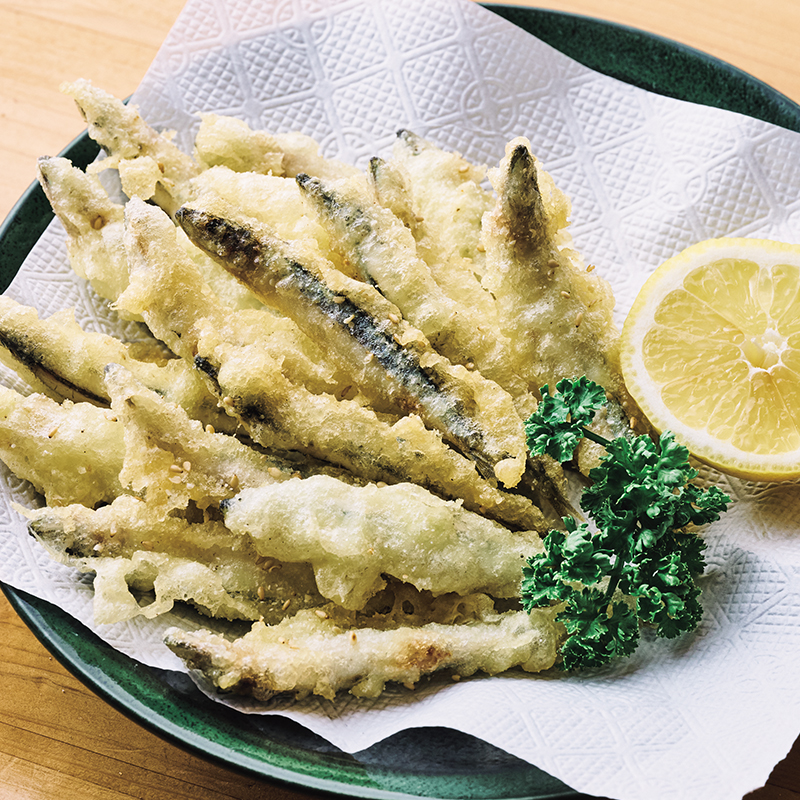
Kibinago Tempura: 770 yen (including tax).
Crispy on the outside, fluffy on the inside. It has no bitterness, and you can enjoy it whole.
The Fishermen Supporting Kibinago Fishing in Ushibuka, Amakusa.
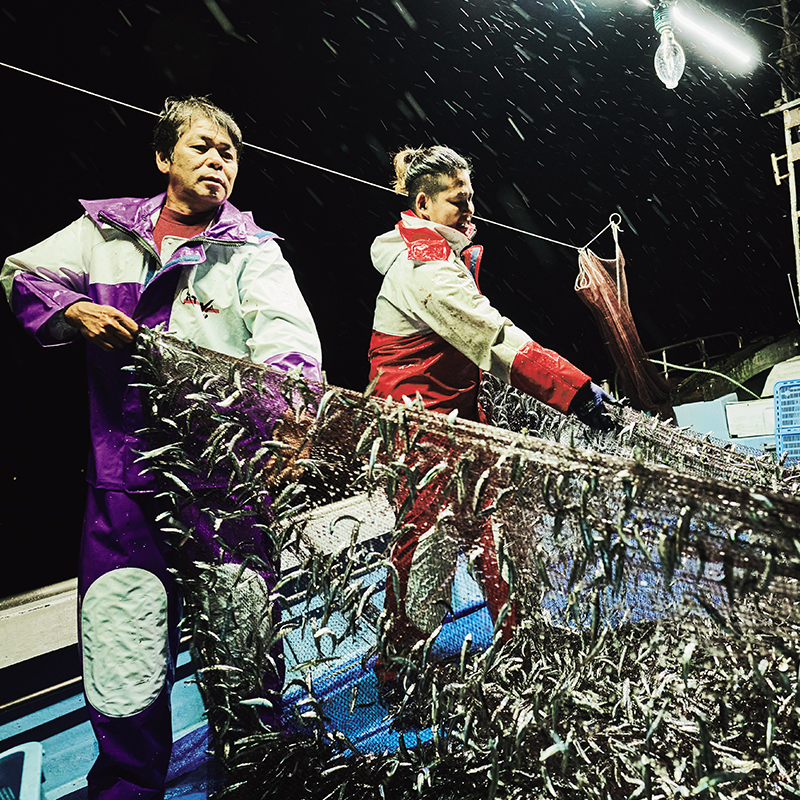
A scene of kibinago fishing by the father-and-son duo, Kenichi Ikeda (left) and Yusei Ikeda (right). Because the size of the kibinago differs between summer and winter, they say they change the mesh size of their nets to match the season.
Around 1:30 a.m. At Suguchi Port in Ushibuka, 10 fishing boats that specialize in kibinago fishing are beginning their preparations. There are 793 fishermen belonging to the Ushibuka Fisheries Cooperative, including regular and associate members. However, among them, only 30 specialize in kibinago fishing.
2:00 a.m. The 10 boats set sail and fish in the waters about 10 minutes offshore from the port. Fisherman Kenichi Ikeda says, “In kibinago fishing, the location where you fish is important. Which position you fish in greatly affects the catch of the day.”
When underwater lights are cast into the sea and turned on, the surface of the water sparkles, creating a magical scene. Lured by the light, small fish, starting with kibinago, gradually appear near the surface of the sea. “First, we lure them in with the underwater lights. Then, we set up a strip-shaped net along the path of the fish and shake the kibinago caught in the net off the net.”
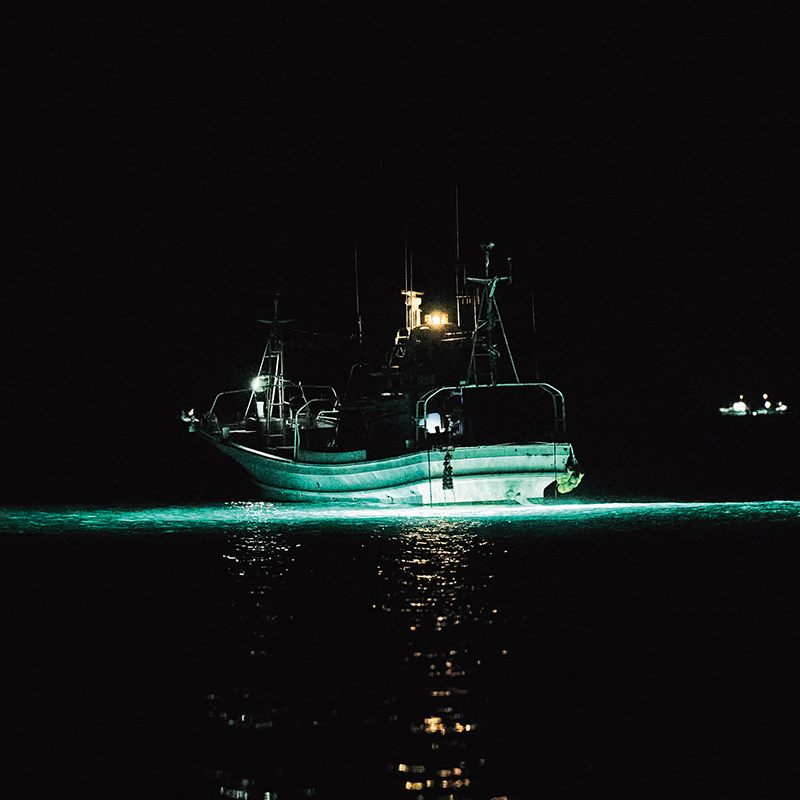
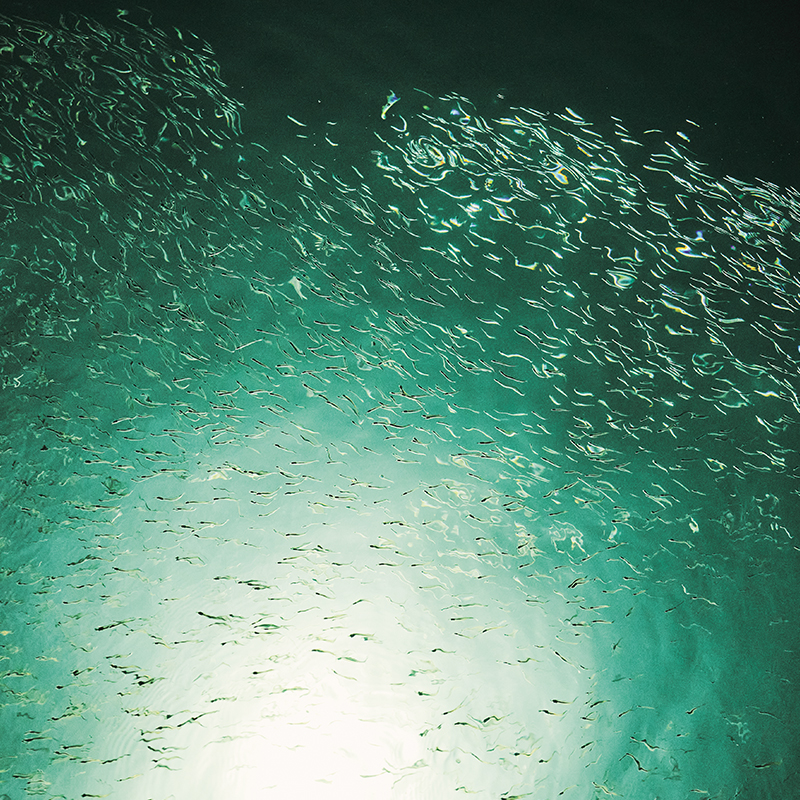
Utilizing their habit of gathering toward light, they attract the kibinago with underwater lights and conduct the fishing.
“Because they quickly lose their freshness, we pack them in ice until the morning auction. Each fishing session takes about 30 minutes, and we fish about three to four times by 5:00 a.m.” The weights attached to the net are said to weigh as much as 70 kilograms, and considering the resistance of the seawater and the kibinago caught in the net, just hauling in the net is a considerable amount of heavy labor.
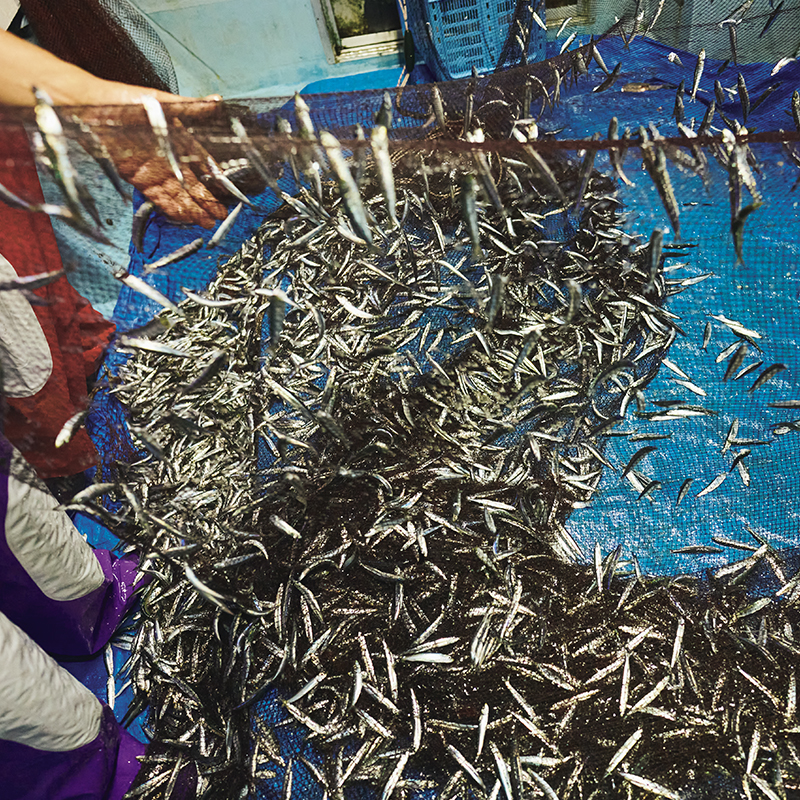
Because they are delicate fish that die if they are away from water for just one second, they are caught quickly and packed in ice.
Mr. Ikeda hauls in the nets until 5:00 a.m. while changing locations, and by 5:30 a.m., he sorts the fish caught that day and puts the kibinago up for auction. 6:30 a.m. At Ushibuka Fishing Port, as much as approximately 1.5 tons of kibinago had been landed.
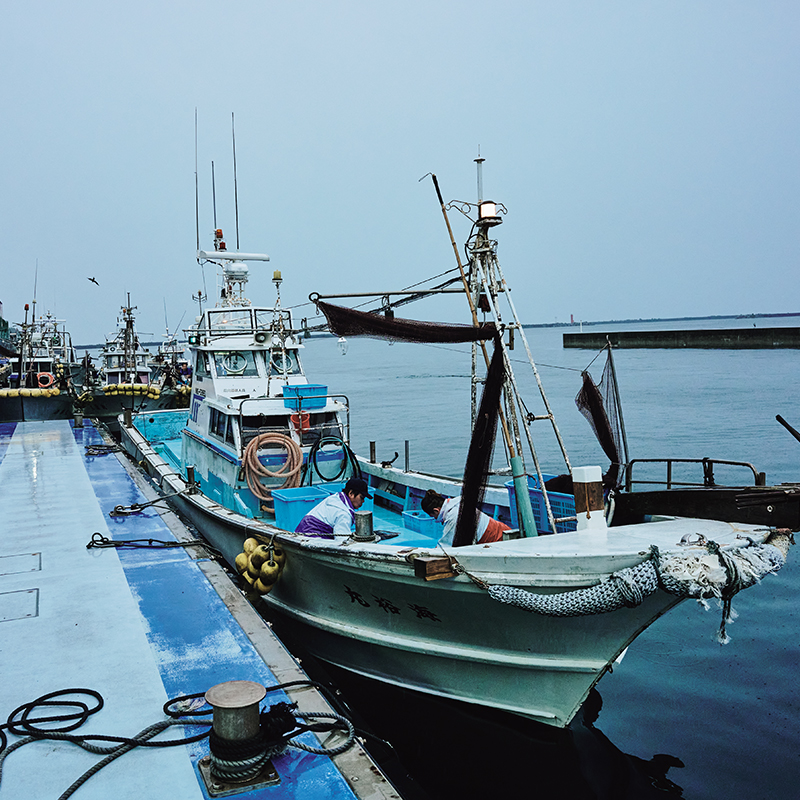
Because fish other than kibinago are also caught in the net, they sort them one by one by hand.
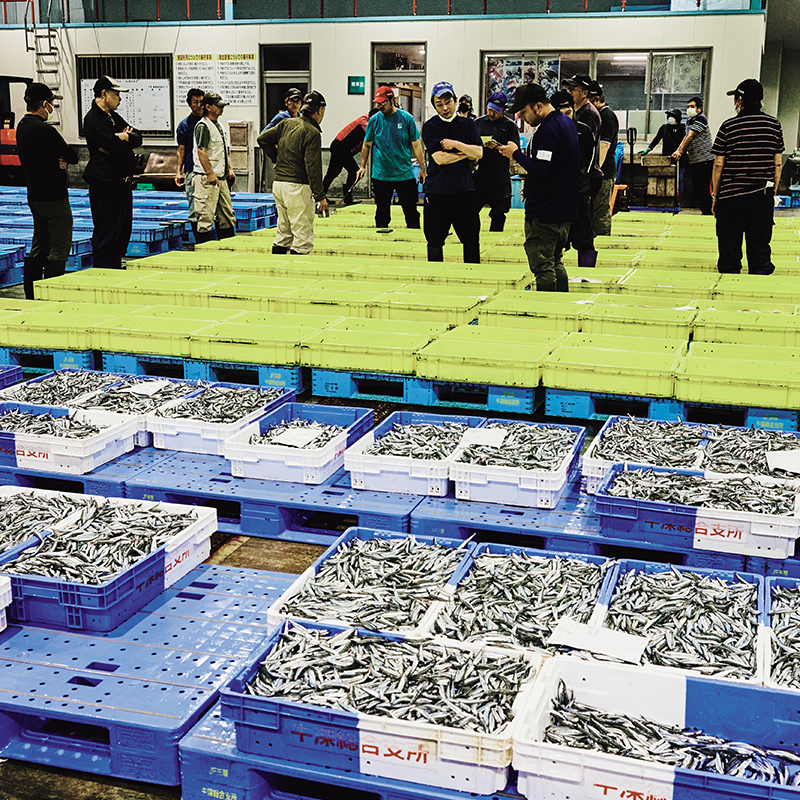
Kibinago, for which freshness is everything, is landed right before the auction begins. Currently, it is priced at 10,000 to 20,000 yen per box (approximately 19 kg).
According to Koichi Tabata, the director of the Ushibuka General Branch of the Amakusa Fisheries Cooperative Association, the catch of kibinago has been on a downward trend in recent years. “Due to a decrease in fishermen, the volume of landings has dropped by about 25 percent over the past 10 years. The annual volume of landings for 2023 was 183 tons in Ushibuka alone. Along with this, prices have risen. In inverse proportion to the decrease in supply, demand for the overseas export of processed products, prepared side dishes, and fishing bait is increasing.”
A marine products company participating in the auction also says, “The hamane (the price at the auction) for kibinago has not fallen below 10,000 yen per box for about the last two years. In the past, it was half this price.”
The appeal of kibinago is also beginning to be known overseas, further driving up the market price of Ushibuka’s kibinago. The fishermen and chefs of Ushibuka know inside out the kibinago that Amakusa is proud of. If you eat it while knowing their feelings and workmanship, it is bound to become an unforgettable memory of your trip to Amakusa.