


The sparkling Ariake Sea.
Classic jazz songs.
And even drinks and sweets
unique to Amakusa.
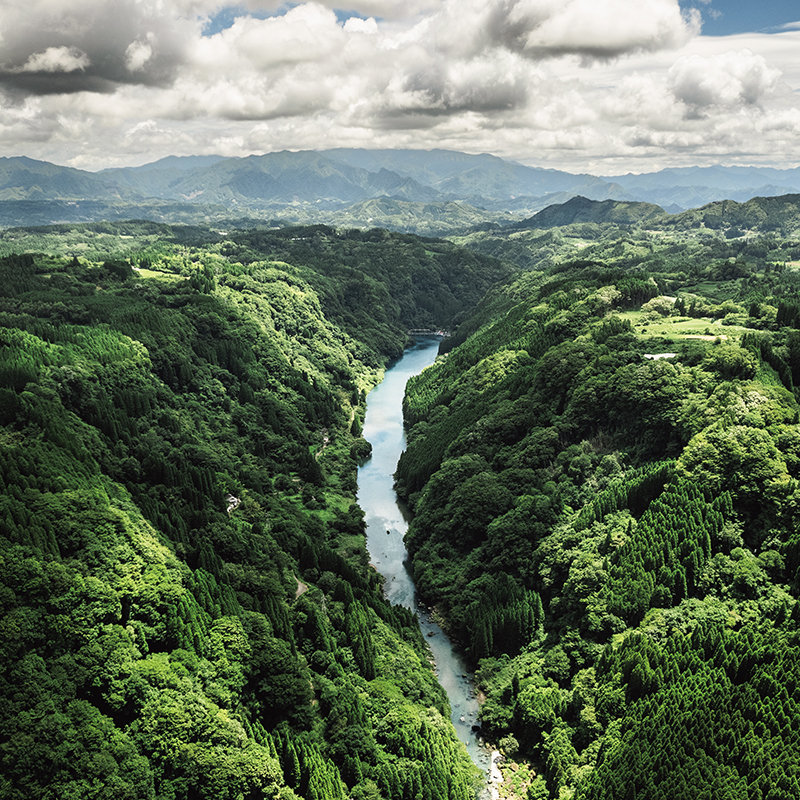
The sea of Amakusa is popular as a summer tourist destination in Kumamoto.
However, when heading there by car from Kumamoto City, encountering traffic congestion is not uncommon.
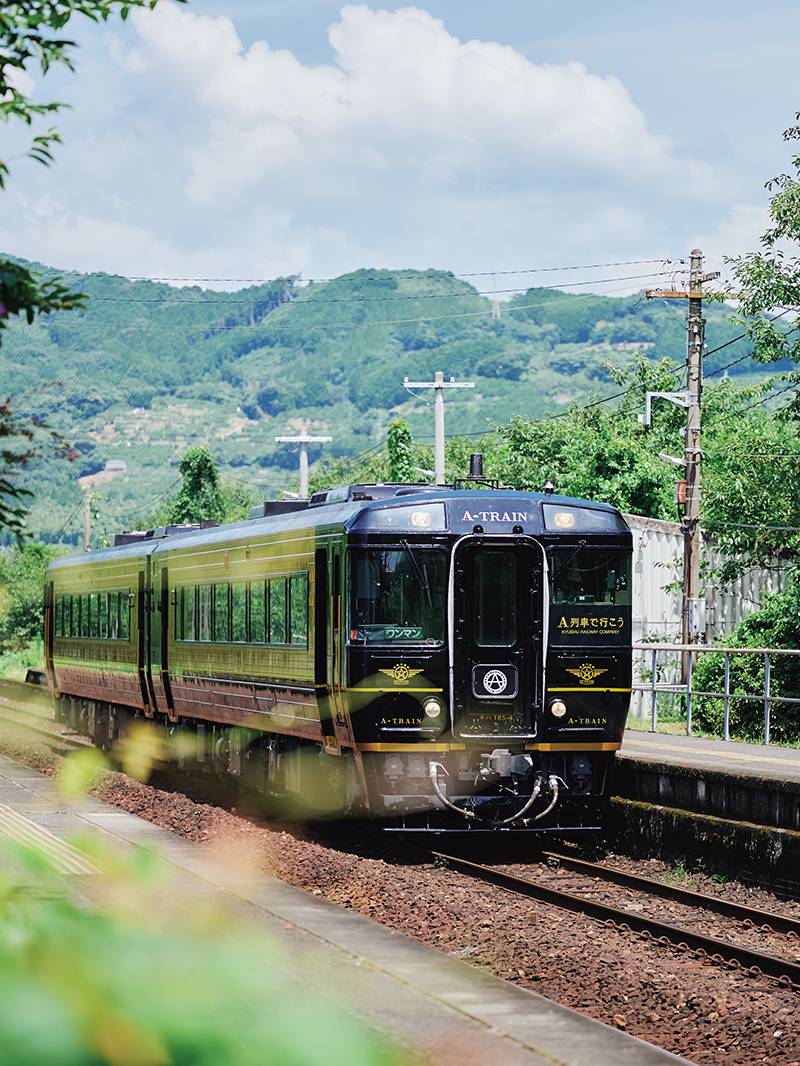
Therefore, what is recommended is the Limited Express “A-Train,” which connects Misumi—the gateway to Amakusa—and Kumamoto Station.
A blissful onboard experience like no other awaits us.
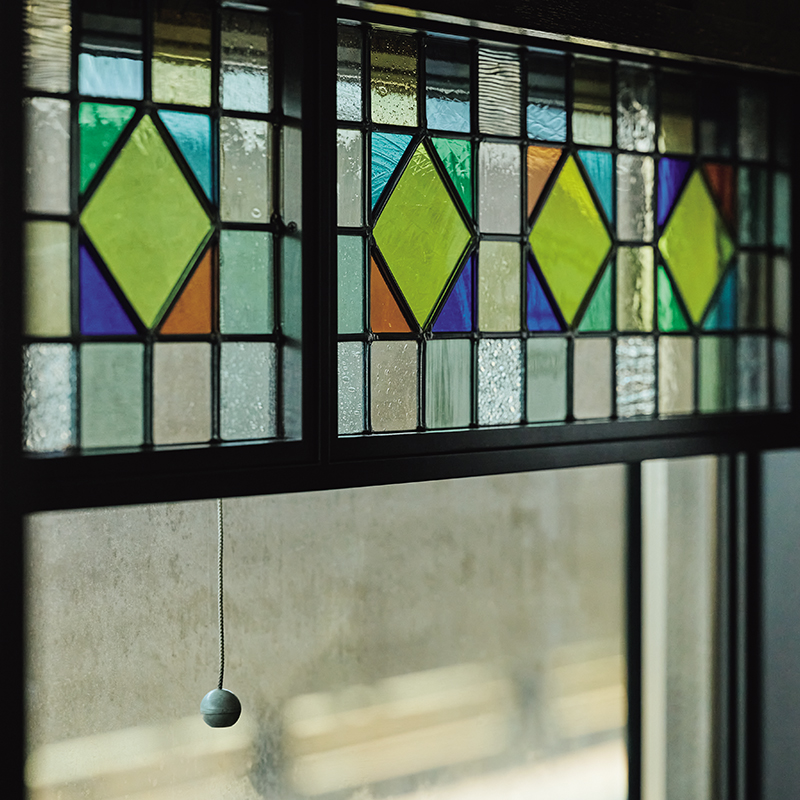
Stained glass adorning the interior.
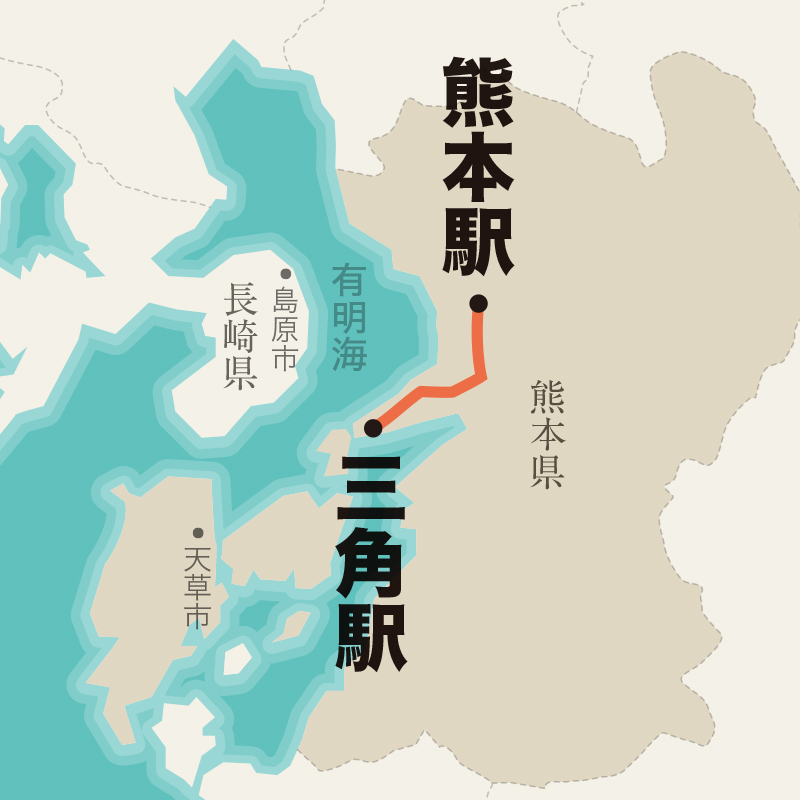
Connects Misumi, the gateway to Amakusa, and Kumamoto Station.
Enjoy summer to the fullest
with the scenery from the train window
and drinks.
While waiting for the A-Train on the platform of Kumamoto Station, the starting point, the sound of a saxophone suddenly comes from the platform speakers. What is playing is the jazz standard “Take the ‘A’ Train,” which is also the origin of the train’s name. On the platform, where anticipation for the upcoming train journey builds, many tourists from Asia as well as Japanese people can be seen. According to Munemori Kodama, a spokesperson for Kyushu Railway Company, the number of users from overseas is increasing year by year.
Along with the sound of its movement, the train pulled into the station. Featuring a black-based body resembling a steam locomotive accented with gold lines, it has a luxurious appearance.
The design motif is the Nanban (Western) culture introduced to the Amakusa Peninsula in the 16th century. One’s eyes are drawn to the dignified design based on wood grain and the stained glass that adorns the interior.
The train is a two-car formation. In Car No. 1, there is a bar counter called “A-TRAIN BAR,” where you can order highballs using local Dekopon and seasonal ciders. The special feeling of having a bar inside a train enhances the joy unique to travel.
In addition, “Amakusa Chi-Ice” (salt ice cream) using Amakusa salt is also popular. While it has the sweetness of vanilla, the salty flavor is in exquisite balance, and you cannot stop bringing the spoon to your mouth.
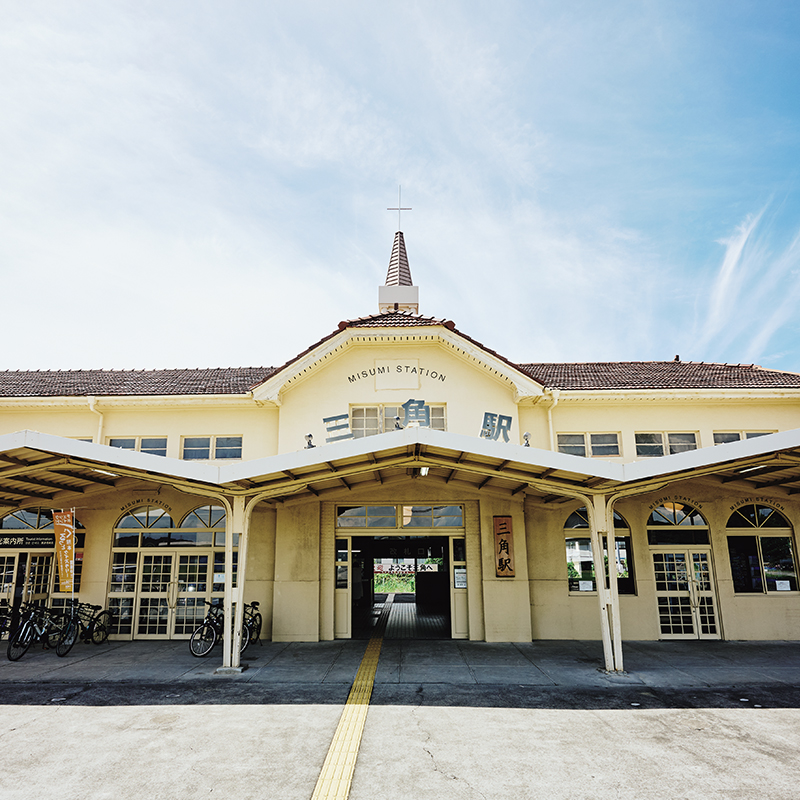
Misumi Station, the final stop. On the opposite side, a boat heading for Amakusa.
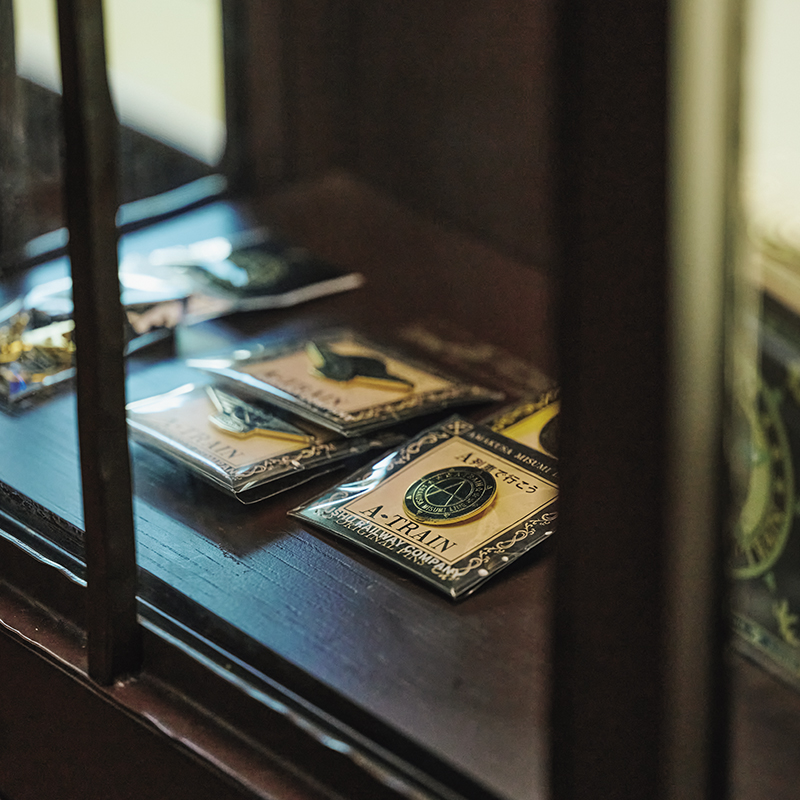
Original goods are available for purchase onboard.
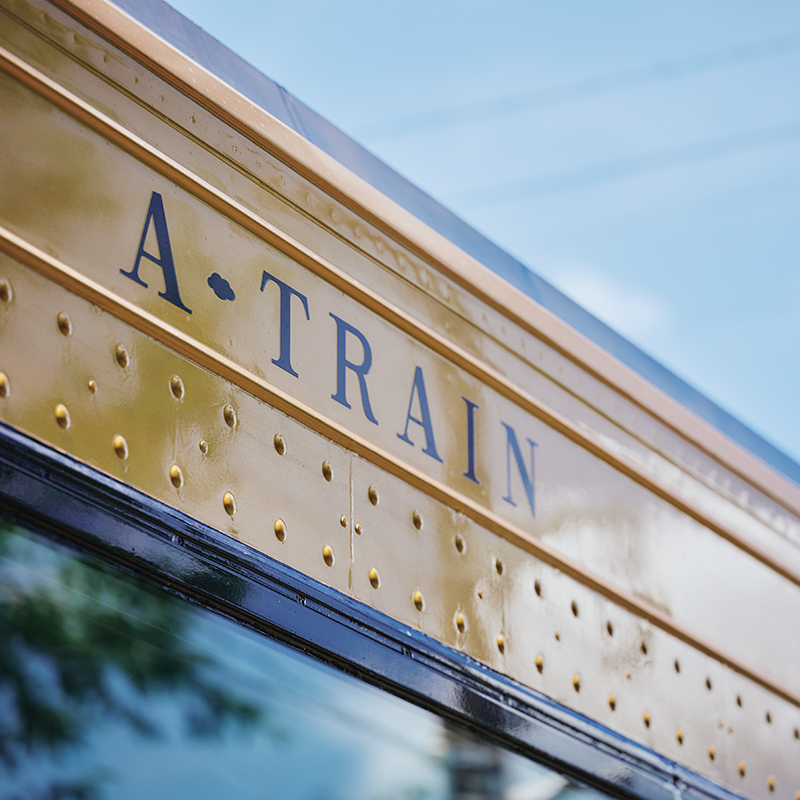
The “A” in “A-Train” is also the initial letter “A” of Amakusa.
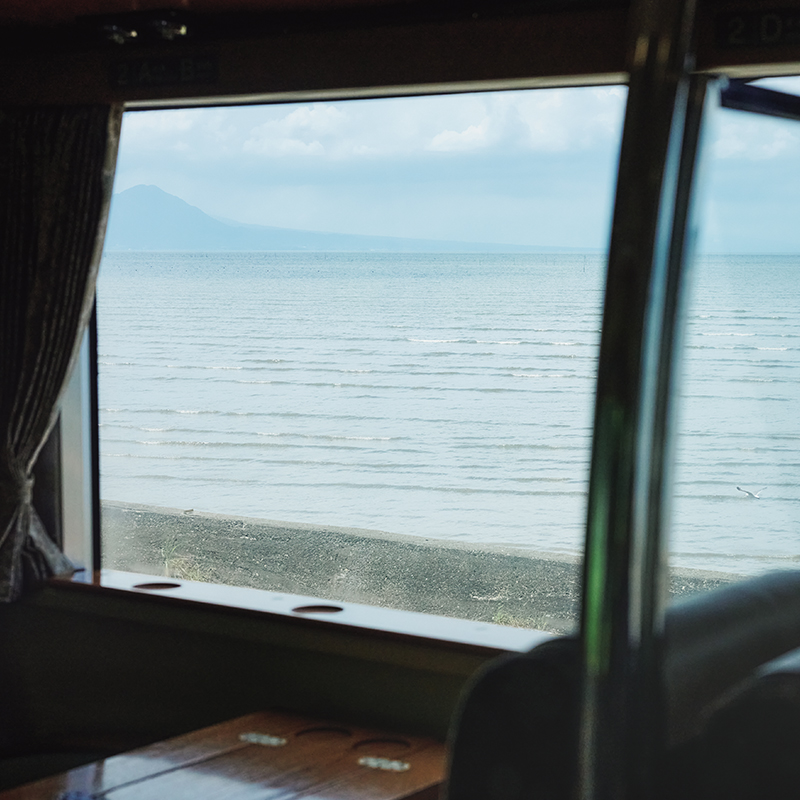
When passing the Okoshiki Coast, it is a perfect photo opportunity.
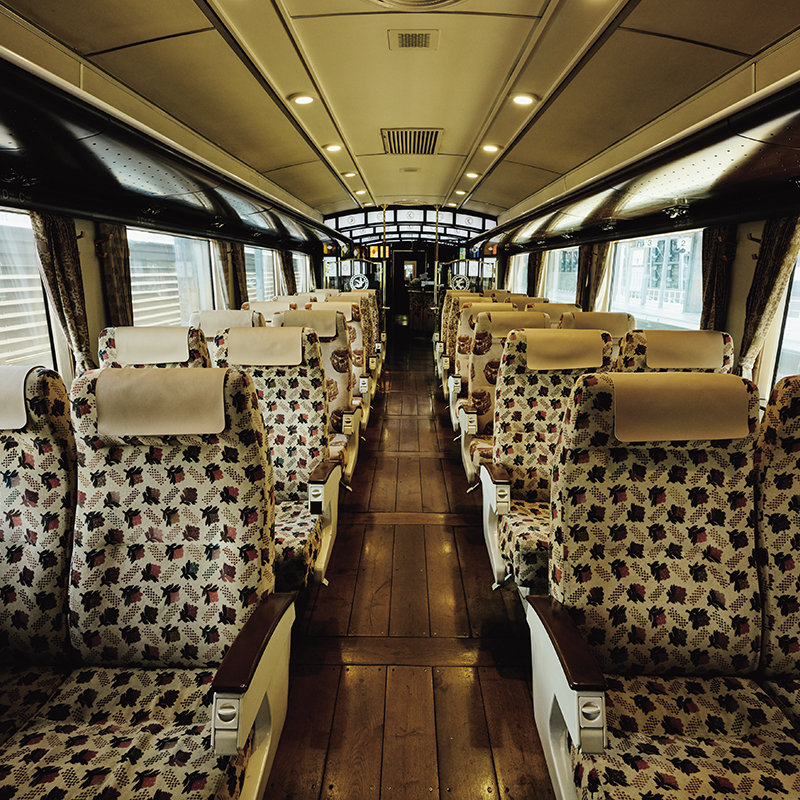
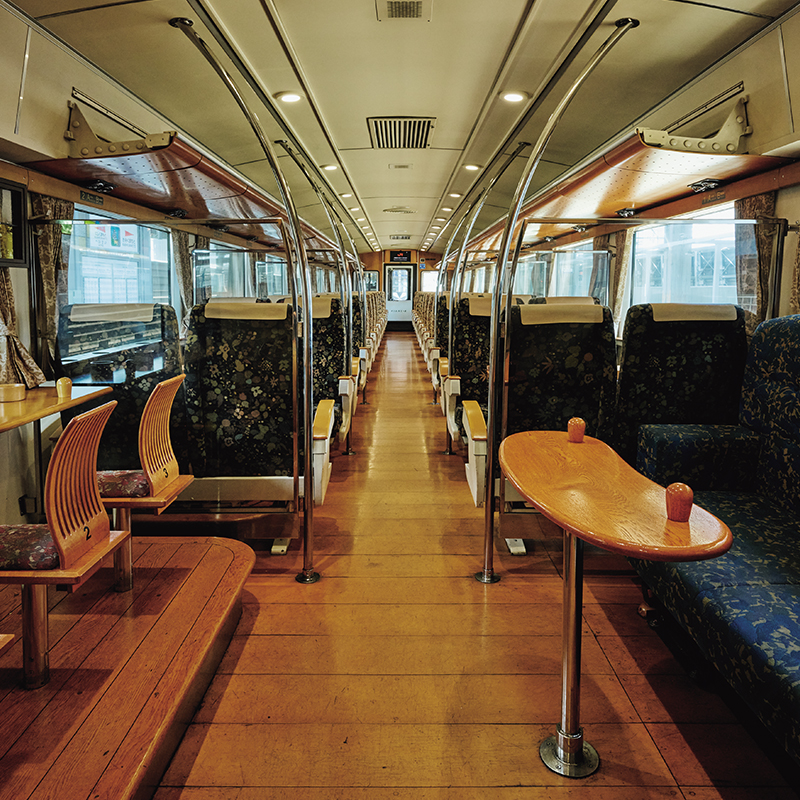
The luxurious seats feature different designs in Car No. 1 and Car No. 2. There are also box seats.
Because I needed to drive a car after getting off the train, I decided to give the highball I had purchased for photography to another passenger. When I offered it to a family of six from overseas sitting in a nearby seat, saying “Please have this drink” in my broken English, a man accepted it.
After the train had been running for a while, a voice crying “Oh!” arose from inside the car. When I turned my eyes to the train window, the Ariake Sea spread out before me, shining a vivid blue as it caught the sun. Not only the sea, but also the Shimabara Peninsula, Mount Unzen, and Mount Heisei Shinzan in Nagasaki Prefecture on the opposite shore came into view.
Oda Station, where the train stops along the way, is the oldest existing station building in the prefecture. When the train arrived, local residents welcomed us by waving flags. A long stopover time is set aside, allowing passengers to take photos with the train on the platform and purchase juice made from local bankan citrus fruits.
When I returned to my seat on the train, the man to whom I had given the highball earlier was beckoning me. As I approached, he handed me a bottle of juice he held in his right hand. “Non-alcoholic!” As a thank-you for the highball, he had gone out of his way to present me with juice sold at Oda Station. Although I could only express my thanks in broken words, I felt gratitude for his kindness and joy in being able to connect with someone.
Before long, the train left the coastline, passed through the mountains, and arrived at the final stop, Misumi Station. While I was photographing the train’s interior at Misumi Station, a woman called out to me, asking, “Is this a photo shoot for a magazine?” As I explained this magazine and engaged in small talk, she told me that she had come all by herself from Osaka. When I asked how she came to ride the A-Train, she said she had loved railways since she was a child, and having reached the milestone age of 50 this year, she was thoroughly touring Kyushu—a place she had never visited before—by train. “The scenery from the train window was wonderful, and it became a great memory.” The smile of the woman who spoke those words left a lasting impression.
It was a journey of about 40 minutes from Kumamoto Station to Misumi Station, but it was filled with deeply moving scenery and interactions with people. I want you to ride it, too. That was the kind of onboard experience I felt it to be.
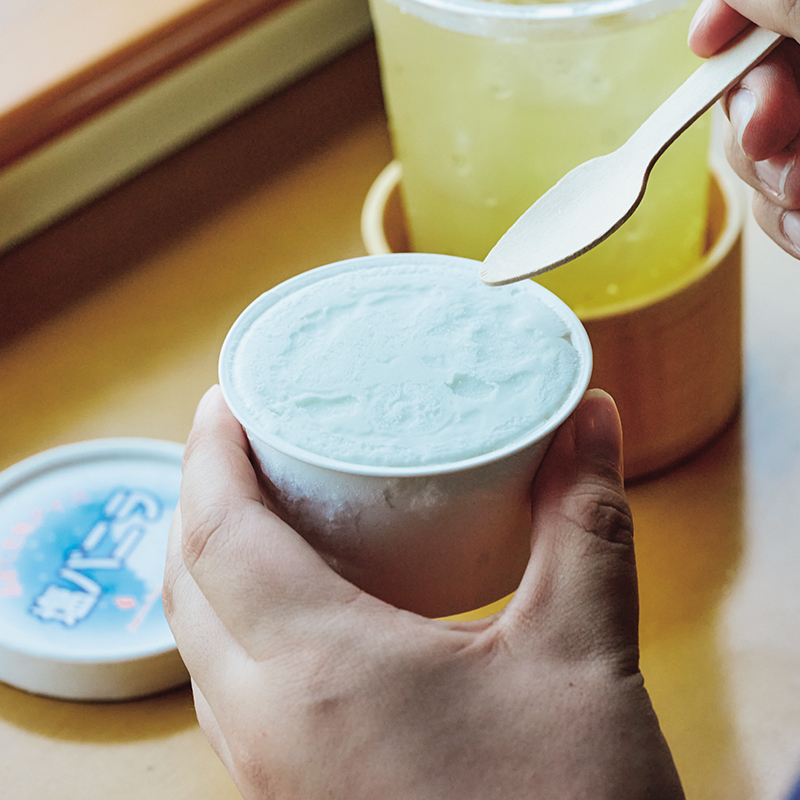
Amakusa Local Ice Cream 500 yen (tax included)
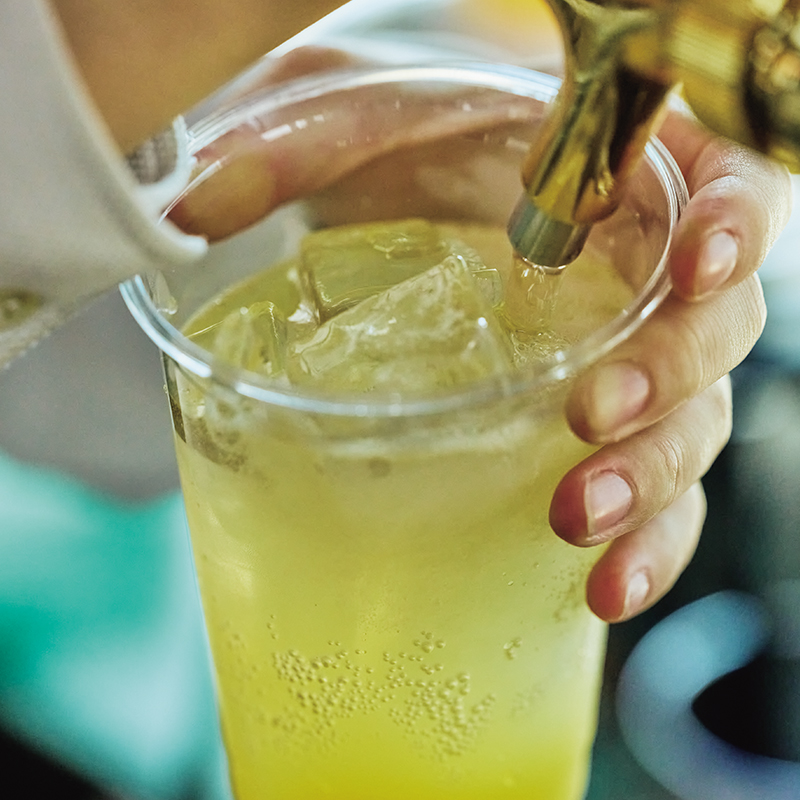
Highball / A-Highball (Dekopon) 700 yen (tax included)
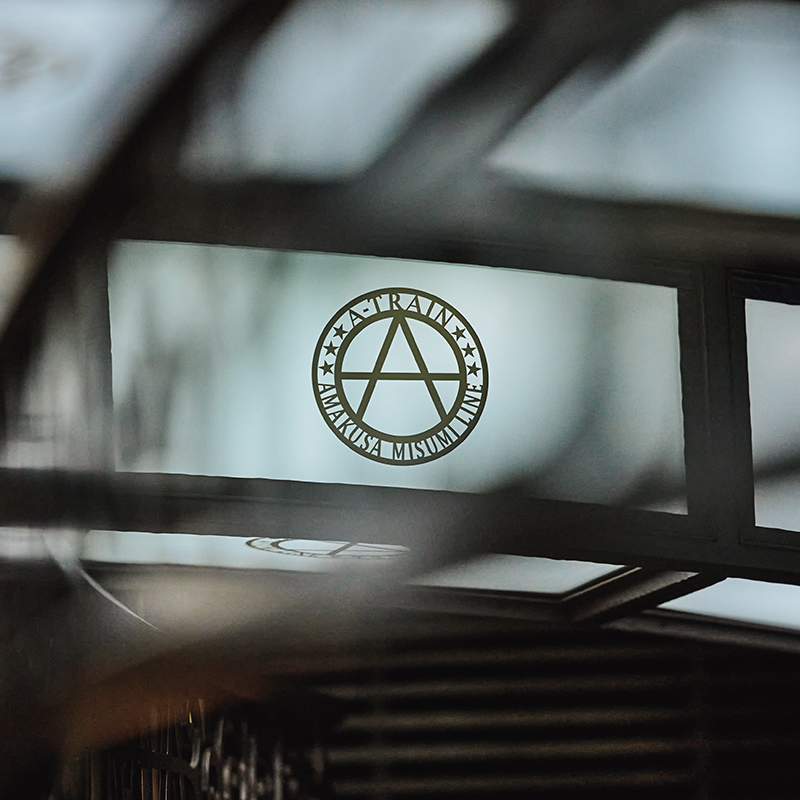
The special logo featuring the “A” motif is also one of the highlights.
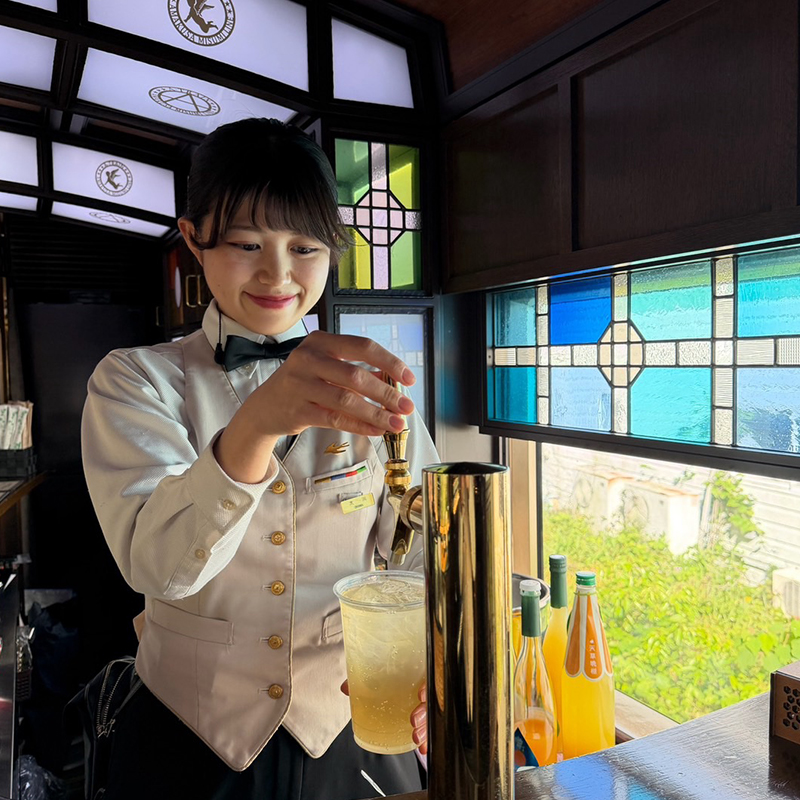
An authentic bar counter in Car No. 1 that deepens the joy of a train journey.
Savor local delicacies
while taking in a panoramic view of the sea
at “Amaterasu Coffee.”
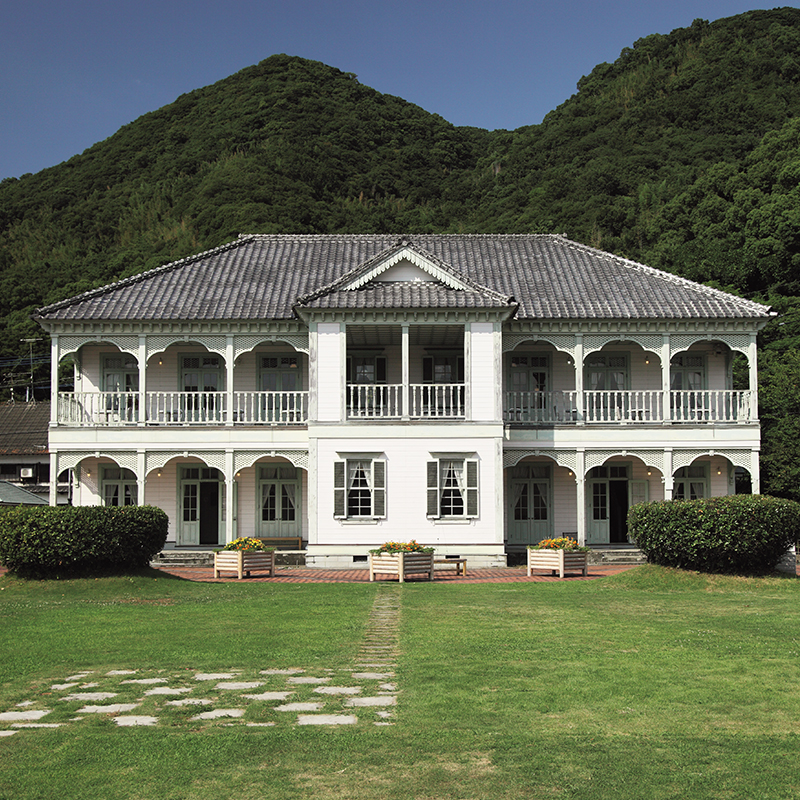
The World Heritage West Port, which you will want to visit after getting off at Misumi Station.
We introduce a recommended cafe that newly opened near Misumi Station in the early summer of 2024.
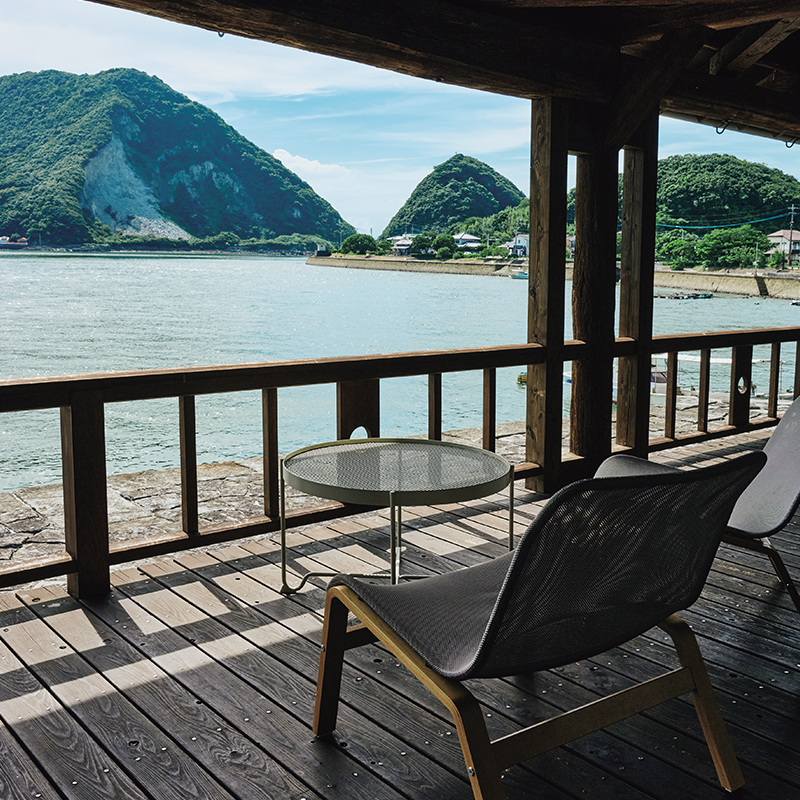
The midpoint between the Ariake Sea and the Shiranui Sea,
commonly known as “Misumi no Seto.”
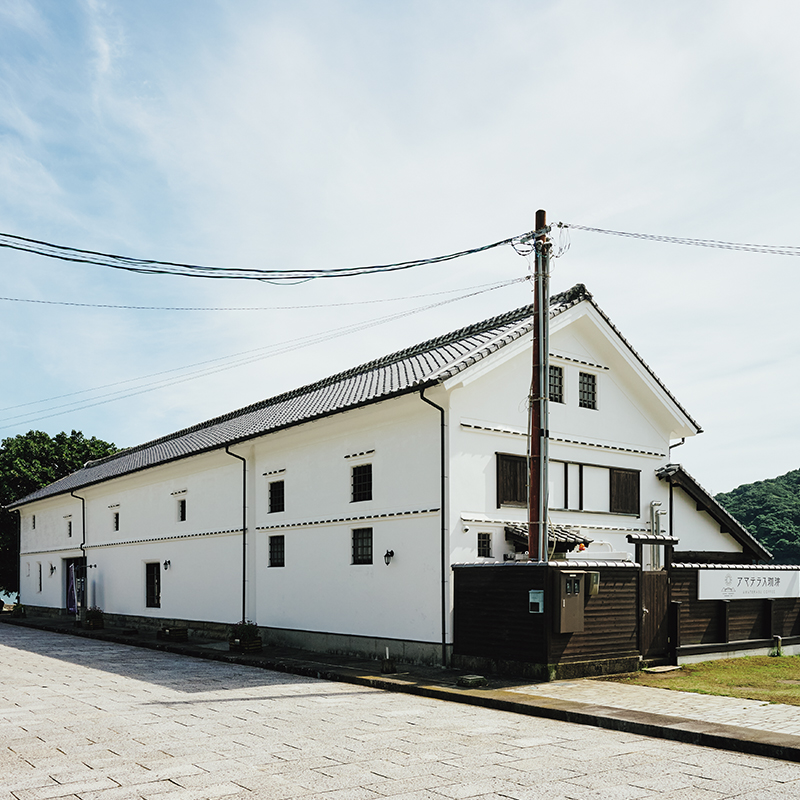
Misumi West Port flourished during the Meiji period as a major distribution center for outbound cargo on the west coast of Kyushu. “Amaterasu Coffee” was built by renovating a shipping warehouse from that era.
The shop manager, Aoi Harada, says that the reason for opening at Misumi West Port was because “I wanted to provide a place where people can experience the charm of the historic Misumi West Port, as well as enjoy the perfect location that features both mountains and the sea.”
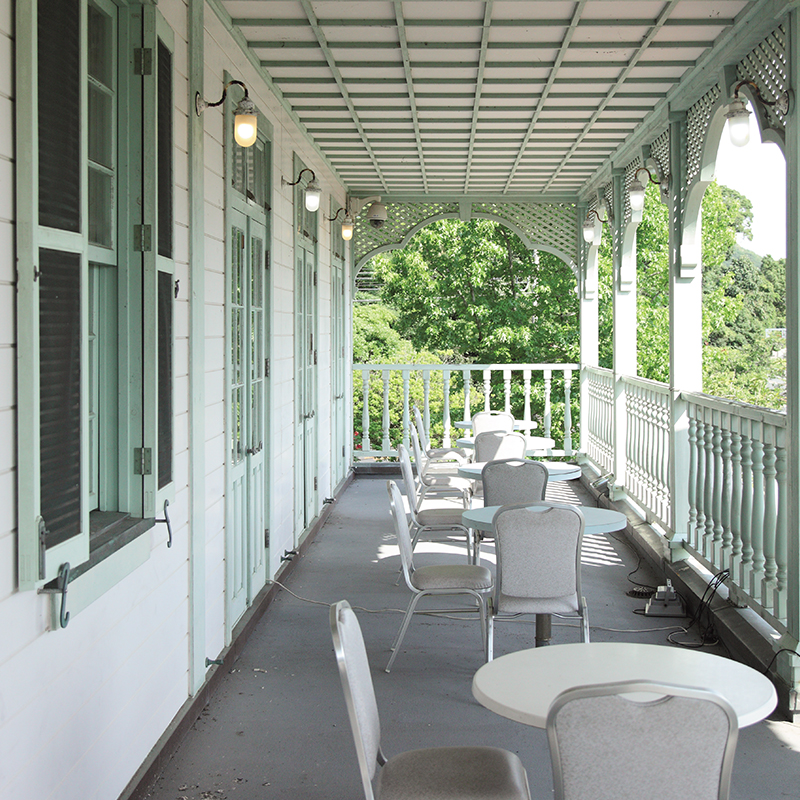
One of the features of the cafe is the terrace seating facing the sea. While being blown by the sea breeze, you can eat menu items that use local products. The popular menu item is a hot dog called the Amaterasu Sand, which uses Amakusa Daio chicken and tomato puree from Uki City. Ginger ale using ginger syrup from Uki City is also well-received. The Amaterasu Sand is a satisfying item, with the firm texture of the local chicken sausage combined with the volume of the bread. Since it is a hot dog, taking it to go and eating it while strolling around Misumi West Port is also recommended.
The origin of the shop name “Amaterasu” comes from the wish to be an existence that illuminates (terasu) the entirety of Misumi West Port, including the beautiful sea and sky (ama). Inside the shop, objects with motifs of constellations inspired by the shop name, created by gaju, a sculptural artist from Amakusa City, are displayed.
Since opening, not only local people but also tourists from both Japan and overseas have been visiting the shop. When you visit the Amakusa area, why not stop by?
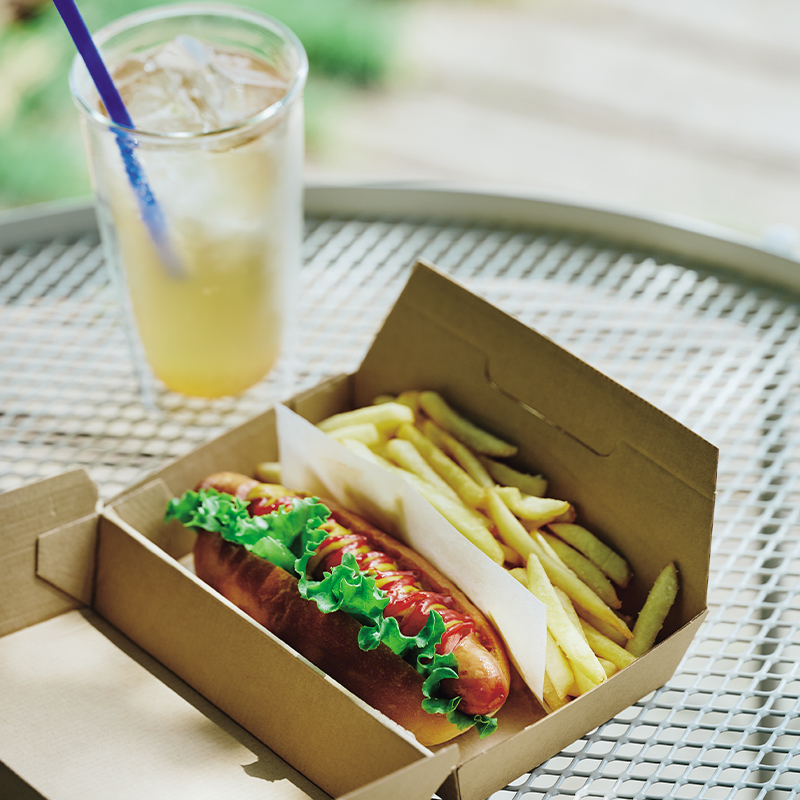
Amaterasu Sand 800 yen (tax included)
Special Ginger Ale 600 yen (tax included)
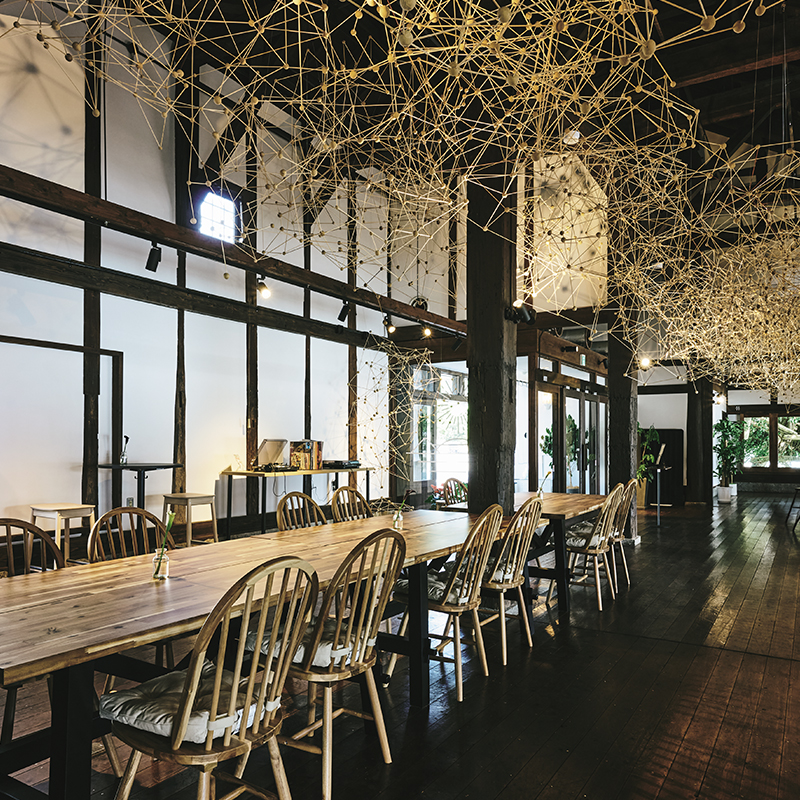
Constellation-themed objects cover the ceiling.
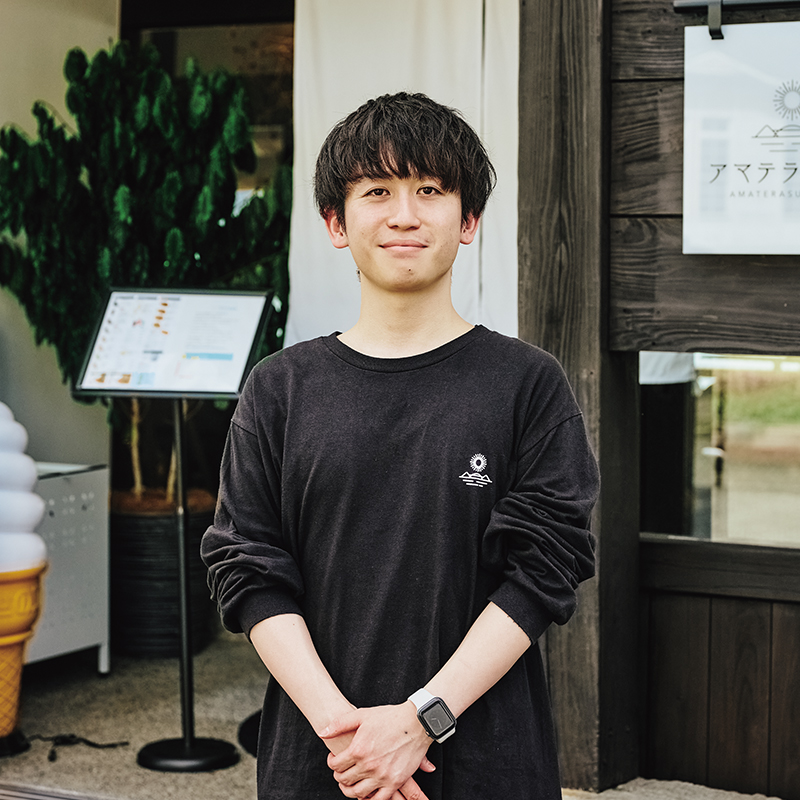
Shop manager: Aoi Harada. Also in charge of menu development.