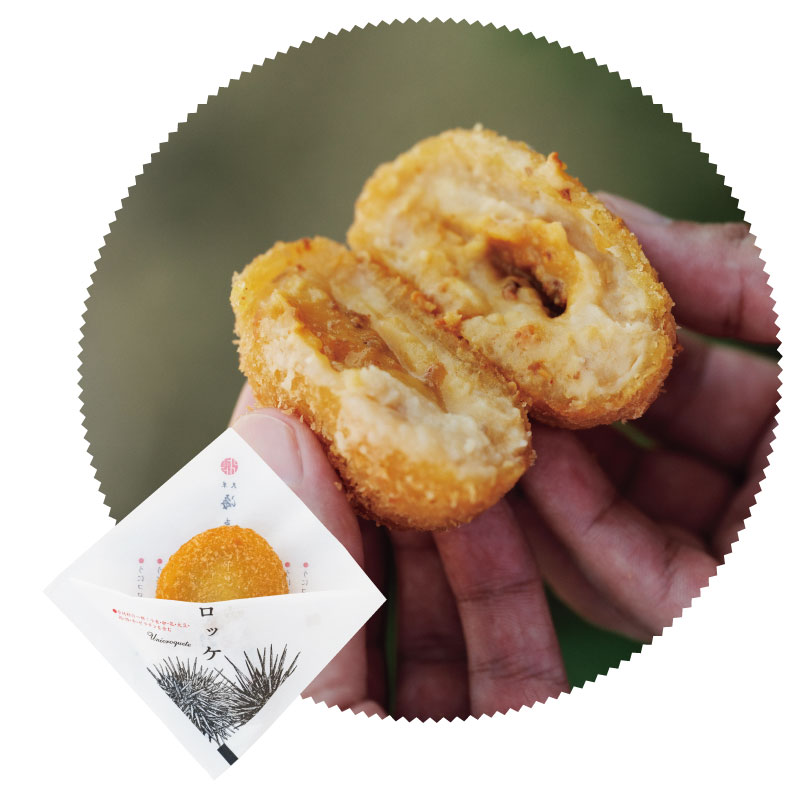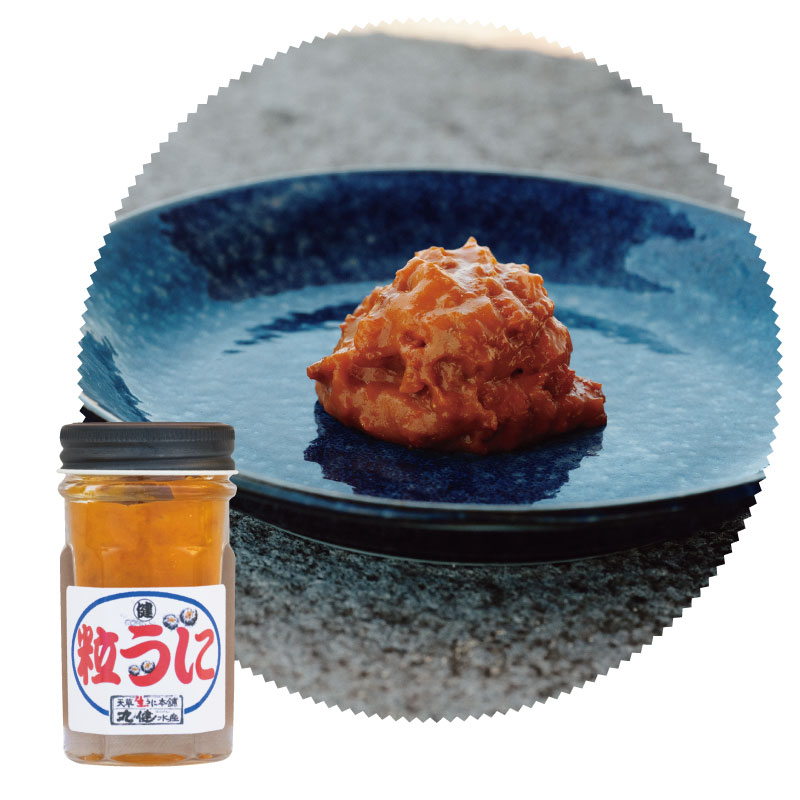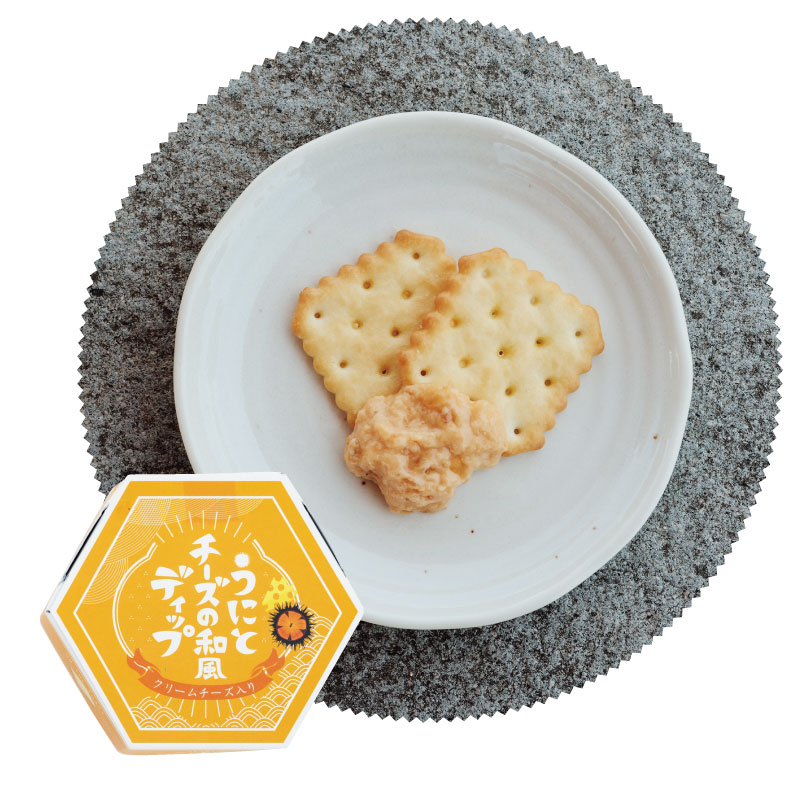



Because it is available for a mere two months during summer in Amakusa, the red sea urchin is often referred to as a legendary, high-end sea urchin.
Its flavor is so exceptional that not only gourmets, but even the owner of “Yakko-zushi”—one of Amakusa’s premier restaurants where reservations are notoriously difficult to obtain—eagerly looks forward to the arrival of this season every year.
Won’t you, too, try a “rich experience” unique to Amakusa’s red sea urchin?
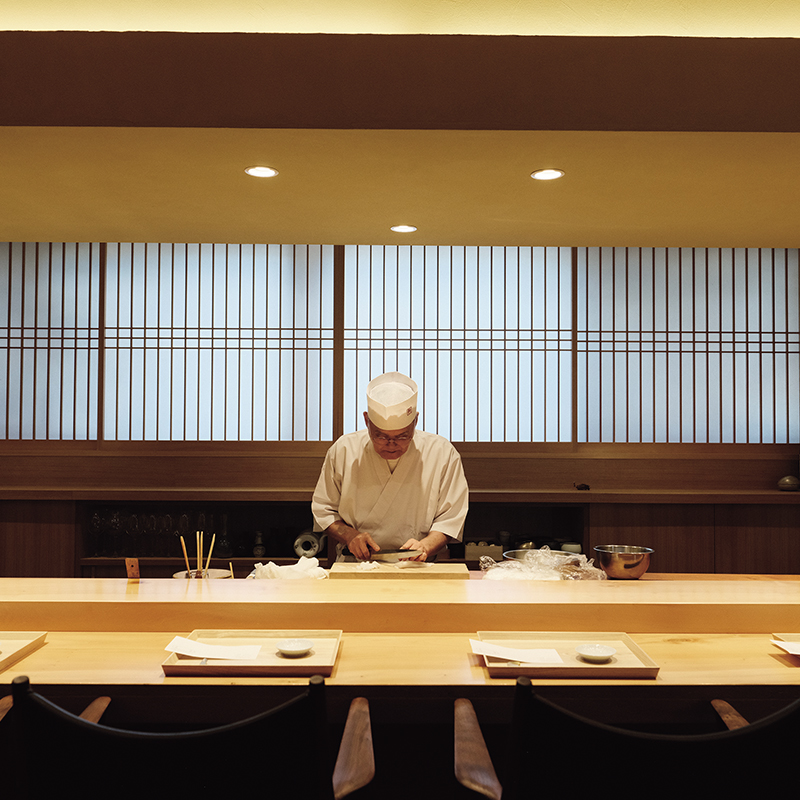
The brand-new interior, renovated in 2022, features counter seating only, with just eight seats.
A flavor that captivates—
Spend a moment of supreme bliss
with red sea urchin at a renowned restaurant.
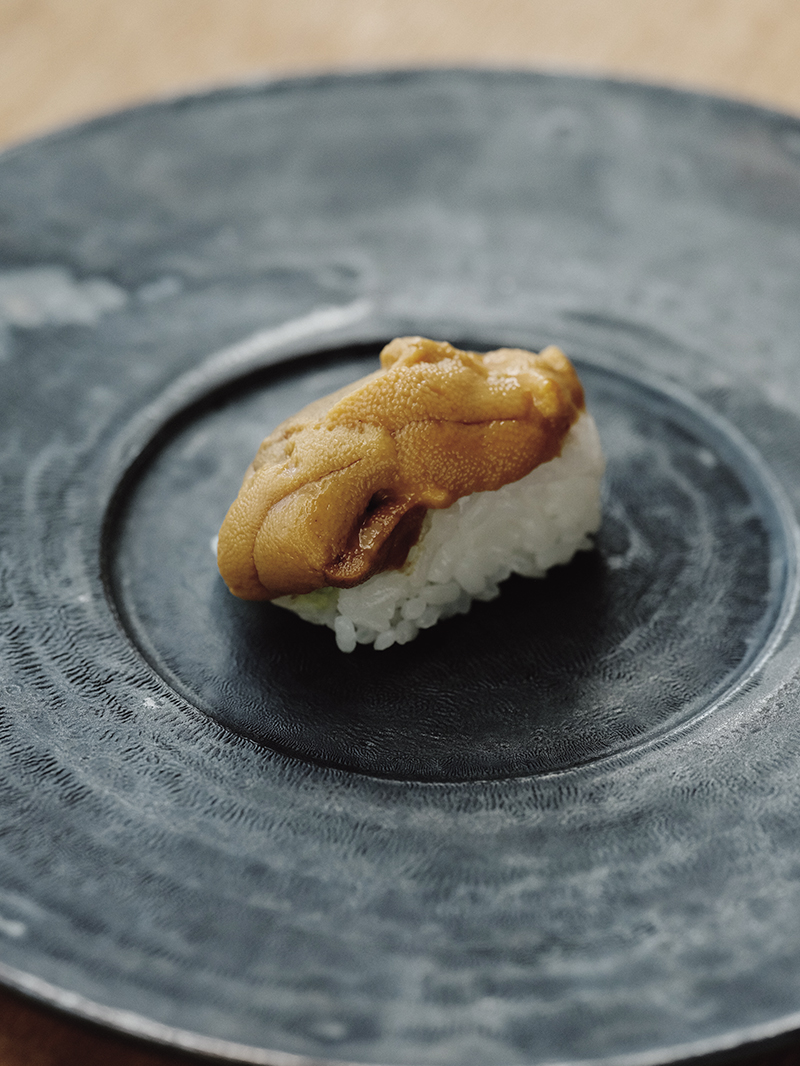
Incredibly rich. The moment the piece smoothly melts on your tongue, sweetness and umami burst forth all at once, and an elegant aroma of the sea fills your nasal passages. The red sea urchin nigiri possessed such an overwhelming flavor that even after finishing, you wish to savor the aftertaste lingering in your mouth for as long as possible.
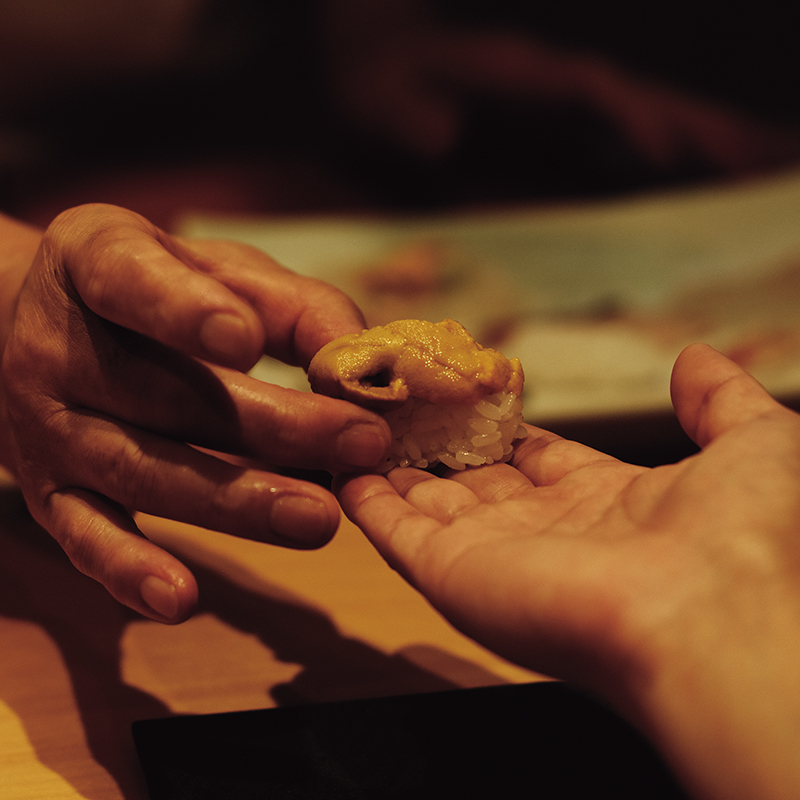
Handing the red sea urchin nigiri directly to the guest rather than serving it on a plate is the “Yakko style.”
“We do not use seaweed for our red sea urchin, nor do we apply soy sauce. Adding nothing—that is what is best.”
So says Yasukazu Murakami, the owner of “Yakko-zushi.” Located at the boundary between Kamishima and Shimoshima in Amakusa City, “Yakko-zushi” is a renowned establishment with a constant stream of guests, so much so that reservations are always fully booked three months in advance. Mr. Murakami built “Yakko-zushi” in a single generation and is one of the representative sushi chefs of Kumamoto. What Mr. Murakami served us after the nigiri was red sea urchin chawanmushi (savory egg custard). Raw red sea urchin is placed atop a chawanmushi made solely from egg whites and dashi broth. Because of its light seasoning without additional ingredients or egg yolks, the richness of the red sea urchin is highlighted, making it a dish that also offers a pleasantly smooth texture.
Overwhelmed by the flavor of the red sea urchin, the editorial staff member was in a dreamlike state. Seeing this, Mr. Murakami spoke with a broad smile. “Every year as the red sea urchin season approaches, I start getting restless. I want to mold it with my own hands as soon as possible and have our guests eat it.” Captivating not only those who eat it but even the sushi chef himself—that is precisely why it is a summer staple of Amakusa.
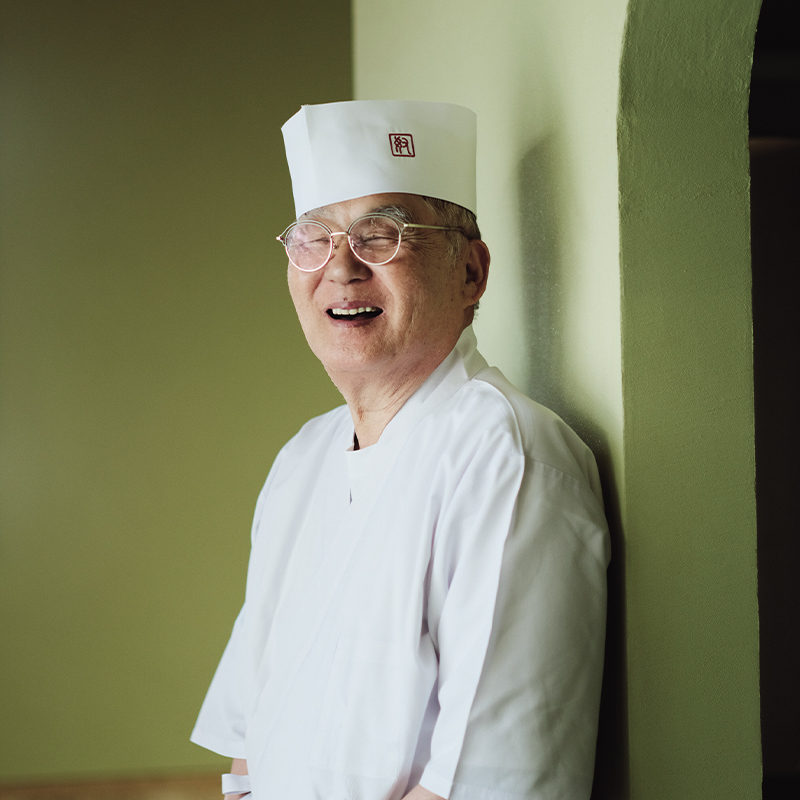
Yasukazu Murakami, who became a sushi chef at the age of 17 and, even now at age 77, single-handedly manages the sushi counter.
Rare and high-end.
Even so, to many people,
I want to deliver the taste of Amakusa.
Compared to other varieties, red sea urchin is characterized by its rich flavor and pronounced sweetness. While it inhabits wide areas of Amakusa, the area surrounding Reihoku Town is particularly considered its true home. It is a sea region so rich in nutrients that even many wild dolphins inhabit it. Mr. Murakami says that the red sea urchin caught here is exceptional in both taste and aroma. Typically, red sea urchin fishing is permitted for a mere two-month window from mid-July to mid-September. When this season arrives, numerous tourists visit from all over Japan seeking the red sea urchin, and guests from outside the prefecture are said to account for 90% of the clientele at “Yakko-zushi.”
Wishing to fulfill the expectations of those who traveled from afar, Mr. Murakami previously served dishes such as red sea urchin placed atop longtooth grouper or flounder nigiri. Now, however, there are only two dishes: red sea urchin nigiri and chawanmushi (savory egg custard). The reason behind this is the soaring cost of procurement. According to Mr. Murakami, the price, which was around 20,000 yen per kilogram until about five years ago, has reached approximately 100,000 yen this year. It has skyrocketed fivefold in just a few years. While there are various factors such as a reduced catch due to changes in the natural environment, the increased volume of shipments outside the prefecture is said to heavily influence the steep rise in purchasing prices.
“In major urban centers, customers will come even if you set high prices. That is why they buy red sea urchin at premium rates. But that does not work here in Amakusa. If purchasing prices rise, local residents in Amakusa will no longer be able to eat Amakusa’s own sea urchin.” Born and raised in Amakusa, Mr. Murakami has been making sushi in Amakusa for nearly 60 years. His devotion to local production for local consumption is extraordinarily strong.
There is something that Mr. Murakami continues to make every year with painstaking care and effort: “uni salt” (uni-shio), a seasoning created by salt-curing red sea urchin and purple sea urchin in a refrigerator for one year, then drying them. It pairs exquisitely with light-flavored seafood like squid and flounder, filling the mouth with the rich flavor of sea urchin. Because raw sea urchin degrades in flavor as days pass, “Yakko-zushi” serves only freshly caught sea urchin to its guests. Diligently collecting the sea urchin remaining each day, the uni salt completed over a full year condenses not only the umami and aroma of the sea urchin, but also Mr. Murakami’s earnest wish to allow visiting guests to savor Amakusa’s sea urchin as much as possible.
Finally, we asked Mr. Murakami, “Do you love Amakusa?” “I love it!” he replied. As he answered like someone proudly showing off a treasure, Mr. Murakami’s eyes sparkled like the summer sea of Amakusa gleaming in the sunlight.
An exquisite delicacy
that can only be savored in Amakusa during summer
is right here.
Meals are served exclusively as a course. The lunch session is 8,000 yen (tax included), and the dinner session starts from 15,000 yen (tax included).
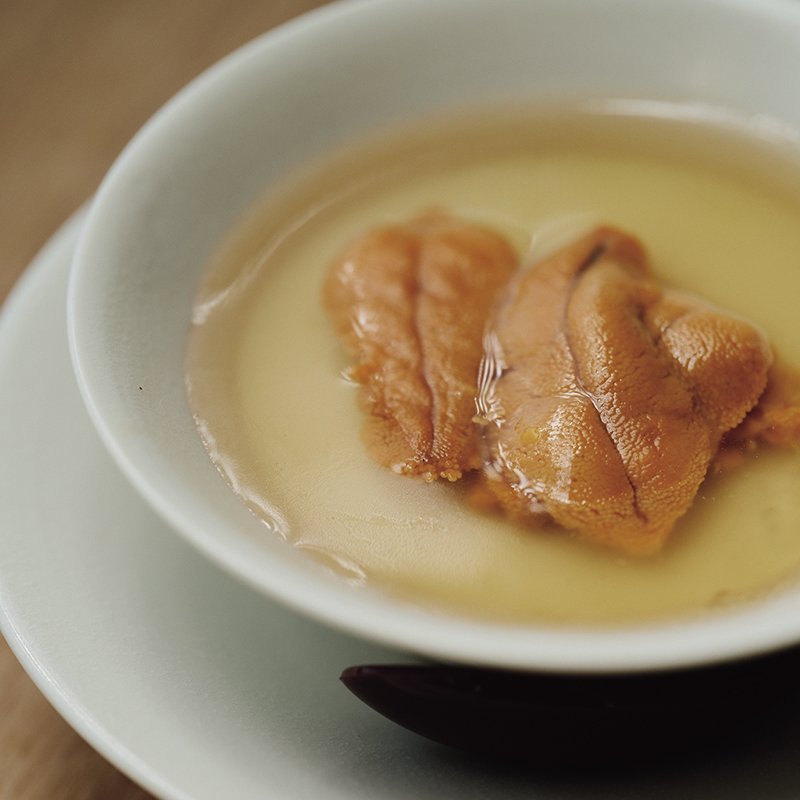
Red sea urchin chawanmushi (savory egg custard)
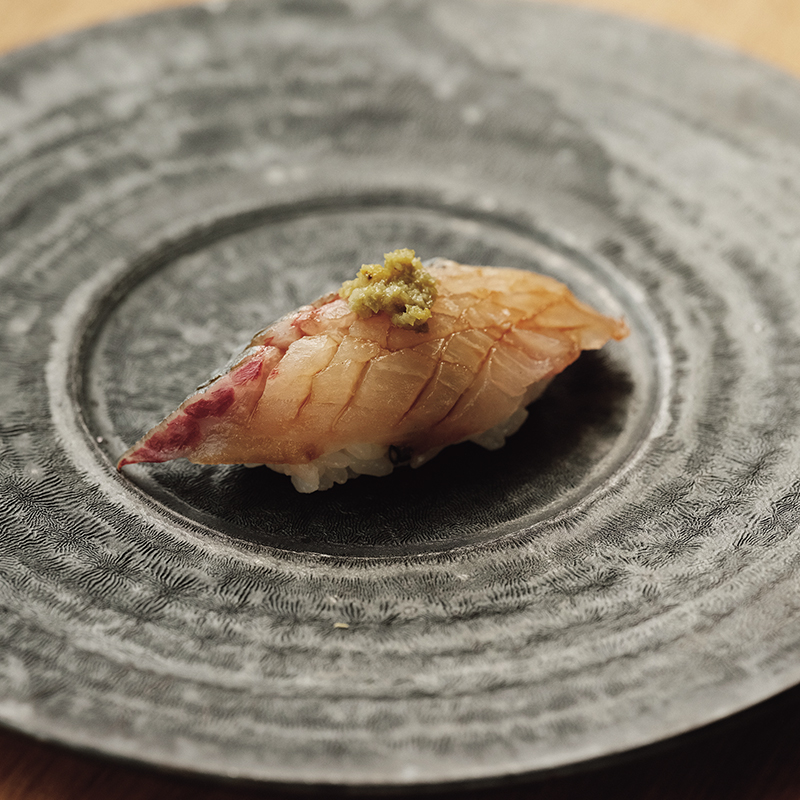
Striped jack nigiri
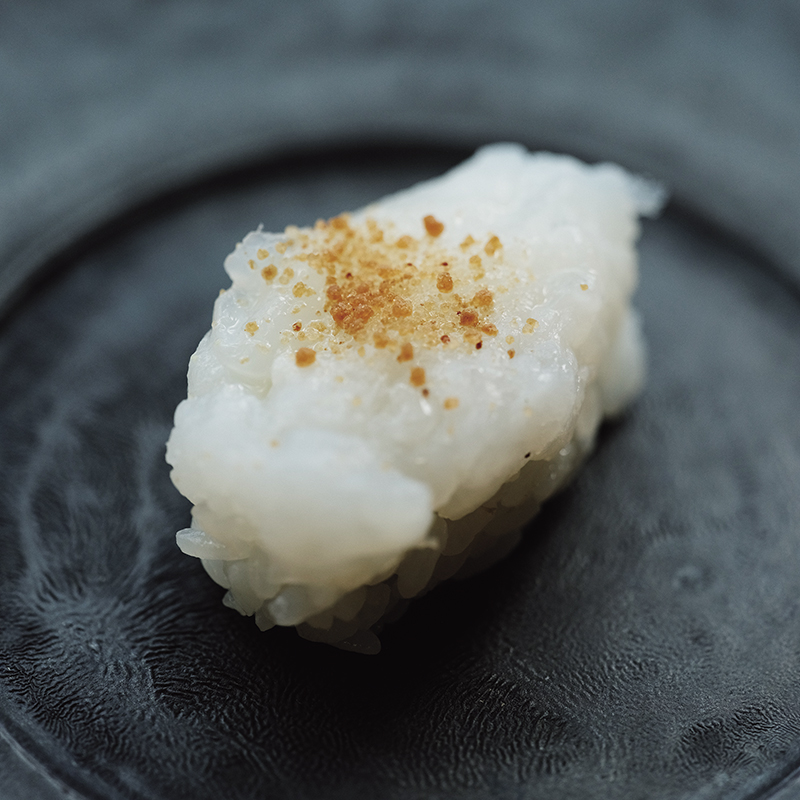
Squid nigiri (topped with uni salt)
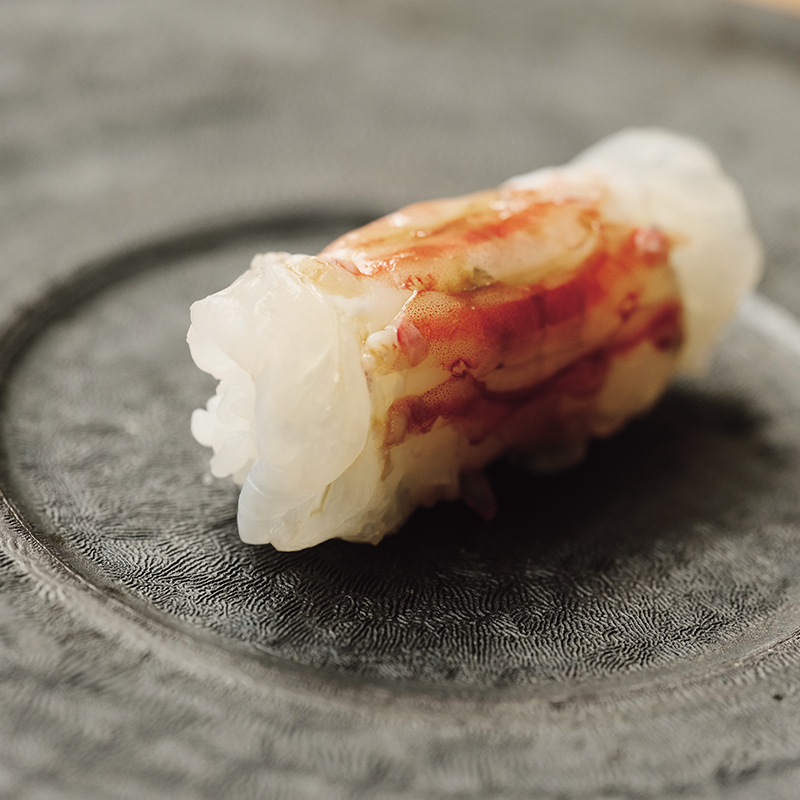
Japanese tiger prawn nigiri
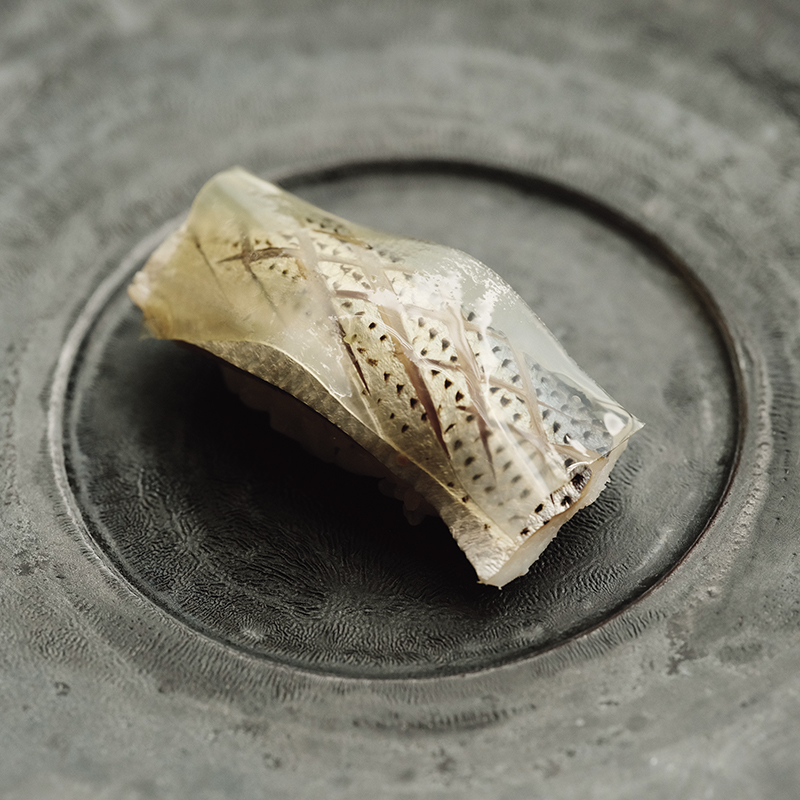
Gizzard shad nigiri
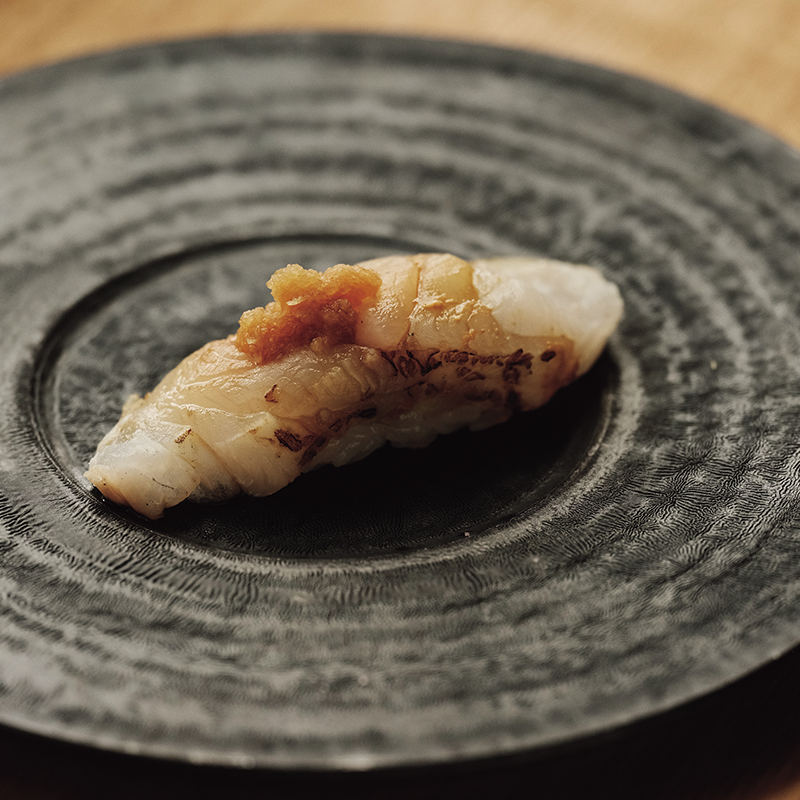
Longtooth grouper nigiri