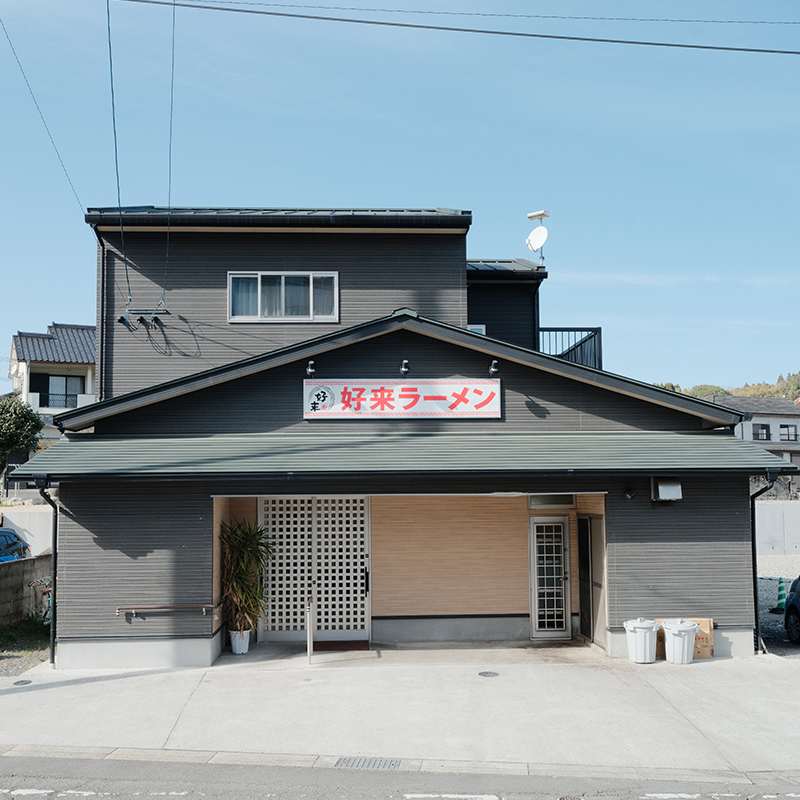



Ramen lovers gather not only from within Kumamoto Prefecture, but also from all over Japan.
Do you know about the “black ramen” of Hitoyoshi?
Stepping through the noren curtain, there was a father-and-son team of shop owners who love ramen and never hesitate to take on challenges to make it delicious.
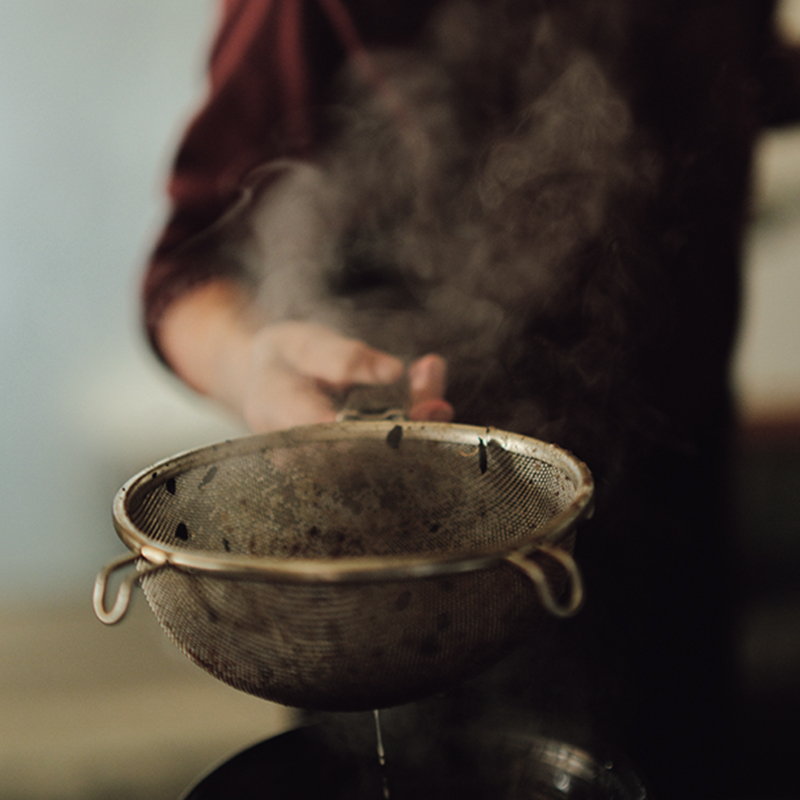
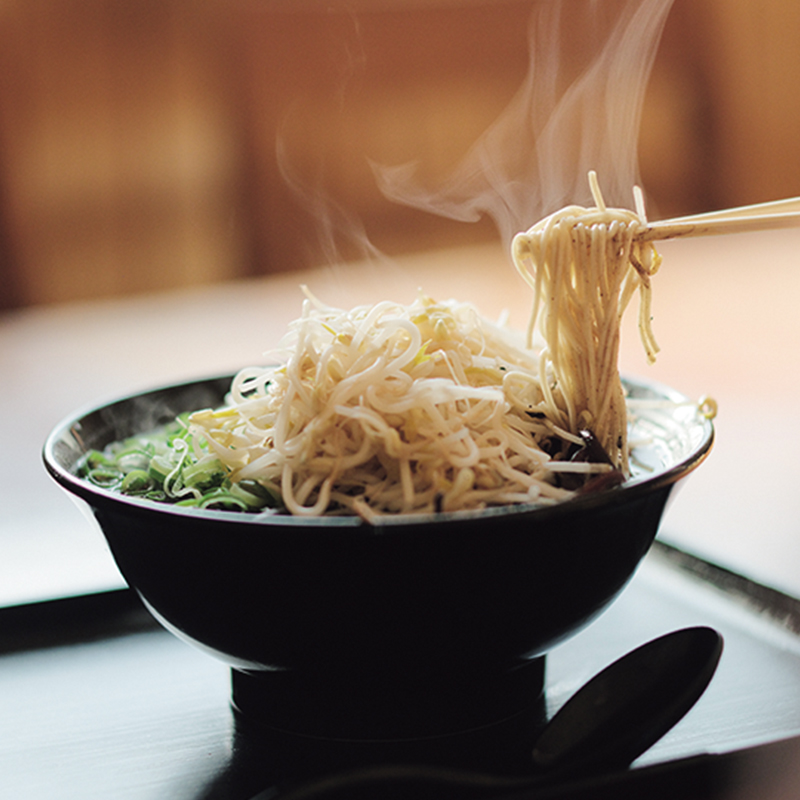
When he enters the kitchen, his gentle face turns into that of a craftsman. He creates a special bowl for his customers.
That has been Mr. Takeshi’s daily routine for 65 years.
A living legend is right here.
The name of a shop that frequently reaches my ears, rumored as a famous establishment in Hitoyoshi. That is “Haorai.” It is not a restaurant for eel or sweetfish (ayu), but for ramen. Among the voices of recommendation, some said, “It is packed with the goodness of Hitoyoshi.” As an author who became a fan of Hitoyoshi through the anime Natsume’s Book of Friends, I went to see and taste it for myself.
Upon arriving and stepping out of the car, the savory aroma of garlic reaching all the way to the outdoor parking lot injects me with energy even before taking a bite. Entering the shop, the condensed aroma of tonkotsu ramen and the full-of-energy father-and-son owners welcomed me with smiles.
The shop is run by the second-generation owner, Takeshi Yoshimura, and his son, Masaki, the third-generation owner. With the two of them casually saying, “Please ask us anything about our ramen,” I decided to first learn about the shop’s history. What surprised me was that Mr. Takeshi has stood in the kitchen and served ramen for over 65 years, starting from the shop’s second year of operation. The history of Haorai Ramen was, in other words,Mr. Takeshi’s life itself.
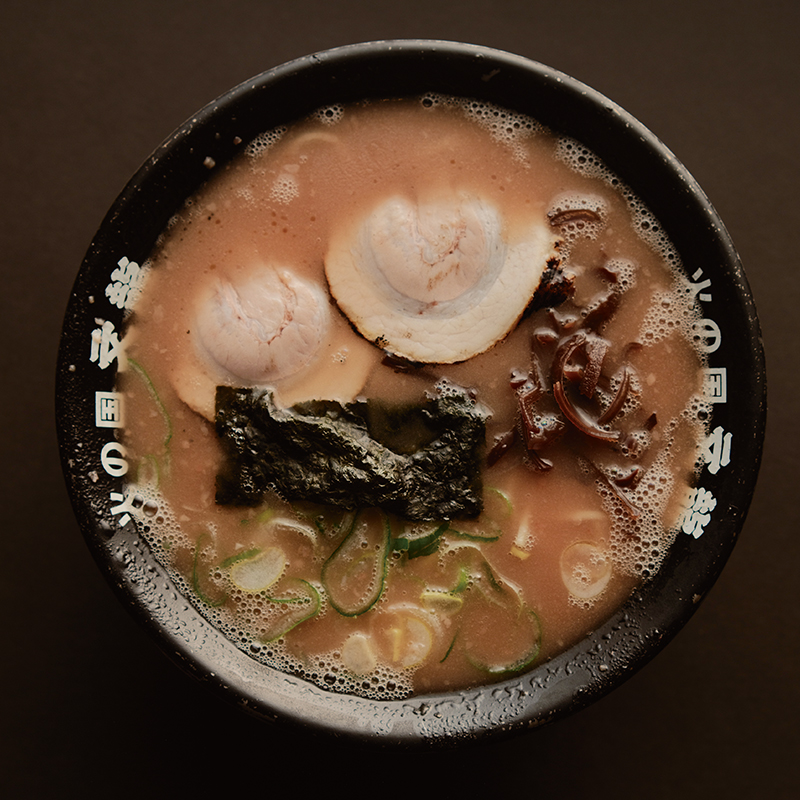
“Ma-yu (garlic oil), which is a characteristic feature of Kumamoto ramen. In the past, that oil was brown at every shop. I wonder if our shop was the first to make black ma-yu?” Ma-yu, which is made by frying garlic, darkens as the frying time increases. However, if you fry it too much, the risk of burning it increases. When I asked Mr. Takeshi why he was so particular about the black color, a simple answer came back. “I thought the black color would have a stronger impact.”
The black ma-yu started from Mr. Takeshi’s curiosity. Frying it gently over low heat until just before it burns is a difficult balance, and it seems those early days were filled with trial and error. The blackness and savory aroma, which reportedly took several years to achieve a satisfying result, influenced various other shops and have now become the standard for ma-yu. However, Mr. Takeshi does not stop here. “When I added sesame oil to bring out more aroma, it became even more delicious. Sesame oil is expensive, so while considering the cost, I hope I can keep doing it.”
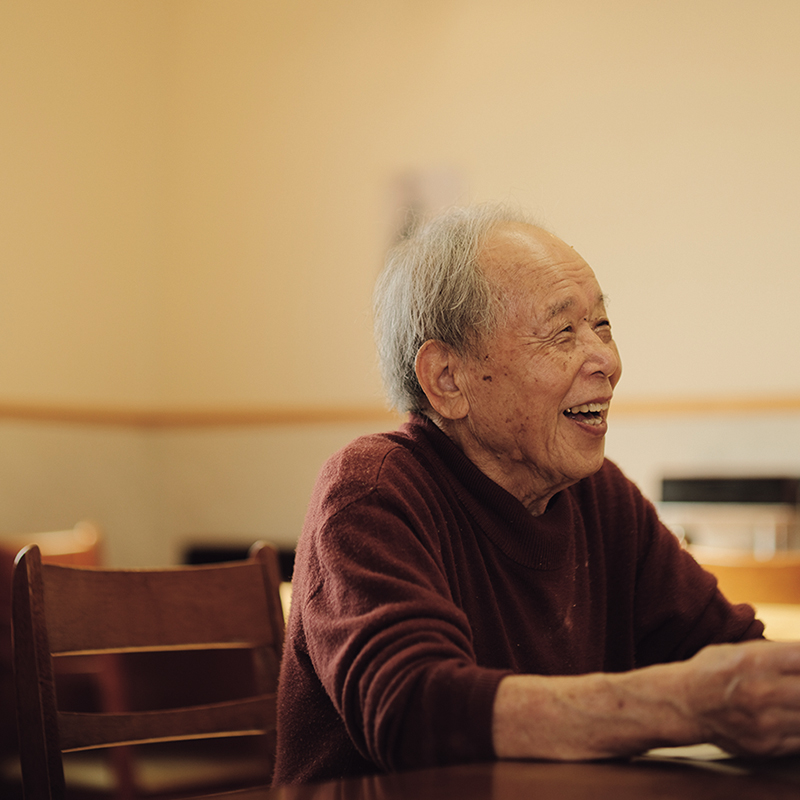
Inside Mr. Takeshi’s head, the pursuit of new ramen never ends. It seems there was even a period when he wanted to make “green ramen” a reality.
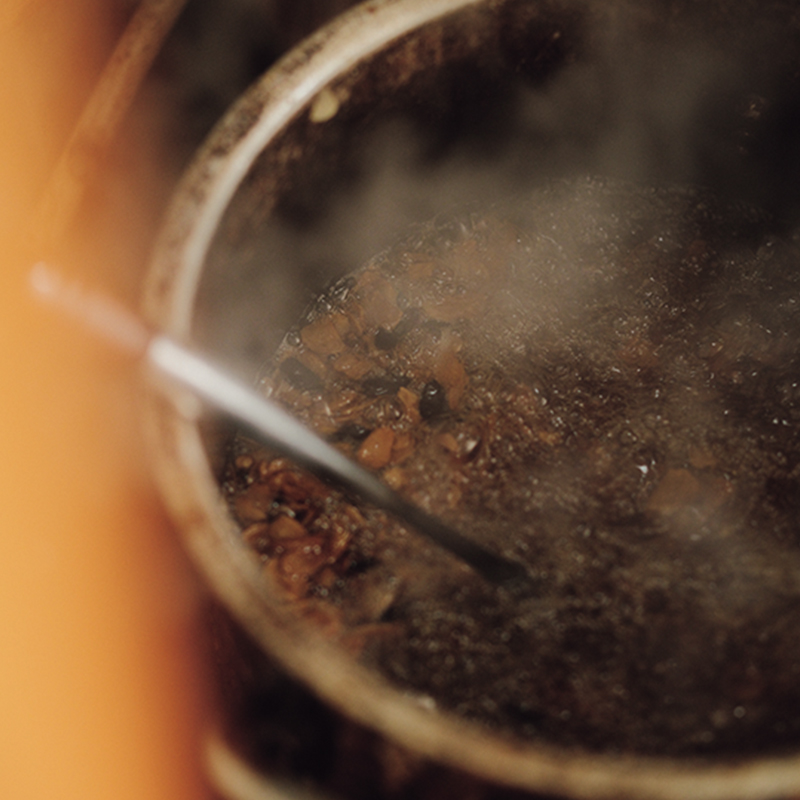
The aroma of garlic overflowing from the pot.
From here, it is fried even more slowly and thoroughly.
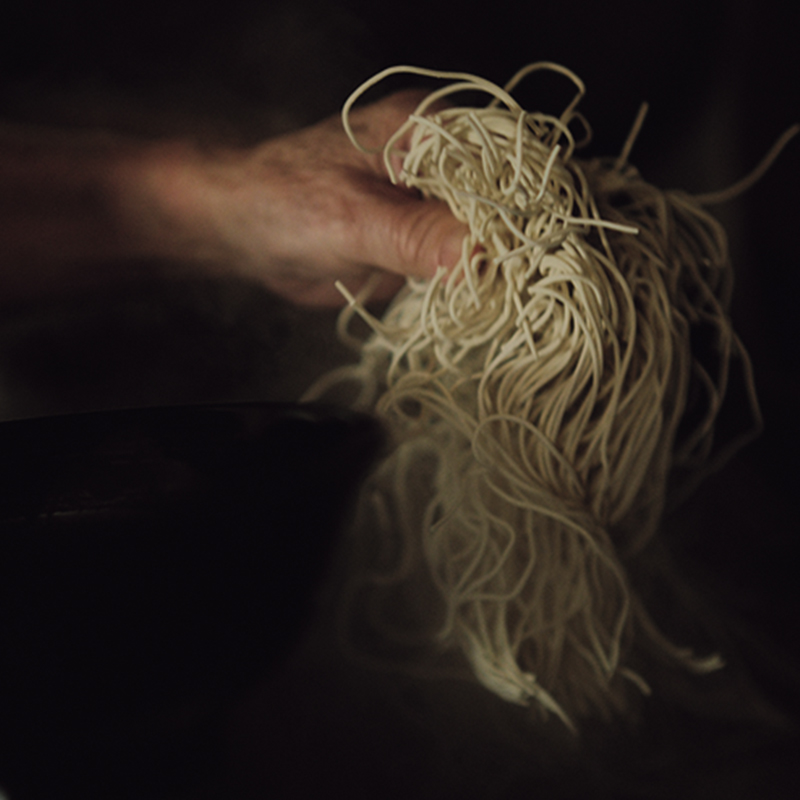
The volume overflowing from the hands even before being boiled.
To think that this is a single serving.
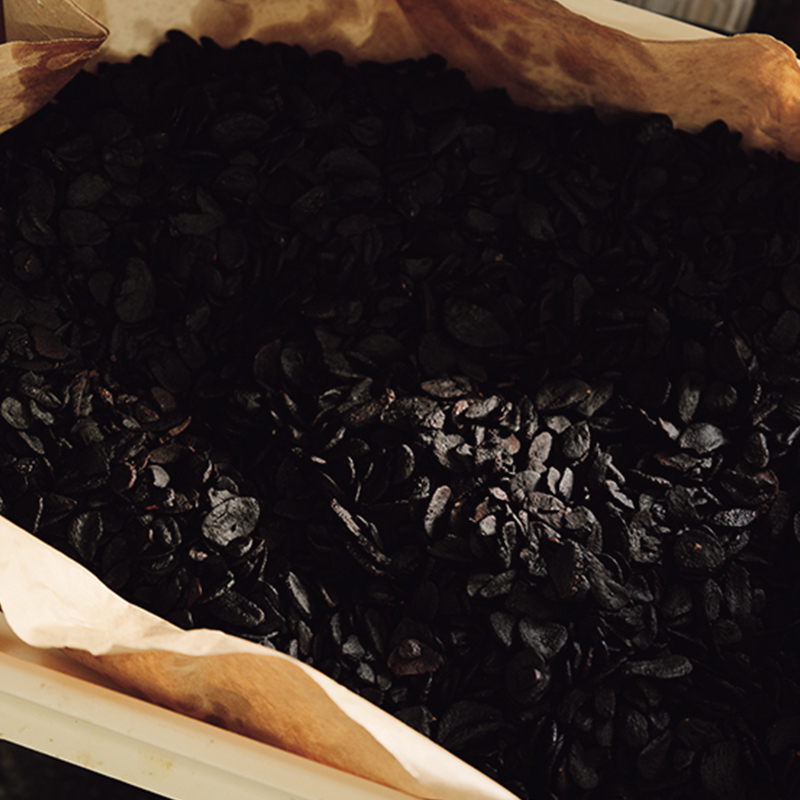
Fried garlic. The fine line between bitterness and deliciousness is a world known only to a connoisseur.
The iron pot that
deepens the flavor of the soup.
As is typical of Kumamoto ramen, the soup is tonkotsu. Just as I was thinking that the soup, too, must have a flavor unique to a famous shop with a long history, Mr. Takeshi offered a fascinating remark. “The one doing the most work in this shop might be the iron pot cooking the soup.” Pointing to the large pot that has been continually used at Haorai, Mr. Takeshi went on to say: “You see, from the iron pot, a very slight amount of iron dissolves into the soup as richness and depth. With a stockpot made of anything other than iron, that does not happen. This difference is something that the people eating can feel.”
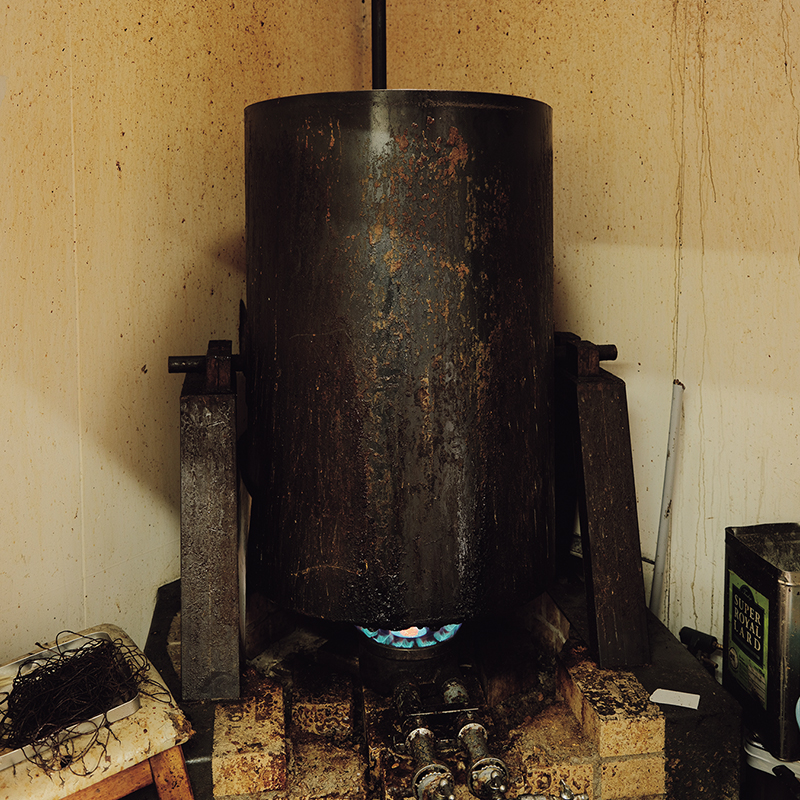
The iron pot placed in a corner of the kitchen.
“Just a single tool, just the water, and the flavor becomes completely different,” says Mr. Takeshi.
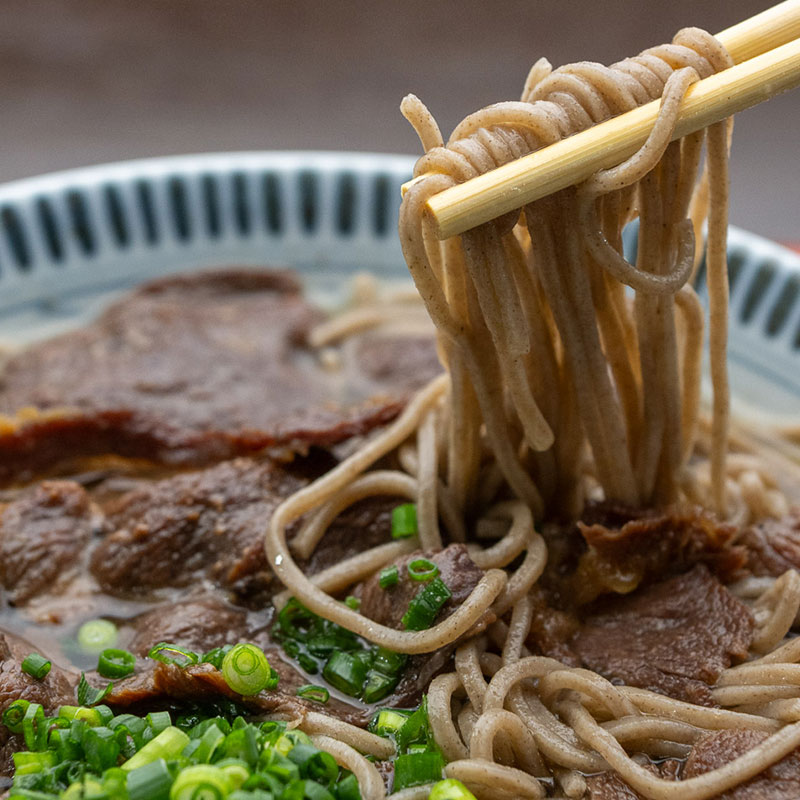
Mr. Takeshi’s dedication is also evident in the noodles. All of the noodles are homemade, crafted using a noodle-making machine inside the kitchen. “Before this shop was established, I worked at a noodle-making company. Because of that, I happened to have the know-how for noodle making. As for the noodle-making machine, someone from the company gave it to me when I came to help out at the shop.” Mr. Takeshi’s particular commitment to the noodles is making them with a round cross-section, rather than a square cross-section. By doing this, it reportedly gives them a springier texture and allows the soup to cling to them better.
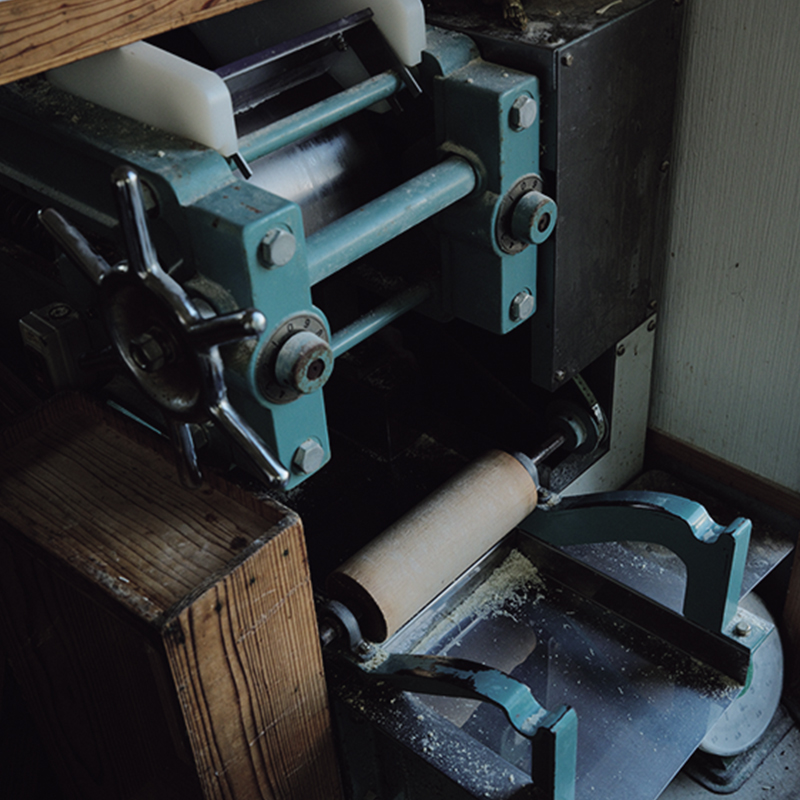
The noodle-making machine newly acquired in the wake of the flood disaster.
It creates a strong chewiness.
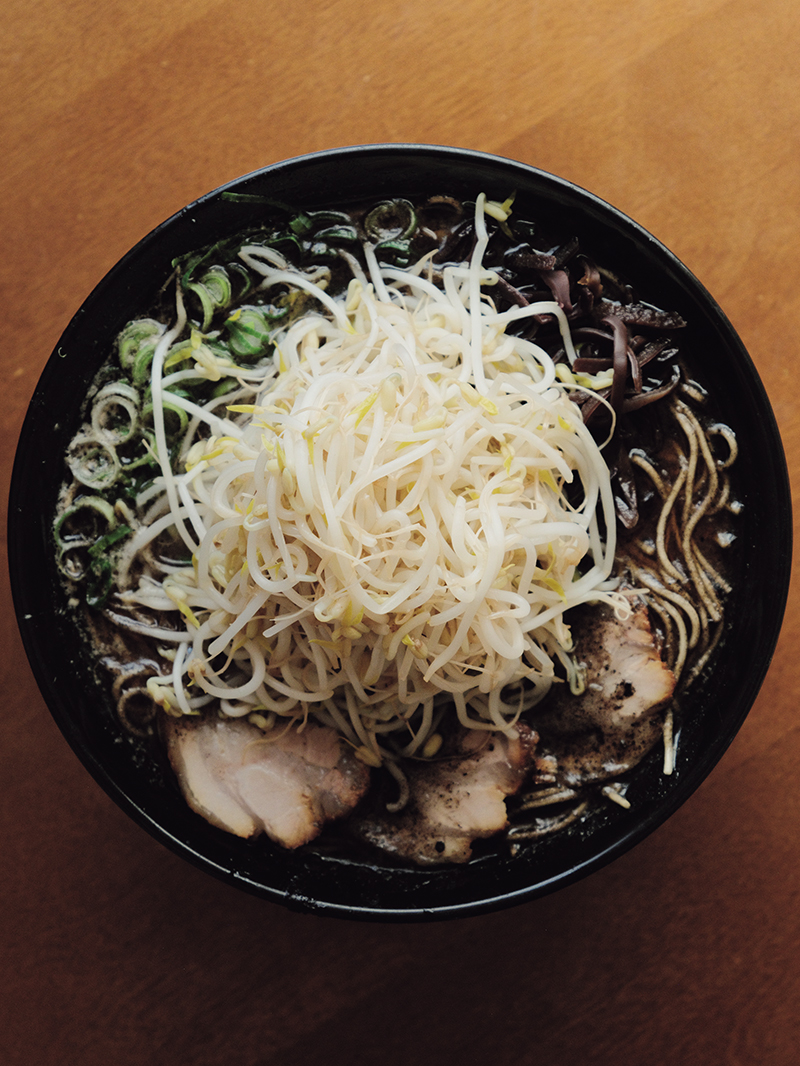
Speaking of Haorai’s characteristics, the eye-catching toppings cannot be missed either. The bean sprouts piled high in the center captivate those who eat it with a bright color that contrasts with the black soup, and a texture different from the noodles.
“It has been a topping since the time of our founding, but at one point, when we made the size of the bowl larger, it was sometimes perceived as though the amount of bean sprouts had decreased compared to before. Since we maintained the sense of volume so as not to disappoint our customers, as a result, it became an even larger portion.” Putting the people eating first, Haorai’s “delicious impact”—thoroughly thought out so that customers would be invariably satisfied no matter when they came to eat—that was the bean sprouts.
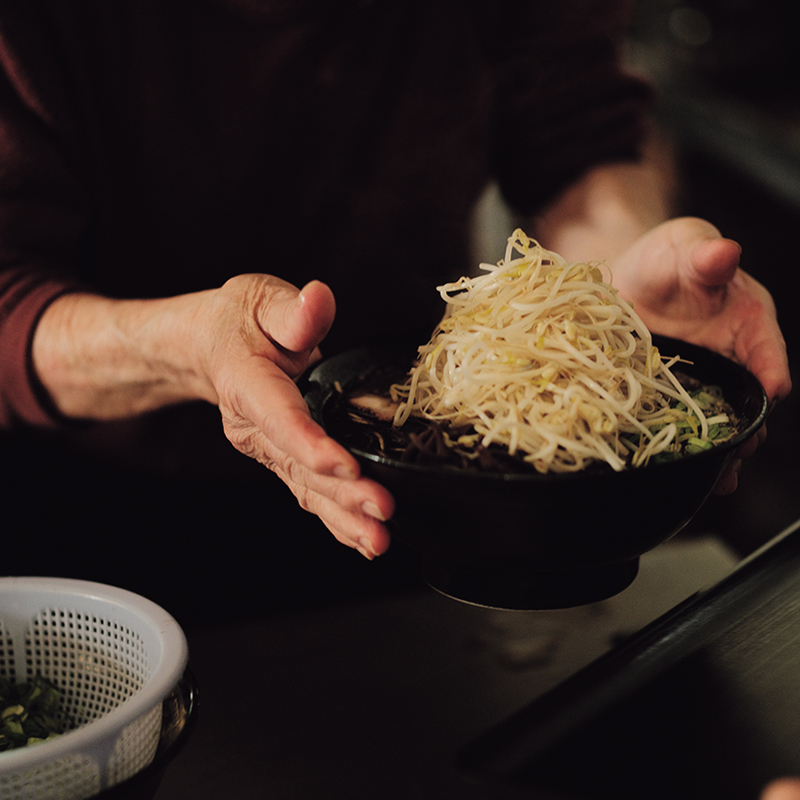
Hidden beneath the bean sprouts, wood ear mushrooms and green onions are also plentiful. I can feel the sincerity of the maker.
“If they are raw, an unpleasant odor comes out, and if they are overboiled, they lose their texture. Furthermore, if the moisture from the bean sprouts leaks out, it blurs the flavor of the soup. There were many challenges.” By passing them through a large amount of hot water for just an instant, they succeeded in removing the unpleasant odor of the bean sprouts while retaining a crisp texture. They were also able to keep the moisture inside the bean sprouts, making it a topping that can be enjoyed even more deliciously. Elevating the visual impact into deliciousness—. The true essence of Haorai Ramen was fully demonstrated.
A flavor unique to Hitoyoshi, with its rich nature.
The moment the clean-toned tonkotsu soup is draped in the black ma-yu, an even more savory aroma filled the kitchen. Finally, fresh bean sprouts are piled on top, and it is complete. I want to quickly taste the numerous details of dedication packed into this single bowl. Now, time for the actual tasting—. First, what surprised me was the large amount of noodles I lifted up. An astonishing volume of as much as 250 grams. It was so overly generous that my movements stopped for a moment. Now, as I try the soup and noodles while taking in the pleasant aroma of the black ma-yu, the tonkotsu soup—which offers a full-bodied flavor without any peculiar taste—and the ma-yu, packed with garlic flavor, spread throughout my mouth along with the light-textured noodles. Despite being a combination of strong personalities, I was moved by how easy it was to eat, allowing me to move on to the next bite with a refreshed feeling.
What surprised me even further was the strength of the flavor of the bean sprouts. Each individual soybean sprout is large, possessing a flavor that is not overpowered by the soup. “Only bean sprouts from Hitoyoshi can produce this flavor,” Masaki-san told me. Haorai’s bean sprouts were an ingredient unique to the high-quality environment of Hitoyoshi, starting with the clean water flowing through the Kuma River.
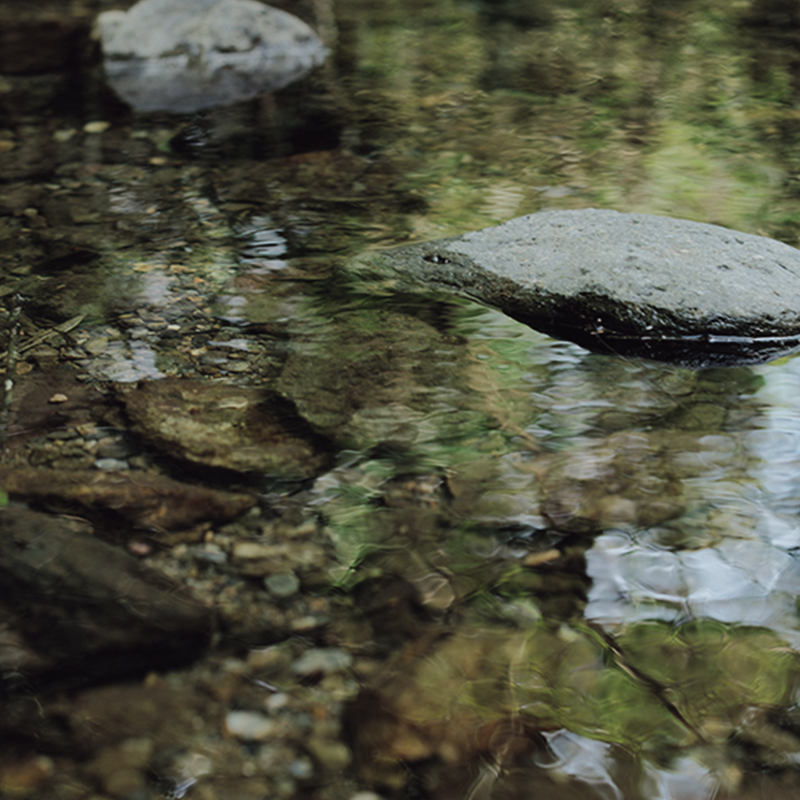
Because it is the beautiful water of Hitoyoshi, the flavor of Haorai comes out.
The blessings of nature are also the secret to being loved for many years.
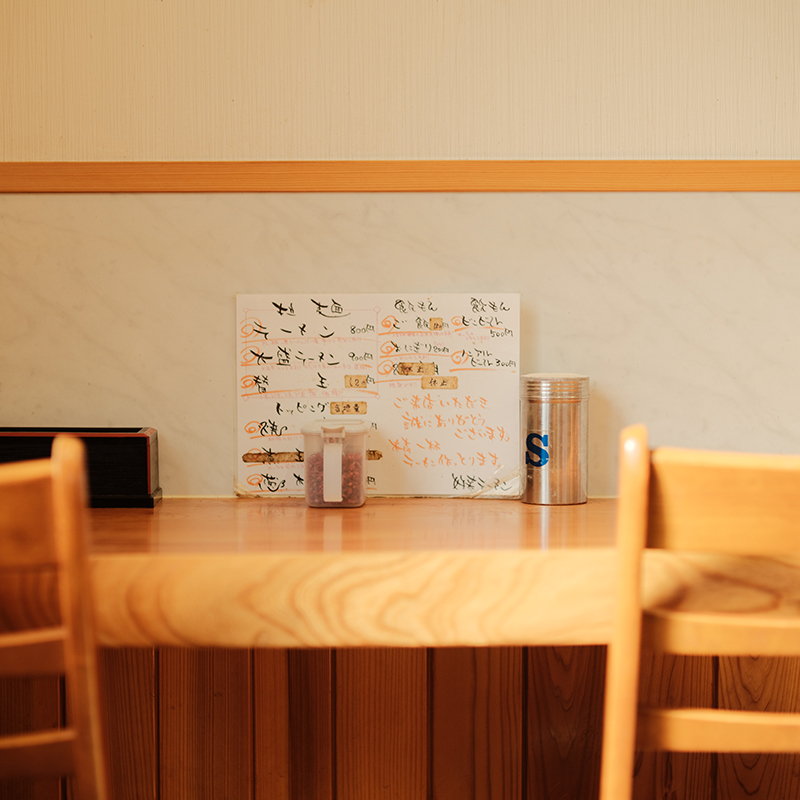
A masterpiece of a bowl where, as you continue to eat, further dedication comes into view. To think that you can enjoy this for 800 yen is a surprise. “We are planning a renovation this summer. For that reason, the price might go up, but even so, we want to keep it as affordable as possible and have many people eat it.” Recently, female customers are also increasing. When you visit Hitoyoshi, why not go to eat at Haorai?
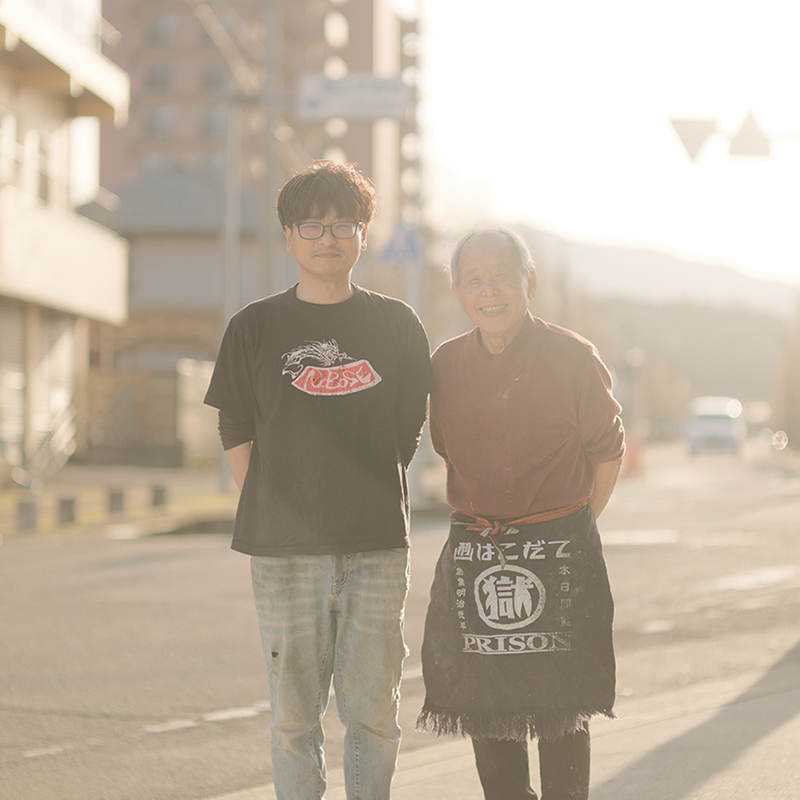
Mr. Takeshi (right) and Mr. Masaki (left).
What captures the hearts of repeat customers is not only the flavor of the ramen, but also the gentle personalities of the two.
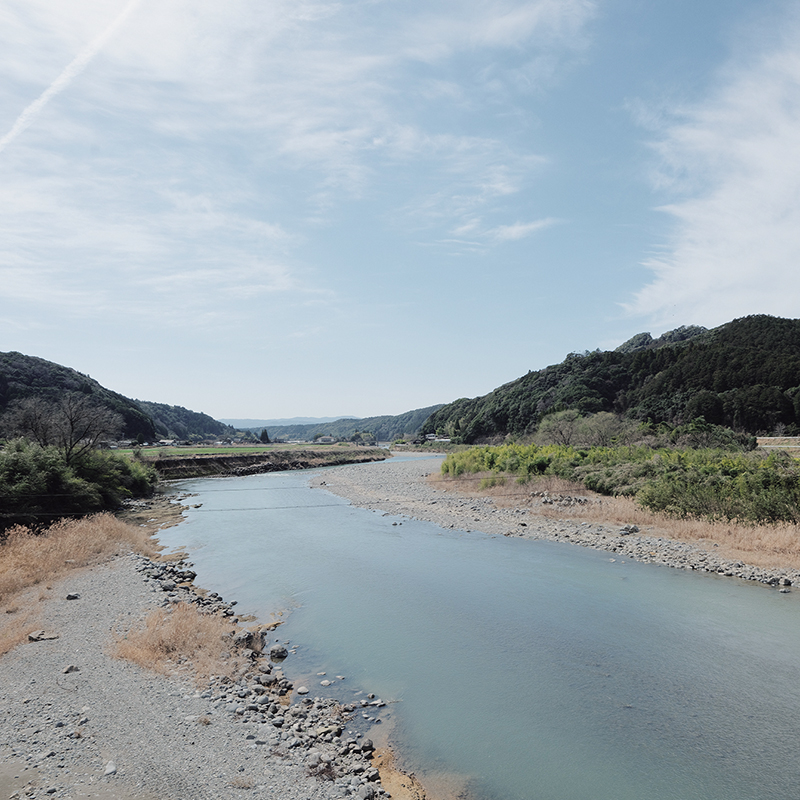
The Kuma River, the symbol of Hitoyoshi. Even the “raging river” was calm on this day.
The current is swift, and it is called one of the three most rapid rivers in Japan.