


By horsemeat experts,
additive-free creative cuisine.
Here, in two different ways,
you can enjoy horsemeat.
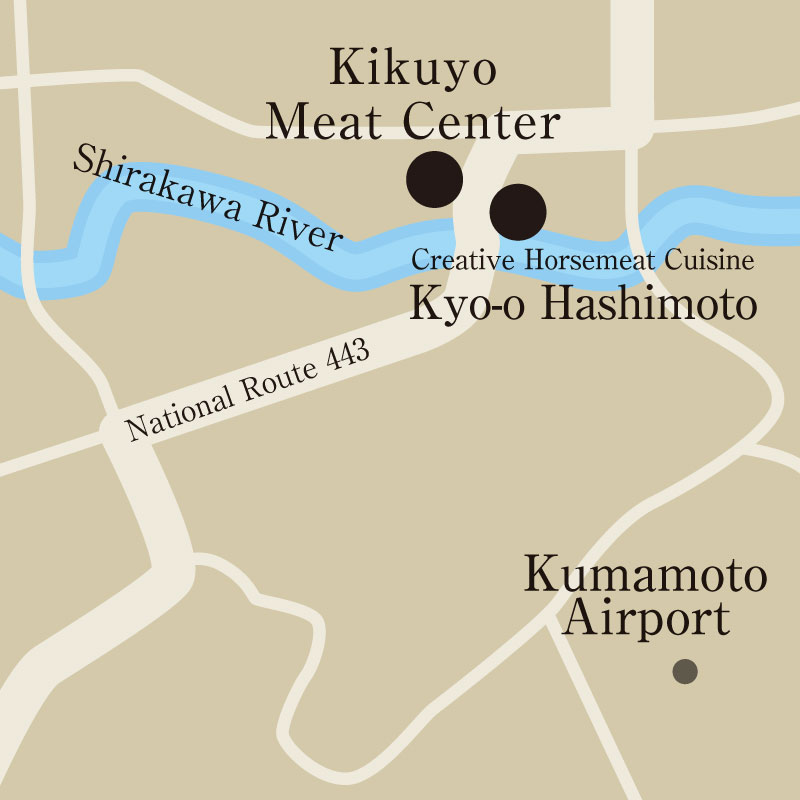
If you drive for about 5 minutes from Aso Kumamoto Airport toward Ozu, you will find Kikuyo Meat Center, a long-established shop specializing in horsemeat with a well-earned reputation for freshness.
In 2018, the shop opened the restaurant “Kyo-o Hashimoto.”
Eating additive-free creative cuisine there and taking home rare, delicious horsemeat sashimi—available precisely because it is a specialty shop—as a souvenir: this is the recommended way to enjoy Kumamoto’s famous horsemeat.
Drawing attention due to TSMC’s expansion,
a famous shop in Kikuyo Town.
“We are a horsemeat specialty shop. We handle everything consistently, from procurement and processing to sales. Wanting to serve delicious horsemeat dishes as ‘horsemeat experts,’ we opened a directly managed restaurant five years ago,” says Katsuhiko Ushijima, manager of “Kyo-o Hashimoto.” He manages the restaurant while going back and forth to “Kikuyo Meat Center,” which sells souvenirs just a one-minute walk away.
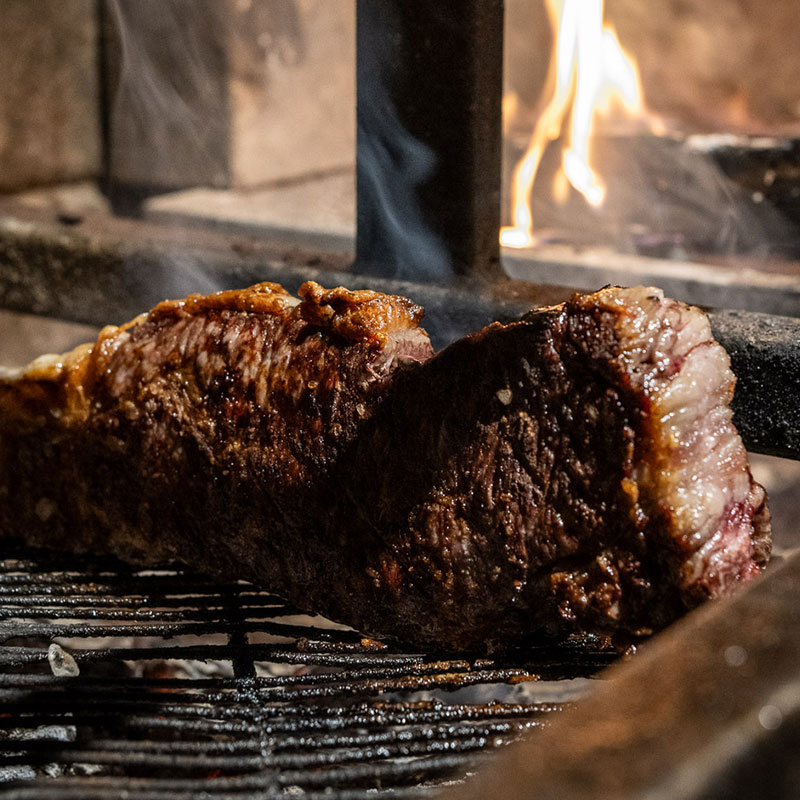
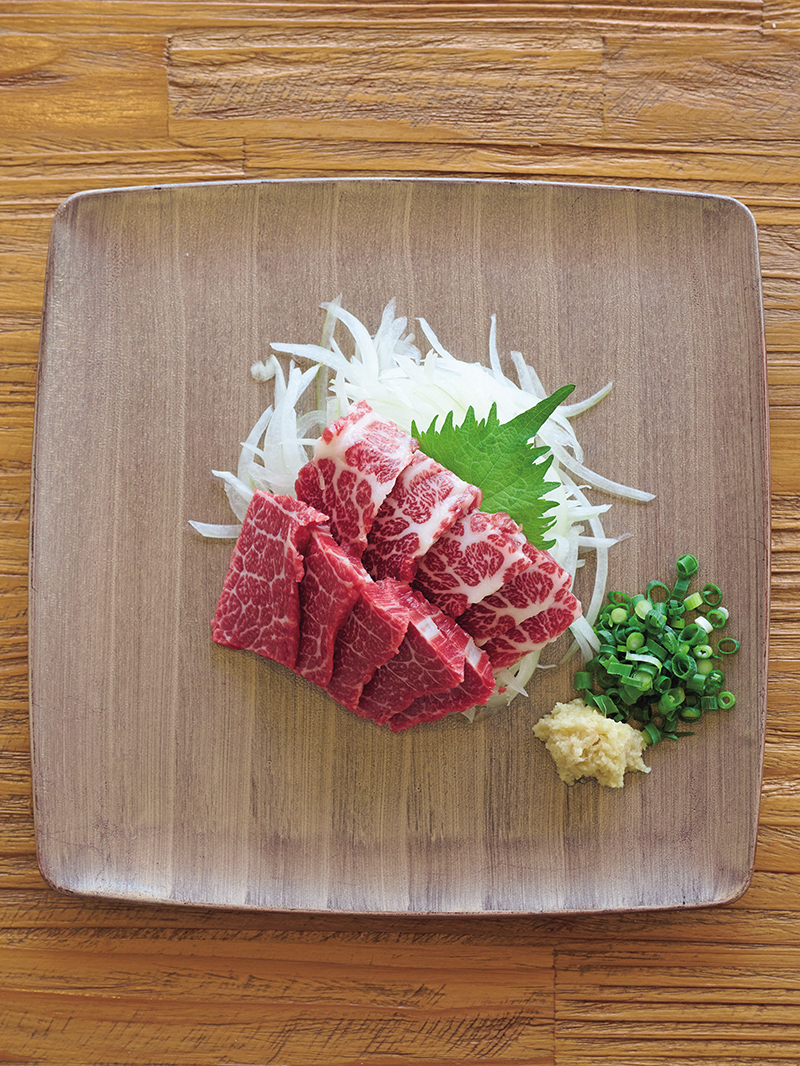
“For fresh, high-quality horsemeat sashimi, I recommend enjoying it with just salt.” True to his words, the horsemeat sashimi served with a touch of salt was a delightful experience—melting effortlessly into the body with all its freshness intact. In the past, back when they also butchered horsemeat at the shop, they reportedly ate horsemeat sprinkled with salt during breaks from working through the night. Today, they offer that very same delicious taste to their customers.
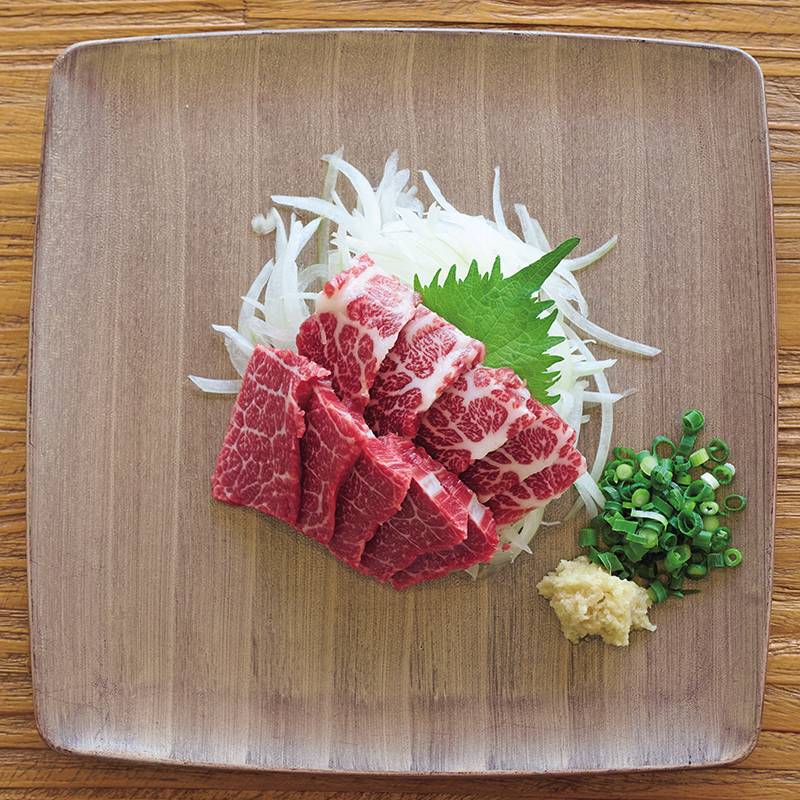
“Tokusen Basashi No. 1” (Specially Selected Horsemeat Sashimi) – 5,500 yen (tax included).
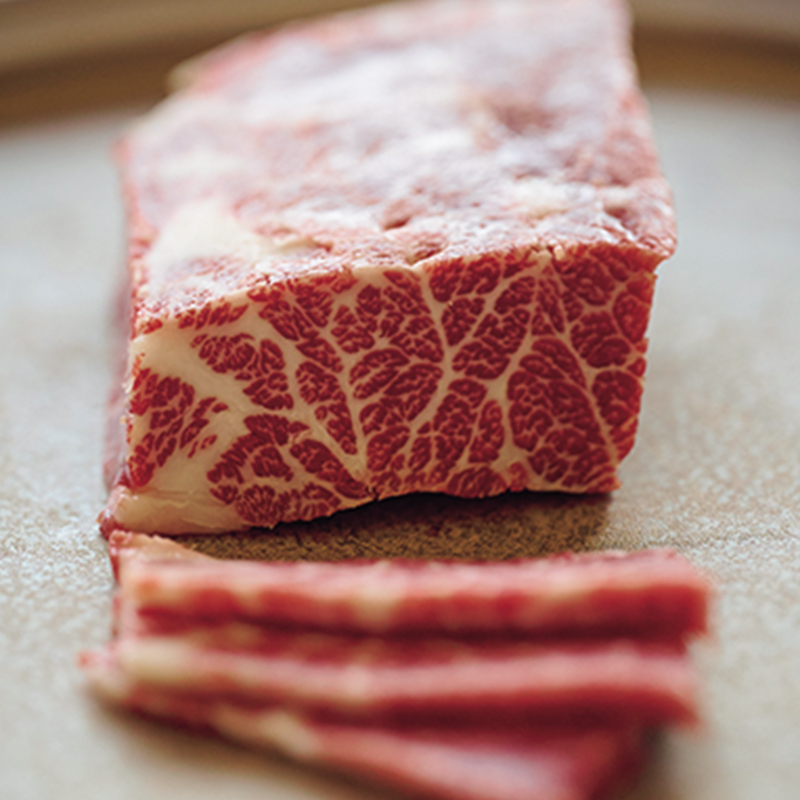
According to Katsuhiko Ushijima, manager of “Kyo-o Hashimoto,” it is so rare that “out of the 100 kg of meat yielded from a single horse, you can barely get 2 kg, if that.”
At this restaurant, it is enjoyed with salt.
Glancing over the menu at “Kyo-o Hashimoto,” what truly catches your eye is the pricing. For example, the popular “Seared Horsemeat Rice Box Course” costs a remarkable 2,500 yen (tax included). Horsemeat is used not only in the main rice box, but also in the side dish, clear soup, and chawanmushi (savory egg custard). Even with dessert included, it comes at this price.
“By purchasing the equivalent of ‘one whole horse,’ we keep procurement costs down and serve our dishes at this price. We used to buy a single whole horse, but the quality varied depending on the cut. Therefore, we now carefully evaluate each cut across multiple horses based on fat, color, and marbling, selecting them to assemble the equivalent of one horse. Through procurement that only a specialty shop can pull off, we hope to extend our hospitality in terms of pricing as well.”
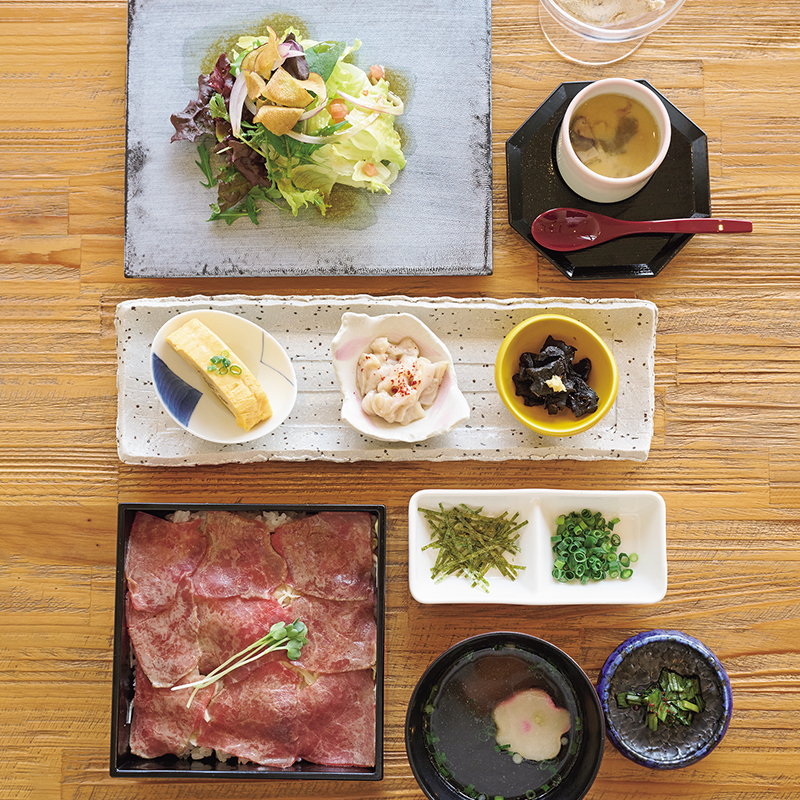
The most popular choice during lunchtime is the “Seared Horsemeat Rice Box Course.”
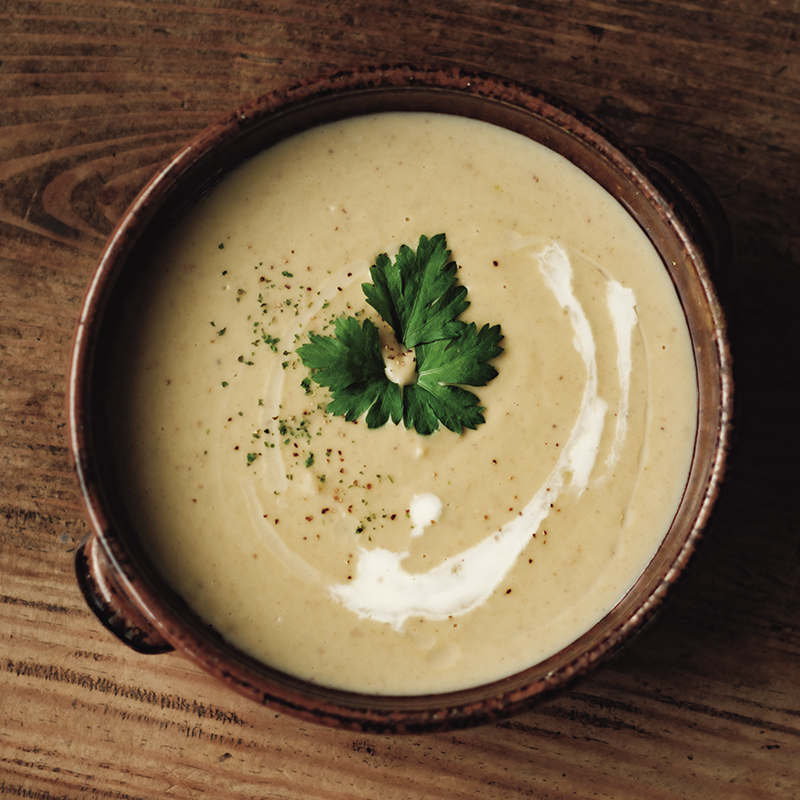
It comes complete with three small side dishes (sweet soy-simmered horse lung, blanched offal tossed with wasabi, and Japanese rolled omelet with minced horsemeat), salad, chawanmushi (savory egg custard) containing horsemeat, the seared horsemeat rice box (using ichibo [top sirloin cap] meat), clear soup with horse sagari [hanging tender], and dessert—an astonishingly great value at 2,500 yen (tax included).
Passing on the food culture of horsemeat through additive-free cooking.
That is the mission of “Kyo-o Hashimoto.”
The aforementioned “Seared Horsemeat Rice Box Course” is available exclusively during lunchtime. In addition, a total of four elaborate horsemeat-centric courses are offered, including simmered horsemeat cutlet, horsemeat rice porridge (zosui), and horsemeat and Kikuyo vegetables stir-fried with aromatic sauce. This extensive lunch menu is also a major reason for opening the restaurant in this location.
“‘It would be wonderful if there were a place near the airport where we could savor authentic Kumamoto-style horsemeat dishes at lunch.’ I often heard comments like that at ‘Kikuyo Meat Center.’ In response, we decided to open a directly managed restaurant, hoping that we, as horsemeat experts, could personally serve dishes that convey Kumamoto’s food culture to visiting tourists.”
Along with promoting horsemeat food culture, another key focus for Mr. Ushijima is additive-free cooking. Standing in the kitchen himself, he spares no time or effort in achieving this.
“I have children myself, so I am doubly conscious of protecting and nurturing taste buds through additive-free food. Once, a family who dined here told me, ‘My child will actually eat the horsemeat hamburger steak here.’ That made me truly happy.
Horsemeat is an ingredient rich in iron and protein, and since sharing recipes helps spread both horsemeat culture and additive-free cooking, I make them available so people can prepare them at home as well.”
Today, Kikuyo Town, home to “Kyo-o Hashimoto,” is bustling with activity following the opening of a plant in February by major Taiwanese semiconductor manufacturer TSMC (Taiwan Semiconductor Manufacturing Company).
“With TSMC’s expansion and the settling down of the pandemic, the number of guests visiting us from overseas has grown. However, we will not change our menu. I believe visitors want to experience what is authentic to that country and local region, so we exclusively serve horsemeat dishes.”
The word kyo-o featured in the restaurant’s name refers to hospitality through food and drink. This hospitality of “Kyo-o Hashimoto” is something we hope you, too, will experience. How about stopping by on your way back from sightseeing in Kumamoto?
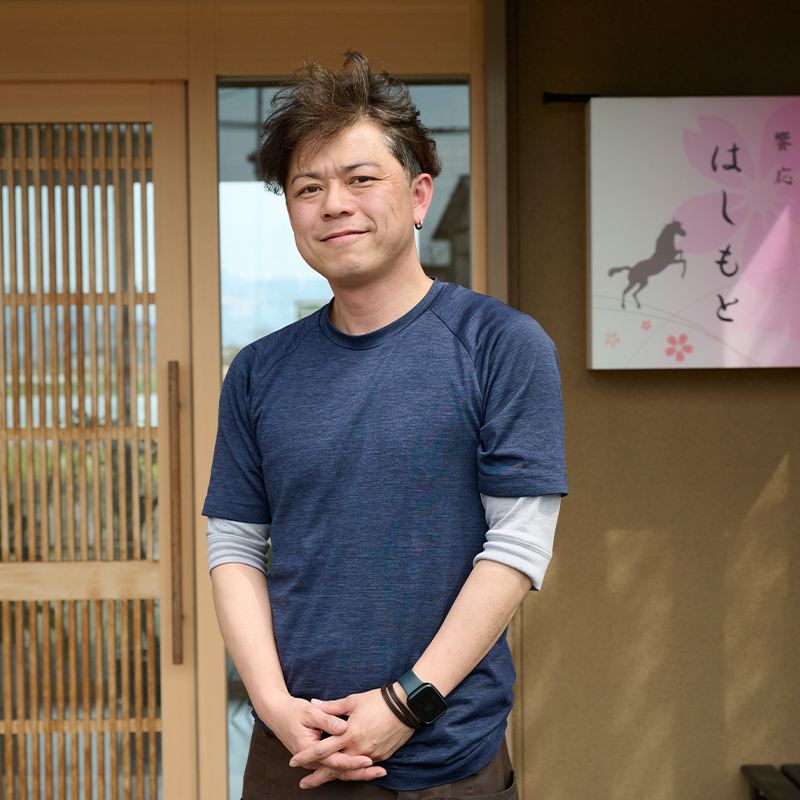
Katsuhiko Ushijima
Born in Fukuoka Prefecture. Nutritionist.
Prompted by the Great East Japan Earthquake, he relocated from Tokyo to his wife’s hometown of Kikuyo Town, Kumamoto Prefecture.
At “Kikuyo Meat Center,” a horsemeat specialty shop, he learned procurement and processing, honing his expertise as a horsemeat expert.
In addition to serving as the owner of the restaurant “Kyo-o Hashimoto,” he and his wife cook and sell food at cafes and food trucks to promote additive-free cooking.