


The area around Kumamoto Station has seen continuous progress with the reconstruction of the station building and the development of new commercial centres, triggered by the opening of the Shinkansen in 2011. Within this rapidly changing landscape, there is a long-established shop with a 69-year history that is dearly loved by both locals and tourists alike.
It is “Kumamoto Ramen Kokutei” (hereafter referred to as Kokutei).
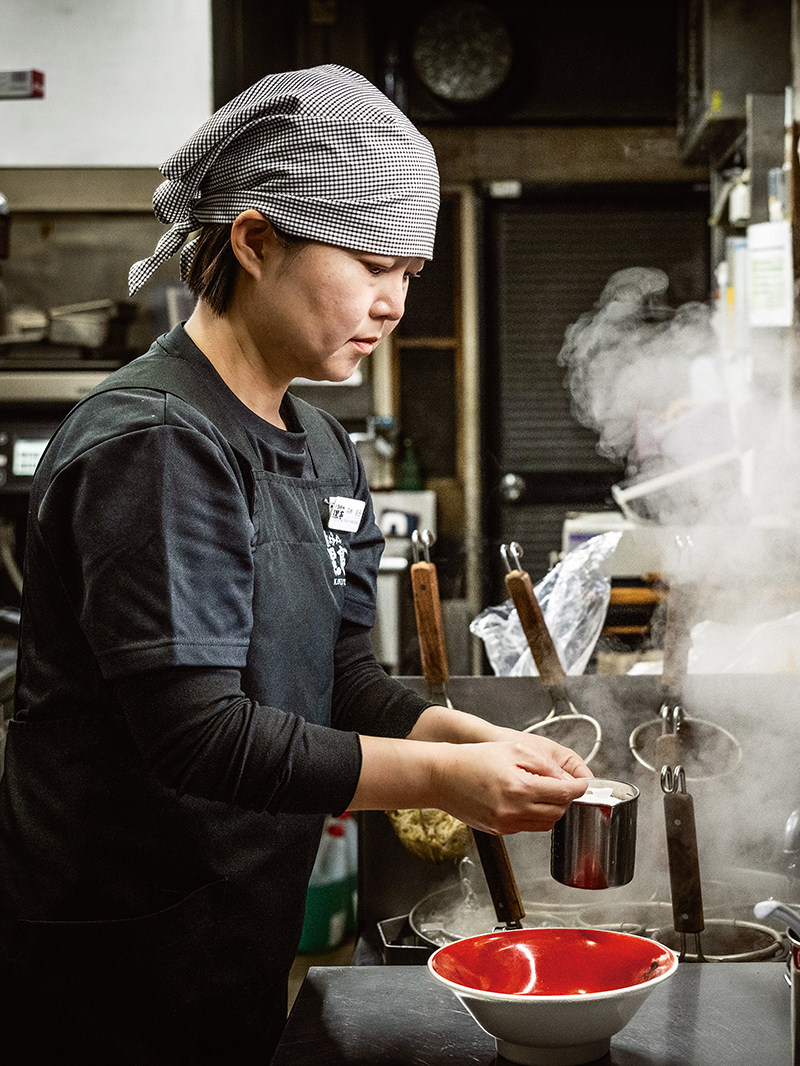
The very origins of Kumamoto ramen, which began with “Sankyu” in Tamana City, passed through “Komurasaki” and continue on to “Kokutei.” We asked Ms. Kyoko Hirabayashi (first photo), the granddaughter of the founder and the third-generation president, about its unique characteristics and history.
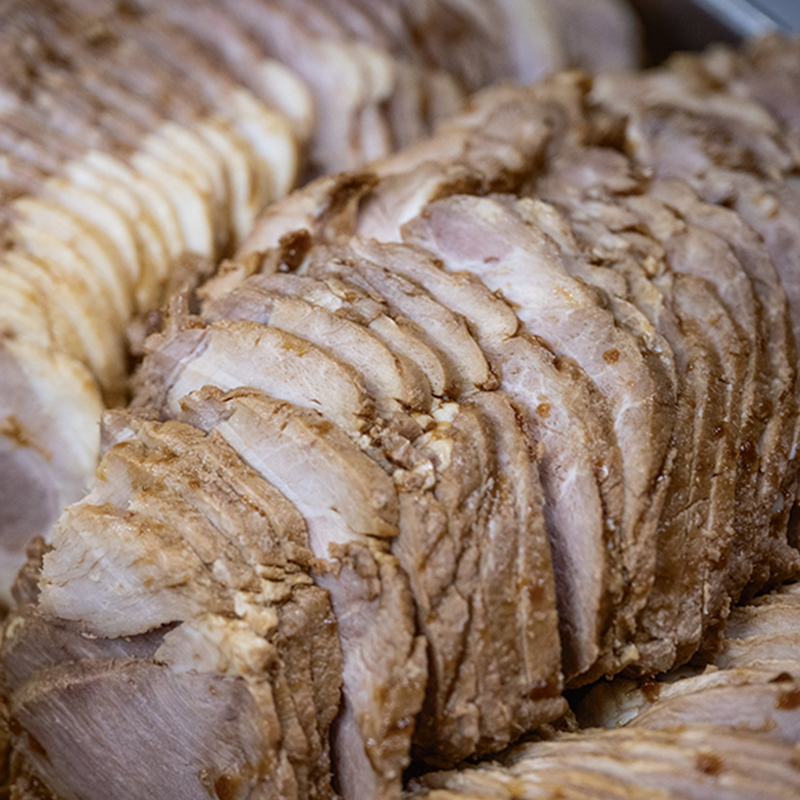
A secret sauce is used for the chashu pork.
It has a flavour-infused, juicy texture.
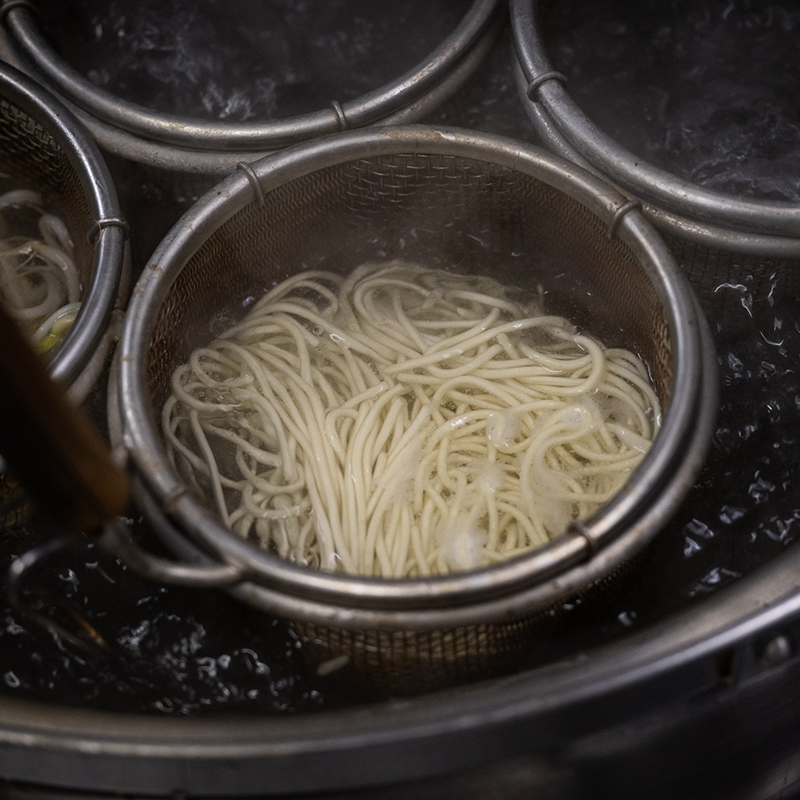
Medium-thick noodles with a silky texture and a chewy bite.
Their compatibility with the soup is also excellent.
The founders were
a married couple of painters.
In 1957 (Showa 32), the ones who founded Kokutei were the married couple, Mr. Takeyoshi and Mrs. Kinuko Hirabayashi. Until then, Mr. Takeyoshi had been active as a painter. Ms. Kyoko Hirabayashi, the granddaughter and third-generation president, recounts the circumstances of how Mr. Takeyoshi came to open the shop as follows:
“My grandfather was originally from Hitoyoshi in Kumamoto Prefecture. He moved to Manchuria during the Pacific War, and returned to Kumamoto after the war. At the time, the ramen shop he often frequented with his fellow painters was ‘Komurasaki’. It seems the first-generation owner, Mr. Yasutoshi Yamanaka, was supporting his artistic endeavours, and suggested to my grandfather, who could not make a living from painting alone, how about trying a ramen shop.”
“Komurasaki” is one of the representative long-established shops, opened by an owner who was influenced by “Sankyu” in Tamana City, the forefather of Kumamoto ramen. After training there, he became independent in 1957. He set up the shop in front of the Japanese National Railways (at the time) Kumamoto Station, where there was a bustling flow of people. The origin of the shop’s name is the colour of the paint that Mr. Takeyoshi liked to use. “In addition, it seems my grandmother also layered her hope that the management would go well and operate in the black,” (Ms. Kyoko).
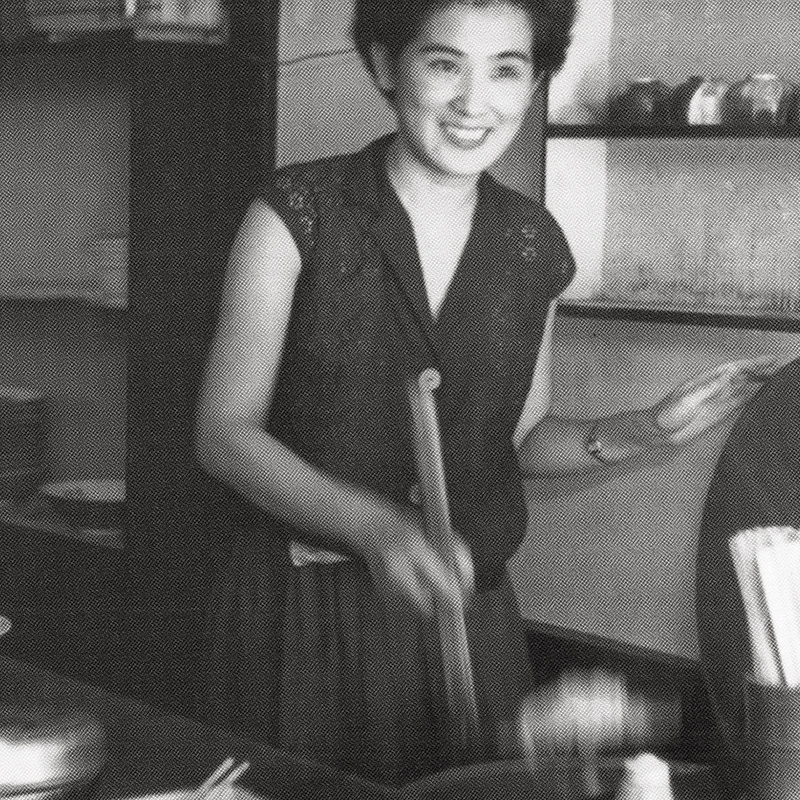
From 1970, when the first-generation president Mr. Takeyoshi suddenly passed away in a water-related accident, his wife Mrs. Kinuko managed the shop as the second generation. Ms. Kyoko, whose home was right next to the shop until she was in her third year of primary school, says she spent her time together with Mrs. Kinuko. “On days when school was closed, I would often bring ramen to our dining table at home and eat it. The staff members were kind, and whenever I had a fight with my mother, I would escape into the kitchen, and they would comfort me.”
When asked about Mrs. Kinuko’s situation at that time, Ms. Kyoko noted, “My impression is that she worked at the shop all day long. She would start preparing the soup from 6 a.m., and after the shop closed at 8:30 p.m., she would do the clearing up and preparation until late.” Even such a Kinuko fell ill just before turning 80.
What would happen to Kokutei if Mrs. Kinuko could no longer work like this? Ms. Kyoko, who was 26 at the time, felt anxious. And so, she made a certain decision.
“Originally, I was told by my grandmother, ‘You don’t need to take over the shop.’ However, I thought it would not be good for the staff members working there and the customers who love the shop if it were to disappear, so I decided to quit my job and take over. It seemed natural to me, as her granddaughter, to do so.”
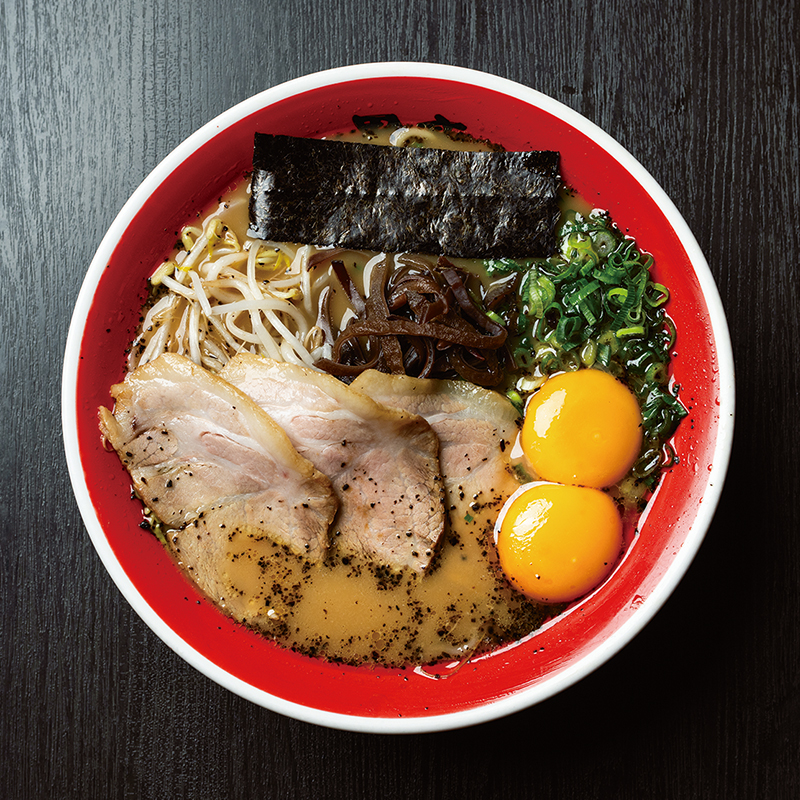
Ramen with Egg
1,200 yen (including tax)
A raw egg topping devised by the second-generation president. Its mellowness adds depth to the flavour.
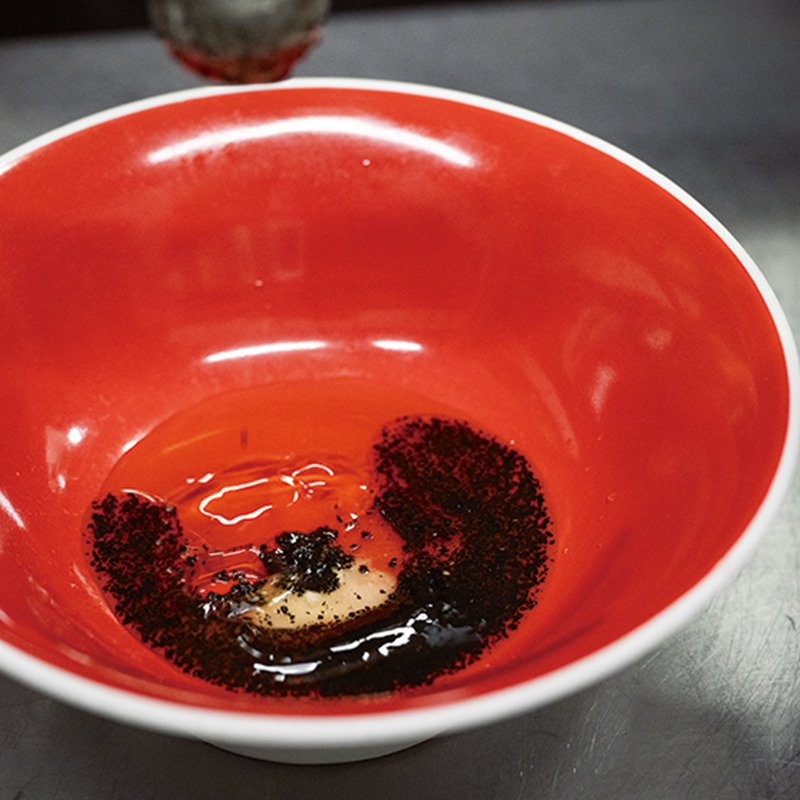
The roasted garlic oil is prepared by hand every day, taking two to three hours.
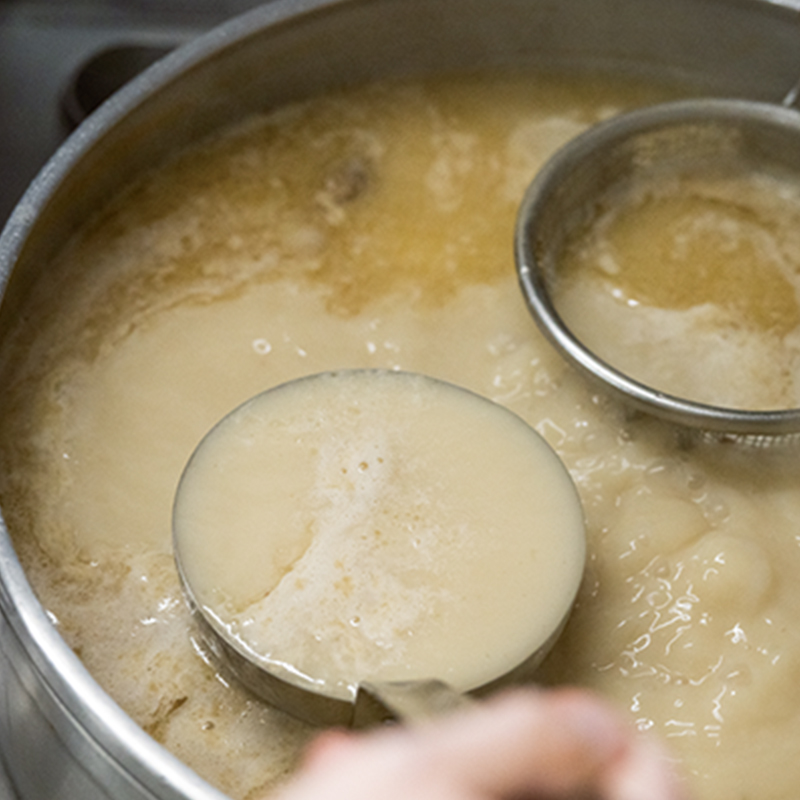
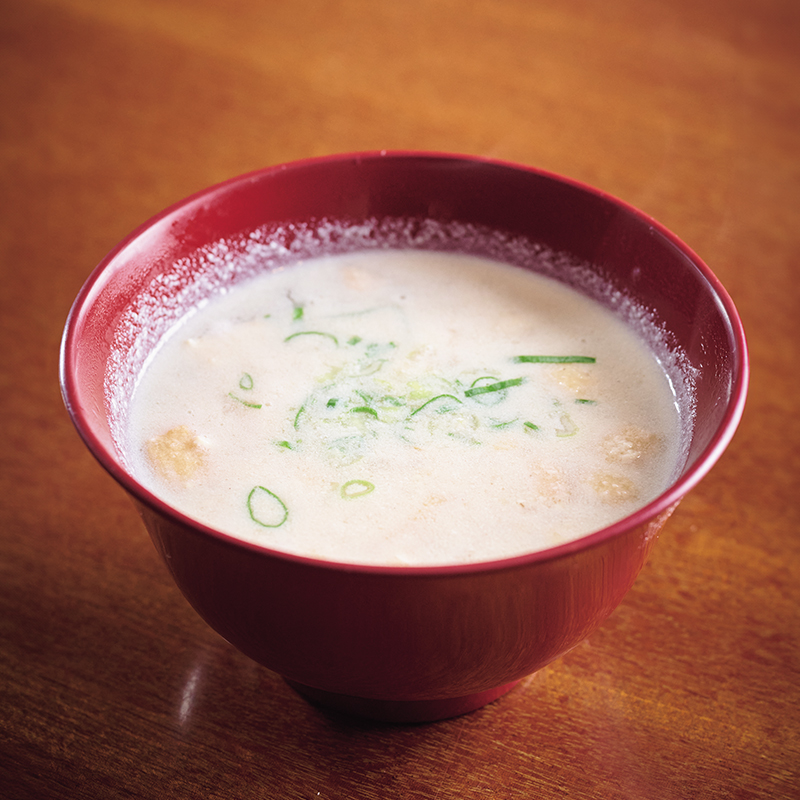
The soup, made by simmering pork head bones in a huge cauldron, is characterized by allowing you to experience umami and deep richness while being light.
“For our customers”
The succession of tradition and innovation.
Ms. Kyoko, who joined the company in 2005 and has been working as the third-generation president since 2008. The very first thing she tackled was the improvement of the soup.
“Kokutei’s tonkotsu (pork bone) soup uses only pork skulls. The characteristic of Kokutei is adding roasted garlic oil to that light soup to bring out richness. Although that has not changed since our founding, around the time I joined the company, we received feedback from customers that the soup was thin. While it is a flavour that has been passed down in the shop, I improved the taste by changing the simmering time, among other things, so that people would say it is even more delicious.”
In 2013, a soup room was established on the premises. The special soup, which takes one day for preparation and another day to age, is made here every day and is delivered not only to the main shop but also to the nearby Sakuramachi Kumamotojo-mae shop and Shimodori shop.
Ms. Kyoko’s desire to inherit tradition while providing something better extended not only to the soup but also to the noodles. In 2011, she switched the noodles, which had been outsourced until then, to in-house production. The reasons for this included the idea of wanting noodles that match the carefully crafted soup, and consideration for wanting to make them edible even for those with egg allergies.
Unlike the noodles until then, there was reportedly a long period of trial and error to develop noodles that do not contain anything derived from eggs at all. “The taste that all members involved in the development could agree on wouldn’t be decided, so we repeated trial productions many times. In the midst of that, we noticed that a unique flavour is born by adding a small amount of stone-ground wheat flour, and the current noodles were completed.”
Kokutei’s ramen, which continues to evolve with improvements, is visited by many customers from overseas, not to mention local regulars. During peak seasons, it is said that they receive orders for around 600 bowls a day at the main shop, and 800 to 900 bowls a day at the Shimodori shop, which has many tourists. This Kokutei will celebrate its 70th anniversary since founding next year.
“Regarding the 70th anniversary, we are thinking of various projects. Furthermore, while passing down Kokutei’s Kumamoto ramen to future generations, I want to make it a place where the young staff members who bear its future can have dreams. To achieve that, I want to challenge new things. We are also envisioning overseas expansion to see how far this Kumamoto ramen can go.”
Kokutei is now even called the royal road of Kumamoto ramen. However, without choosing to settle in comfort, it continues to take on challenges seeking further possibilities.
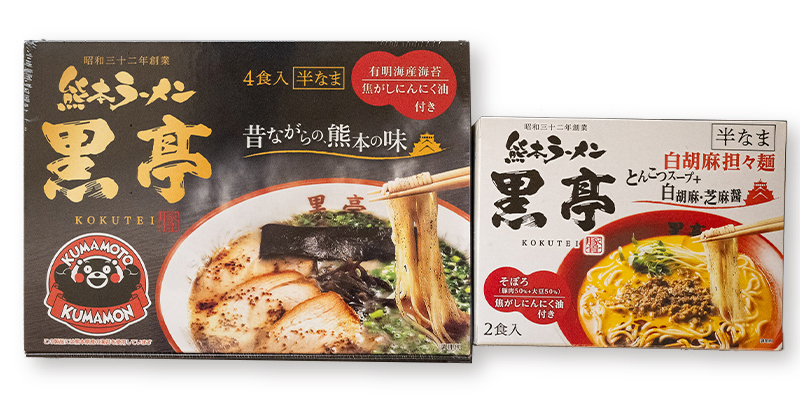
Souvenir ramen where you can enjoy the flavour of Kokutei at home.
(Left) Kokutei Ramen, 4 servings in a box, 1,890 yen (including tax) / (Right) Kokutei White Sesame Tantanmen with minced meat, 2 servings in a box, 1,188 yen (including tax)
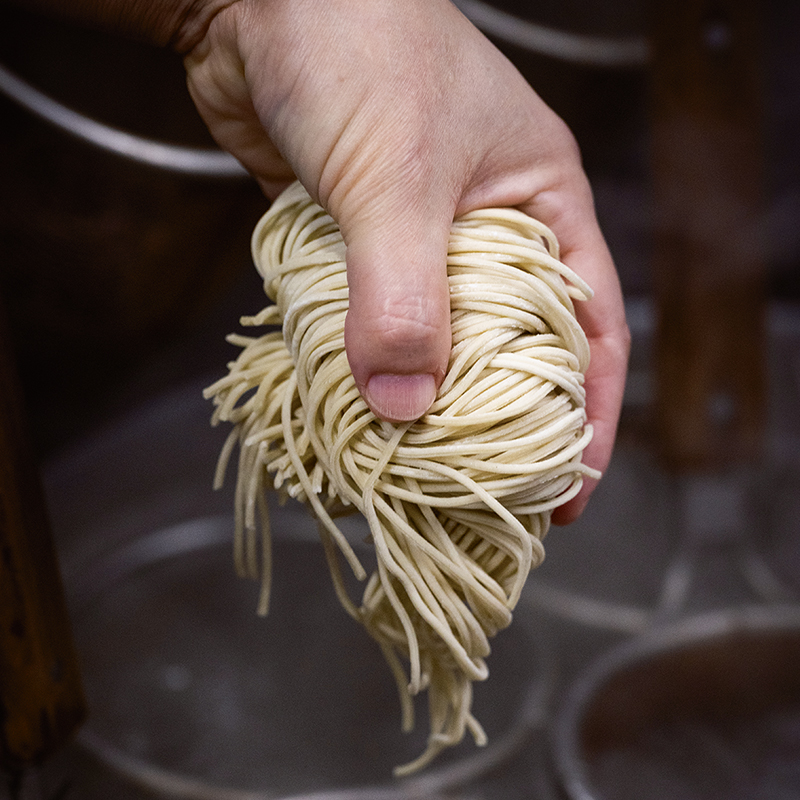
In order to serve piping hot and delicious ramen at any location, a cooking manual common to all shops has been created.
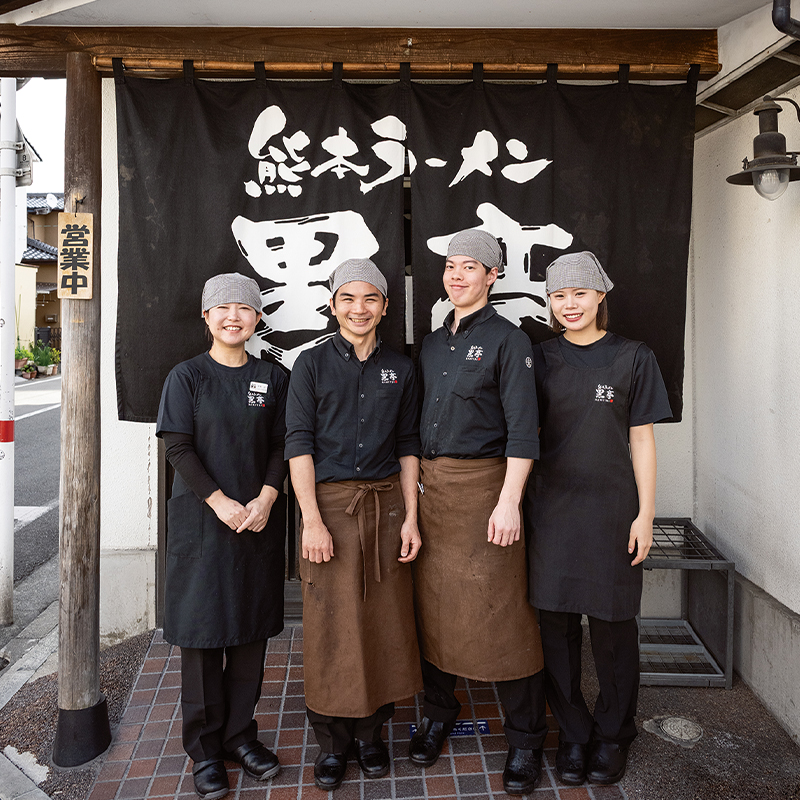
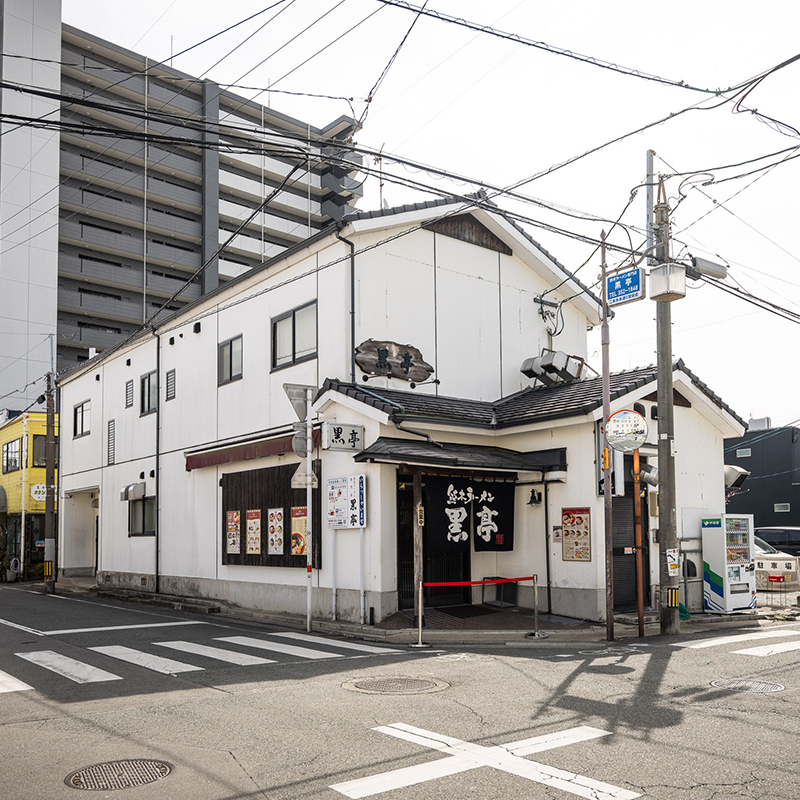
The Kokutei main shop located in the author’s hometown. The flavour of youth that I ate with friends during my student days was still there, unchanged, even now.