


Spring. A shop where the gentle sunlight shines.
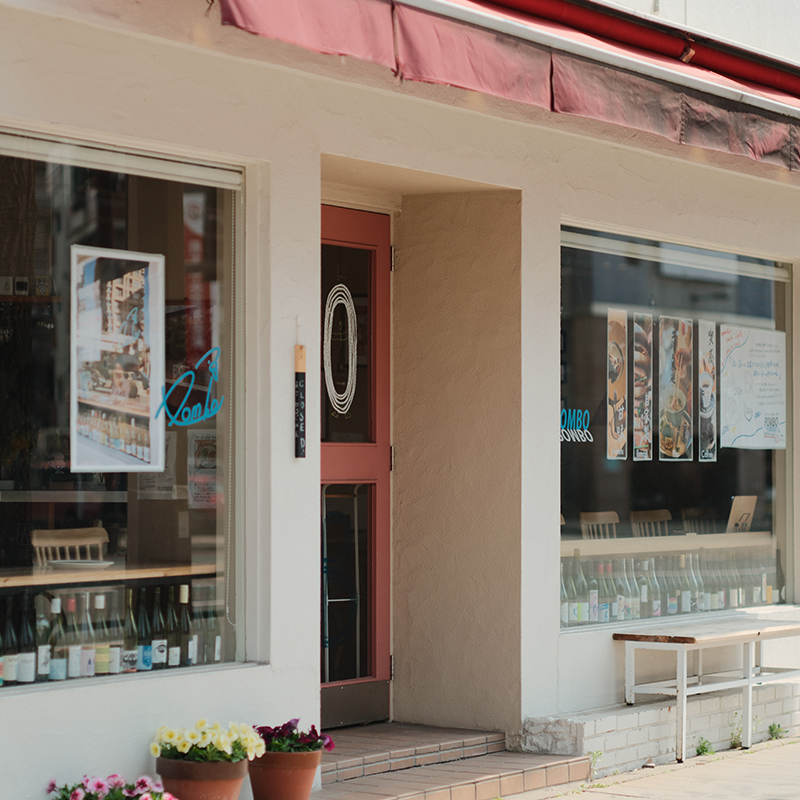
The shop name “POMBO” is a word that means “pigeon” in Portuguese.
Like a homing pigeon that always returns no matter where it flies, we want to make it a shop where people who visit will want to return again.
It was named with such a wish in mind.
This is about “POMBO,” a breakfast shop that we, who live in Kumamoto, want to visit again and again.
We introduce it to you.
A healthy breakfast of Vietnamese cuisine.
Mid-March. A warm day where you can feel the arrival of spring. When visiting “POMBO,” forgetting the hustle and bustle, the visitors were spending time in their own way. At the counter, a young woman dining alone. At the table seats, a couple chatting. There is also the sight of an elderly man reading a book while drinking coffee. The side facing the street where the tram runs is glass-walled, and soft light was shining into the shop.
“POMBO” is a morning and lunch shop open from 8:00 AM to 2:00 PM. The five types of menu items are all Vietnamese cuisine. While retaining the authentic flavor, it is arranged to suit Japanese people, so it is recommended even for those unfamiliar with it.
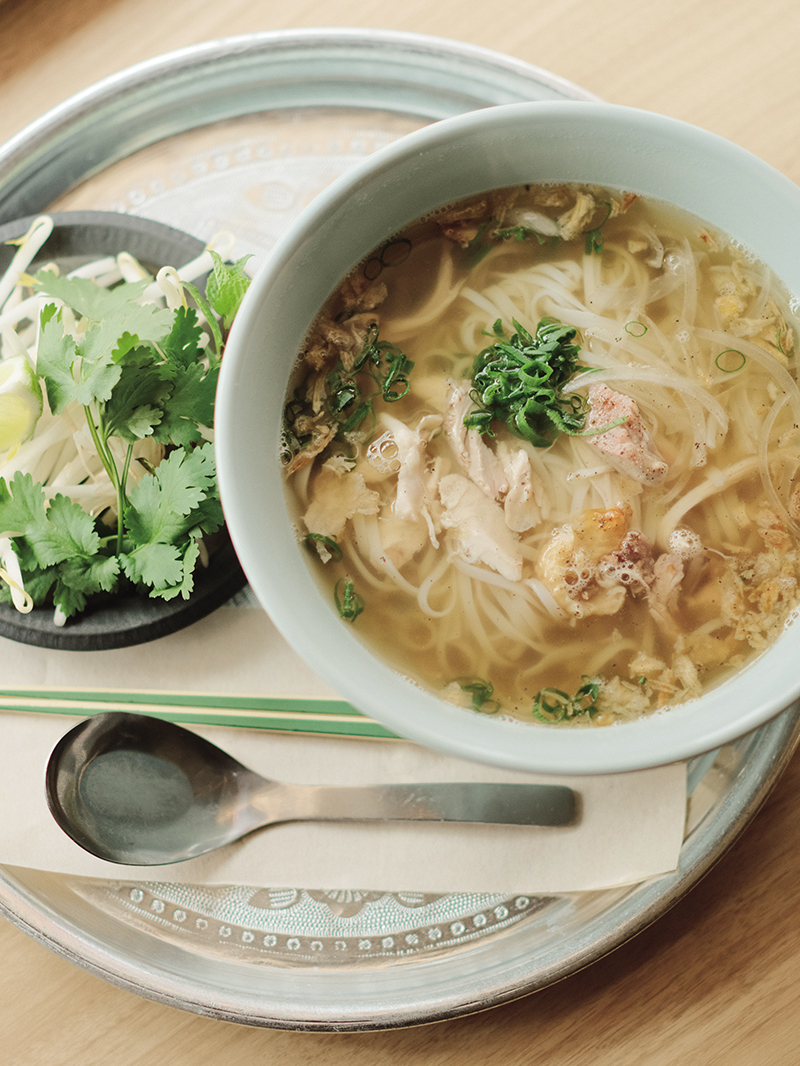
The most popular menu item is “pho.” The soup, made by simmering chicken bones and coriander roots for eight hours, allows you to feel the fragrance of herbs and deep richness, while having less overpowering traits and a mellow flavor. The smooth-textured rice noodles sourced from Vietnam are lower in fat compared to wheat noodles, making it a dish that is gentle even on a body that has just woken up.
And, the shop’s signature menu item alongside pho is a sandwich called “banh mi.” It is a dish that can be called the national food of Vietnam, eaten by sandwiching chicken, herbs, namasu (pickled vegetables), liver paste, and other ingredients into a baguette.
At “POMBO,” you can choose chicken (steamed chicken) or fish (fried horse mackerel) for the ingredients, and with both, you can feel the refreshing aftertaste of herbs and namasu, making you want to reach out for another bite.
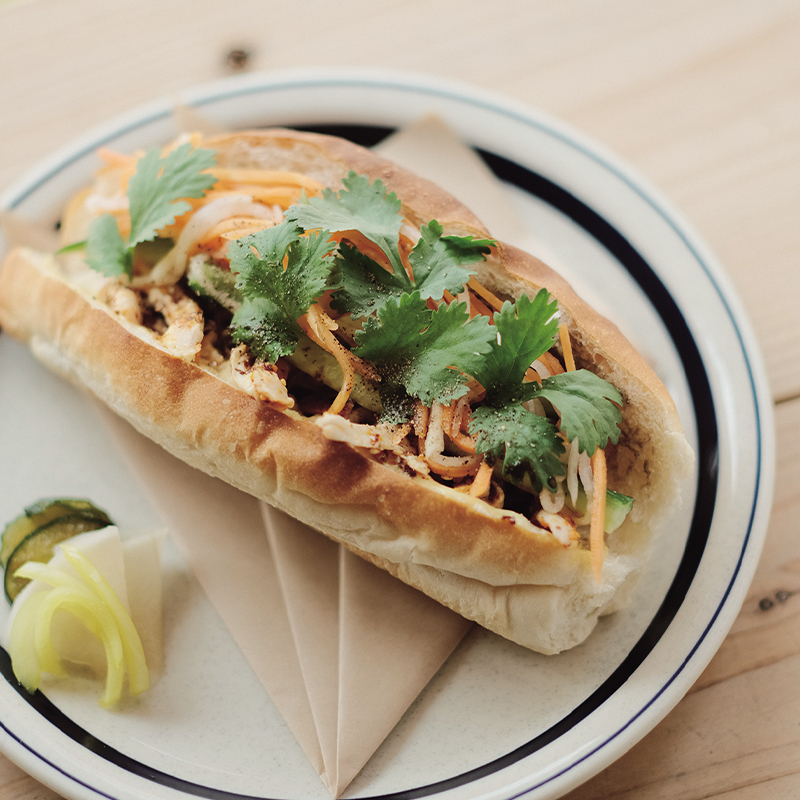
Chicken Banh Mi 800 yen (tax included).
A half size is also available.
“I think it feels lighter than it looks because rice flour is mixed into the bread dough,” explained the shop owner, Ms. Saori Gotan. In order to maximize the umami of the ingredients, authentic banh mi blends rice flour into the bread dough, intentionally subduing the flavor of the bread.
Out of the desire to provide something as close to the authentic taste as possible, “POMBO” uses bread handmade by Ms. Gotan, from making the dough to baking it. Furthermore, seasonings such as mayonnaise and liver paste are also the shop’s originals. The one who prepares them is Ms. Gotan’s husband and chef, Chase Lovrien.
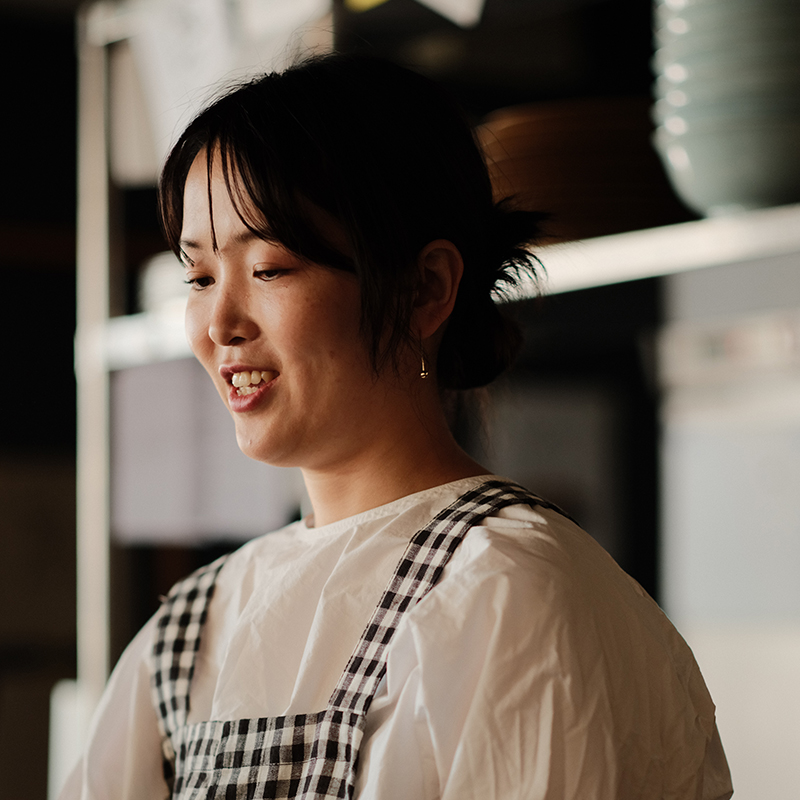
Saori Gotan
Ms. Gotan, who says, “I like the time spent working while watching people commuting to work or school through the window.”
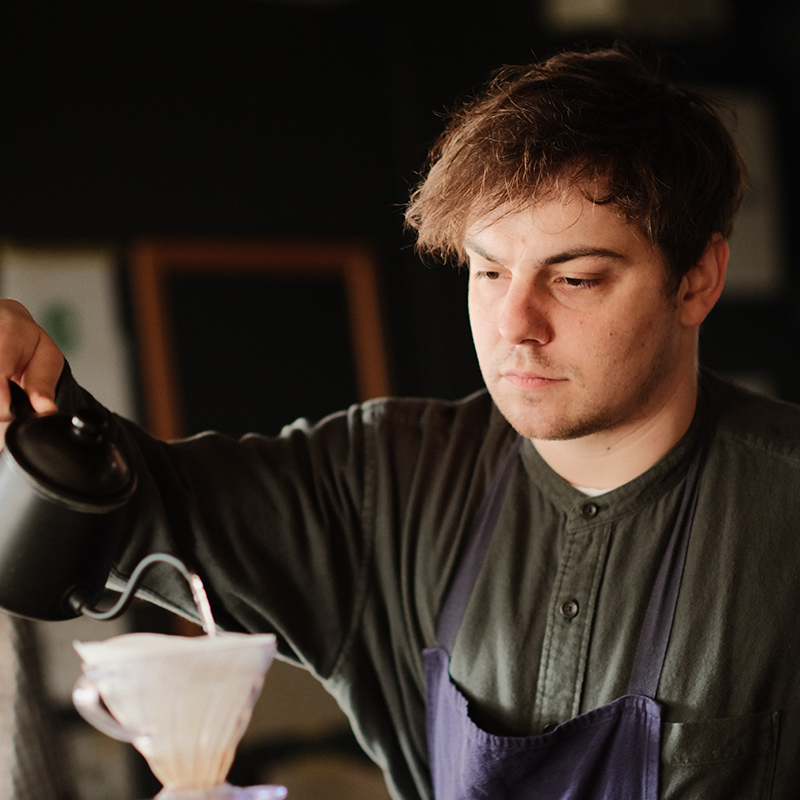
Chase Lovrien
Mr. Chase, whose gentle smile is charming although he is a man of few words. He is fluent in Japanese.
The meeting of the two.
The opening of “POMBO.”
Mr. Chase, originally from Oregon in the United States, became familiar with cooking from a young age under the influence of his father who loved cooking, and proceeded down that path upon graduating from high school. He says he gained experience while working at French and Chinese restaurants.
“I had been cooking at home often since a long time ago. When I asked my family, it seems I was talking about opening my own shop in the future.”
The turning point arrived when he was 25 years old. It was when he came to Japan, invited by the Japanese owner of the restaurant where he was working, and started working at a restaurant in Kumamoto managed by the owner. Although it was planned for only three months, he was fascinated by the kind attitude and personalities of the people he met, and the beauty of the townscape, and decided to move to Kumamoto.
On the other hand, the shop owner, Ms. Gotan, was in Melbourne, Australia, around that time. Wanting to find what she truly wanted to do, she studied abroad at the age of 27, and was exploring her career path while working at a bakery. What she encountered there was banh mi. “I remember being moved, thinking, ‘Such a delicious dish existed.’ After that, I went around eating banh mi all over the city.”
After that, triggered by the COVID-19 pandemic, she returned to her hometown of Kumamoto City, borrowed the front entrance of her grandmother’s house, and started a specialty banh mi shop. She says that she had never formally studied cooking, and it was a start by trial and error.
The one who lent a hand at that time was Mr. Chase, who had been an acquaintance since before her study abroad. While he taught her how to make seasonings and they thought of recipes together, the time the two spent together increased. Eventually, they became attracted to each other, and married when they were 30 years old. Wanting to work together in a shop that could utilize Mr. Chase’s culinary skills, they opened “POMBO,” a French and Vietnamese restaurant, in November 2022.
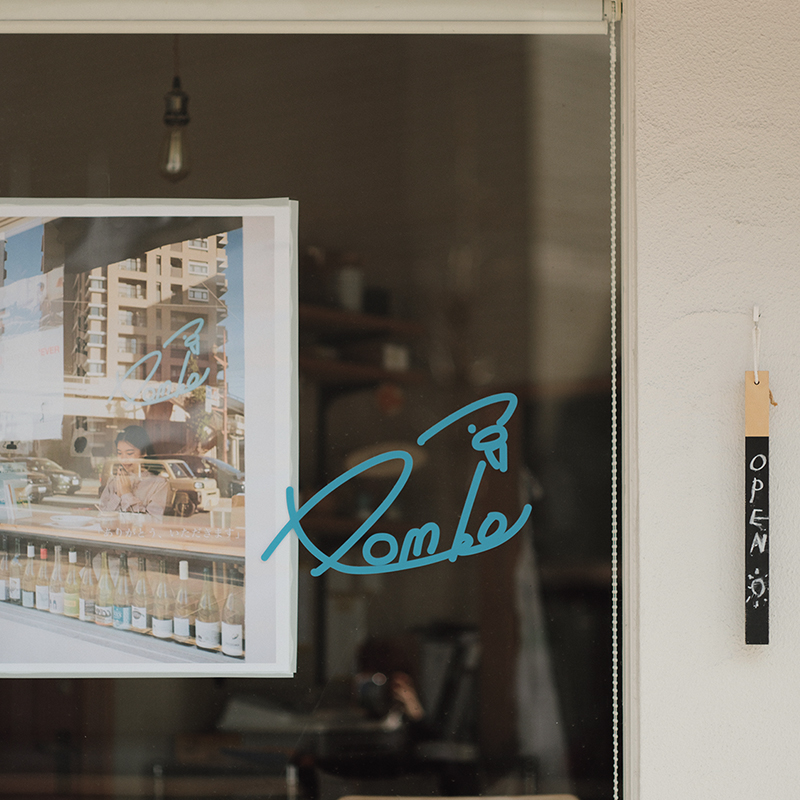
The logo is what Ms. Gotan designed with a pigeon as a motif.
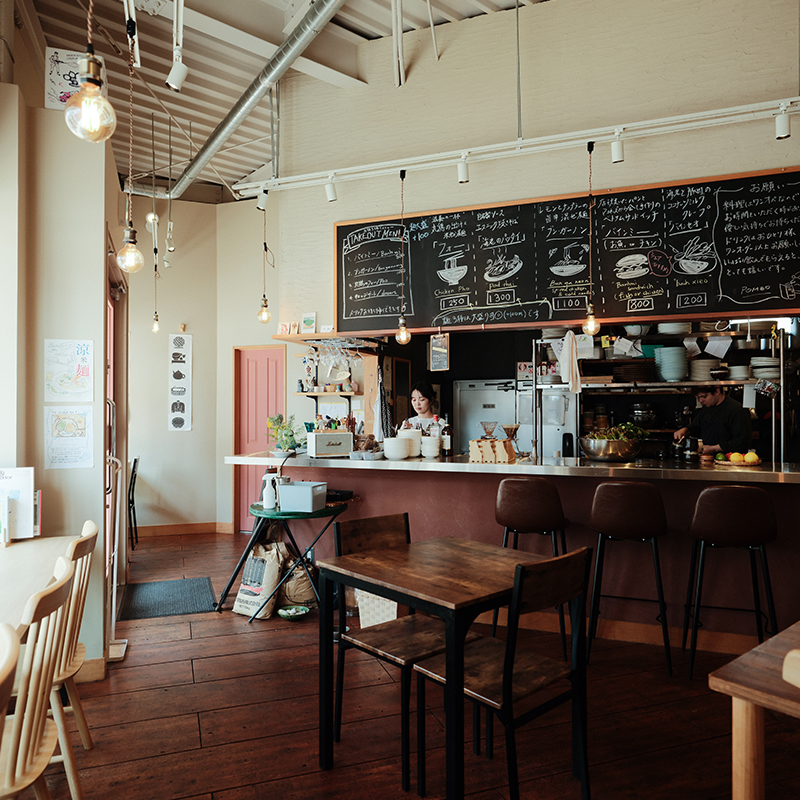
It opened by renovating a place that was originally a warehouse.
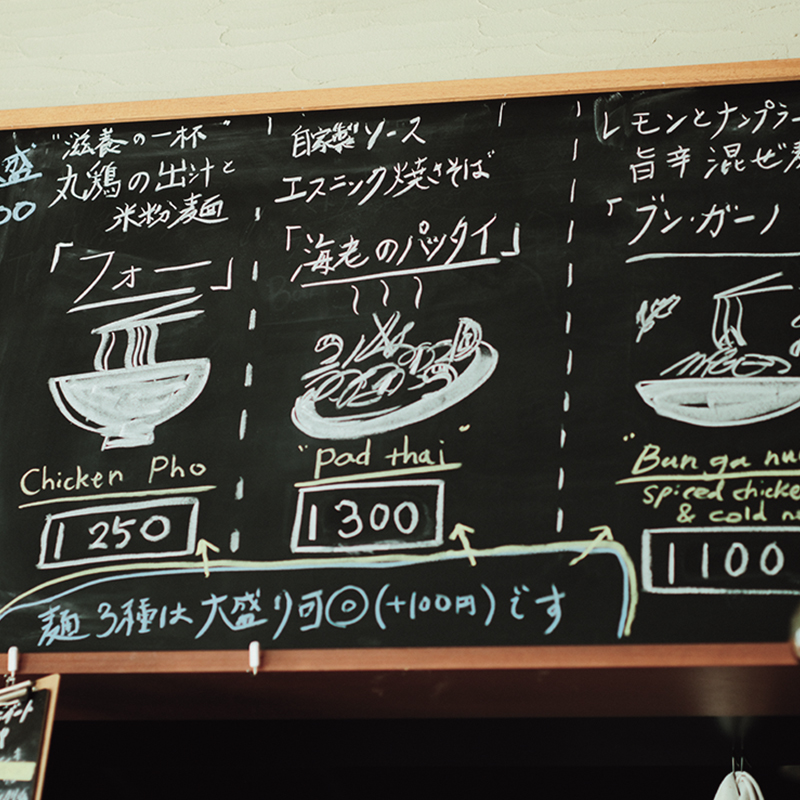
Ms. Gotan’s handwritten text and illustrations soften the atmosphere inside the shop.
In order not to lose sight of what is precious.
Ms. Gotan and Mr. Chase, who were also blessed with a child at the timing of their marriage. Wanting to also cherish family time, they made the business hours for morning and lunch only. It was prosperous immediately after opening, and the foot traffic increased day by day. However, that, ironically, ended up taking away their family time.
“I left the house at 5:30 in the morning, and returning was at 10:00 at night. Because French cuisine takes time for preparation (Chase).”
Days of desperately managing the work in front of them, without even being able to have a relaxing conversation with the visiting customers. It is said that it was also becoming difficult to secure family gathering time. Under such circumstances, what the two decided was to stop offering French cuisine. According to Ms. Gotan, many Vietnamese dishes utilize the freshness of ingredients, and compared to French cuisine, it does not take as much time for preparation. Therefore, they thought that by narrowing down the shop’s menu to Vietnamese cuisine only, they might be able to increase the time spent with family and face the visiting customers more.
When she consulted Mr. Chase, he reportedly agreed readily. This was because Mr. Chase also held the same desire to cherish time with family and visiting customers.
And so, in June 2024, they made a fresh start with a completely renewed menu. Now, half of the visiting customers are solo customers. It has been reborn into a space where people can spend time in their own styles, such as knitting, reading books, or talking with Ms. Gotan and the others.
At the end of the interview, their 2-year-old daughter, Asano-chan, came to the shop. Ms. Gotan and Mr. Chase are smiling warmly at the sight of her playing happily while pretending to operate the cash register. The new “POMBO” was a place for the visiting customers, and it was also a place for the family of three.
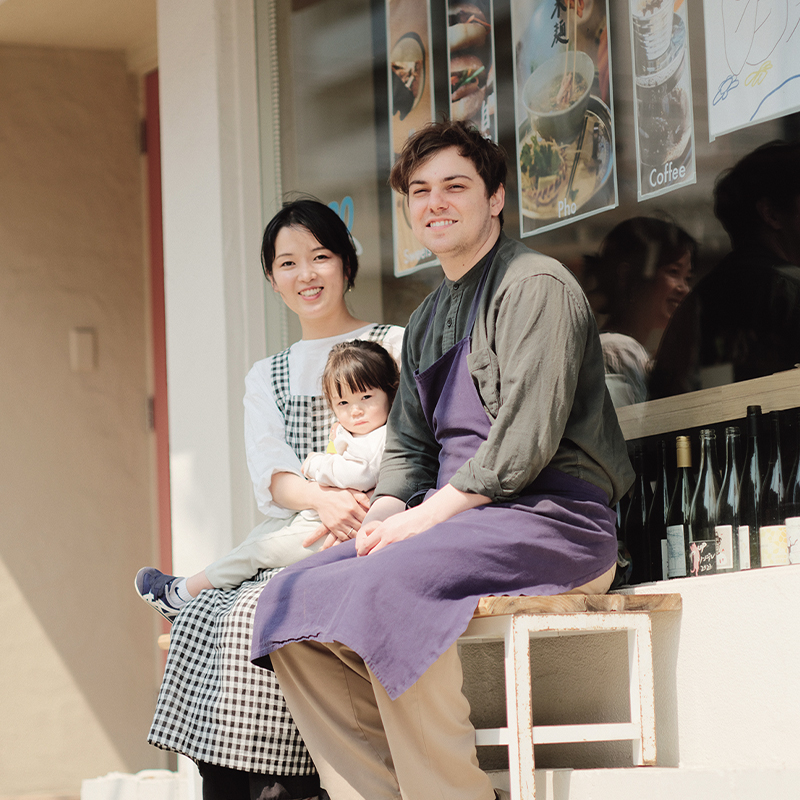
(From left) Saori Gotan (33 years old), daughter Asahi-chan (2 years old), and Chase Lovrien (33 years old).
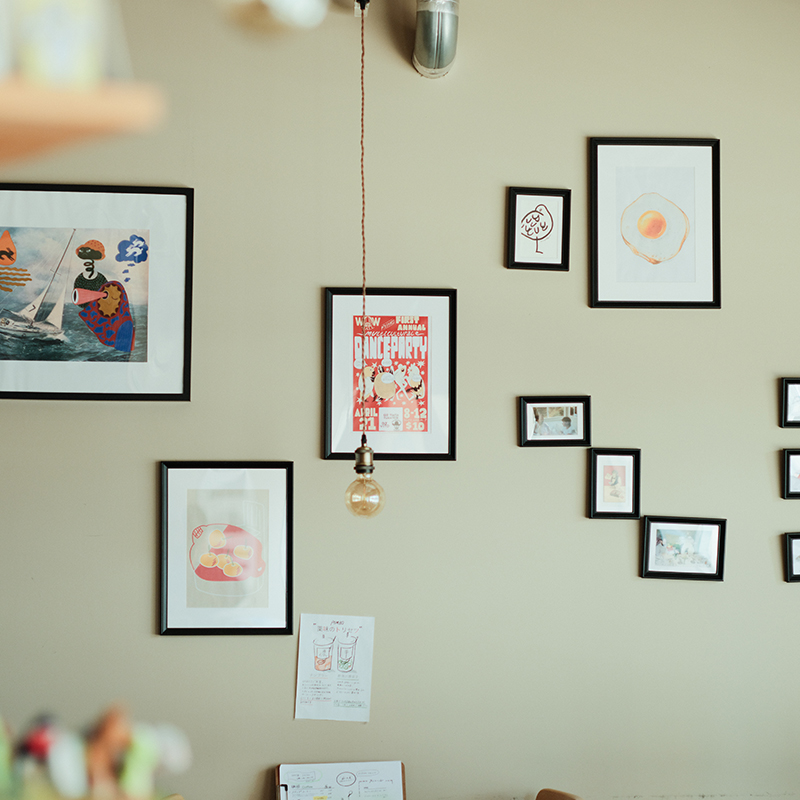
In the back of the shop, favorite paintings and photos of family memories are displayed.
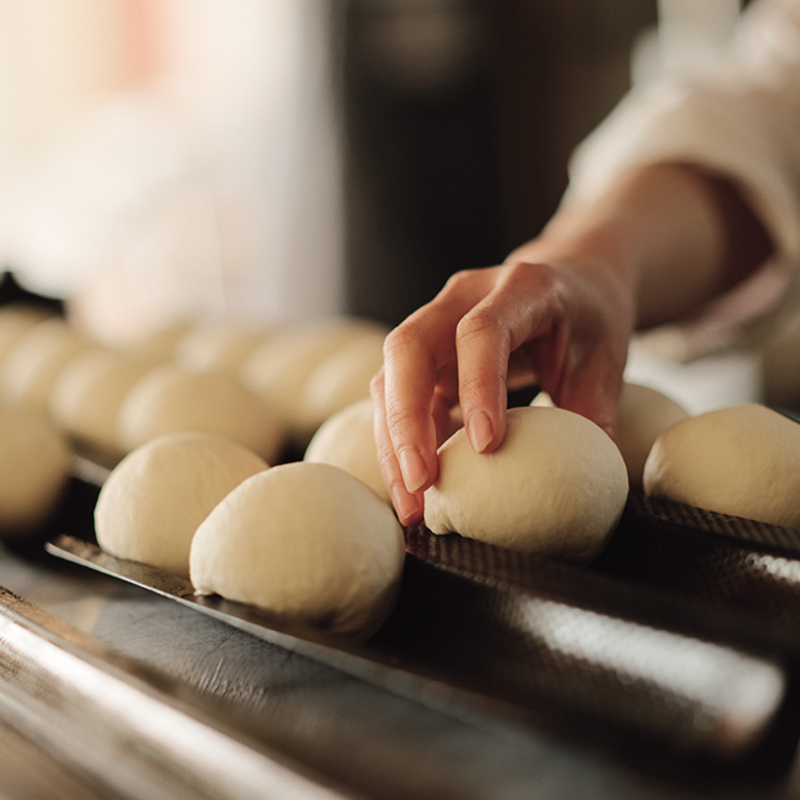
Every day, Ms. Gotan handmakes 20 to 30 loaves of bread.
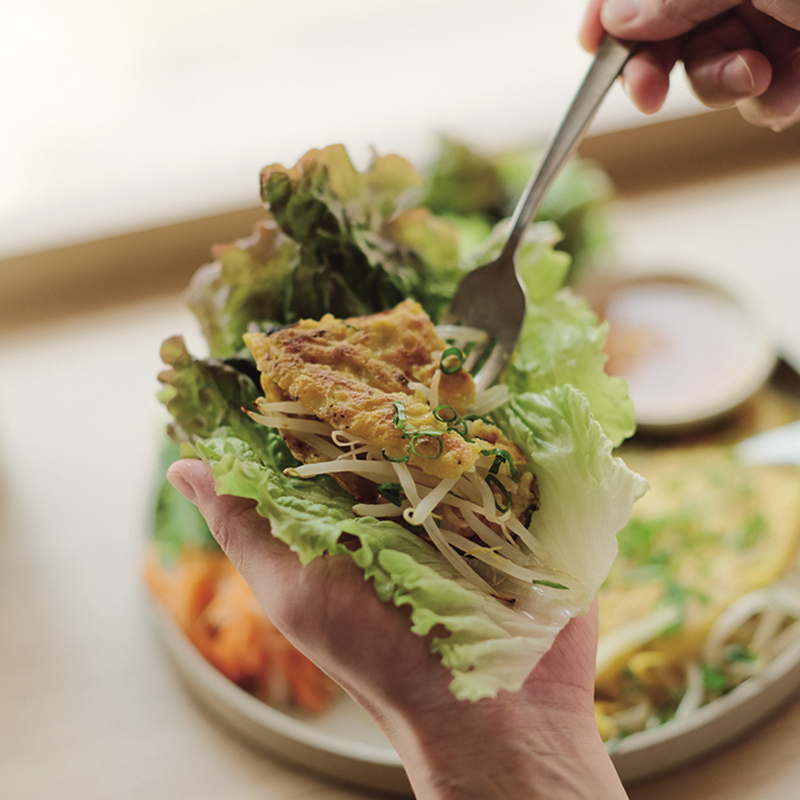
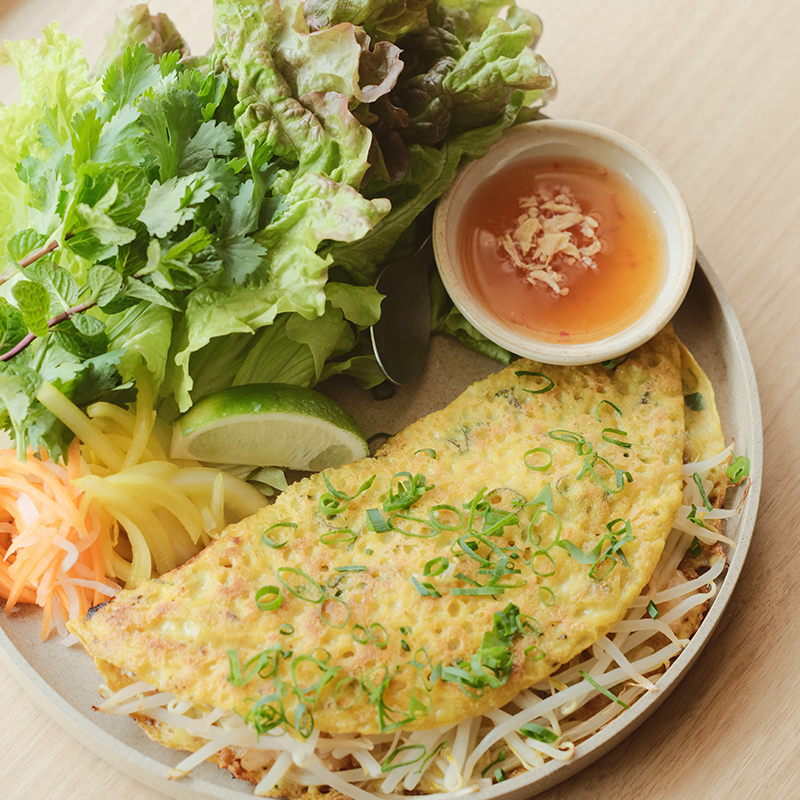
Banh Xeo 1,100 yen (tax included).
Pork and shrimp coconut milk crepe.