


A three-minute walk from Kumamoto Station. Despite its short opening hours from 7 a.m. to 11 a.m., there is a shop visited by tourists from both Japan and abroad, all seeking its breakfast.
The name of the shop is “Asagohan no Mise Tarachine” (hereafter Tarachine).
“Tarachine” (垂乳根) is a makurakotoba (a traditional poetic pillow word) used in waka poetry to modify the word “mother.” A heartfelt breakfast awaits you, prepared by the owner, Ms. Mayumi Sakai, with our well-being in mind.
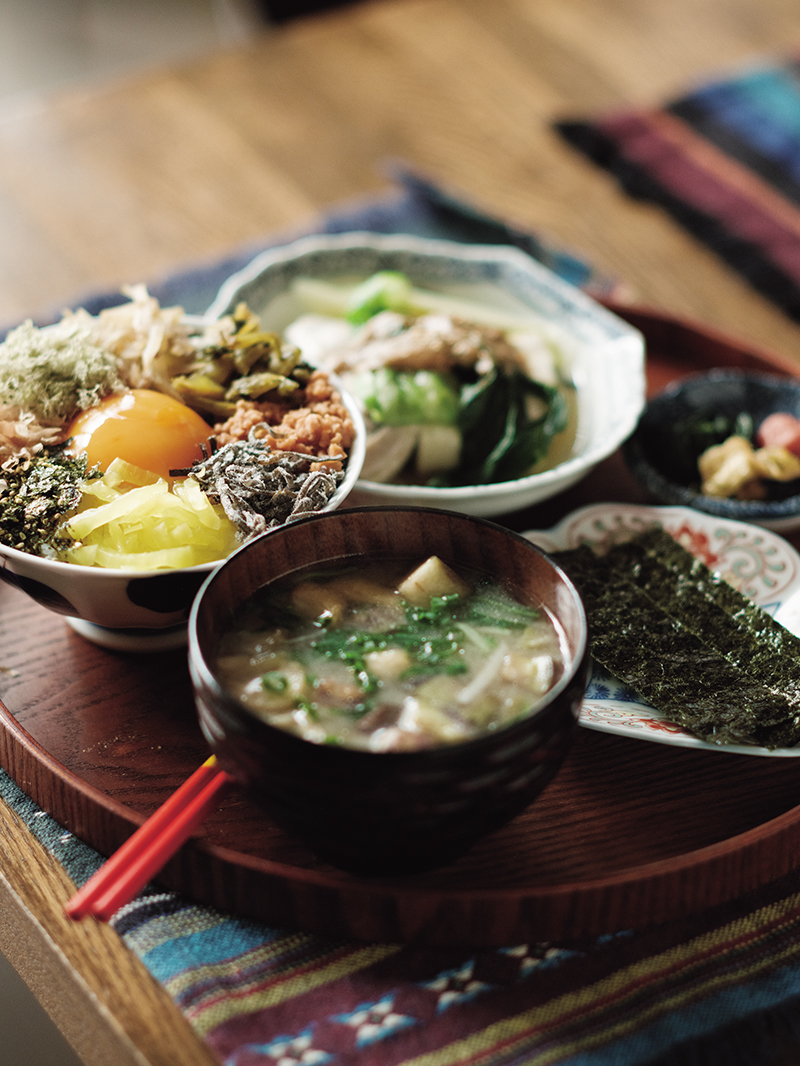
Tamago-kake-gohan (rice with raw egg) is the most popular.
“Kumamoto has many restaurants, and trained professionals delight us with various genres of cuisine. However, most of them are places for lunch and dinner. I had been thinking that there are few restaurants where you can eat breakfast.”
So says Ms. Mayumi Sakai, the owner of “Tarachine.”
“Perhaps it is because I have experienced raising three children, I had been hoping there would be a shop that provides a home-style breakfast for students living away from their parents and for people living alone. And, I wanted to open such a shop myself. When I talked about this with Mr. Ryuma Tokunaga, an acquaintance of 20 years and the owner of this building, upon meeting him after a long time, he said to me, ‘The second floor of my place is vacant, so why don’t you open a shop there?’”
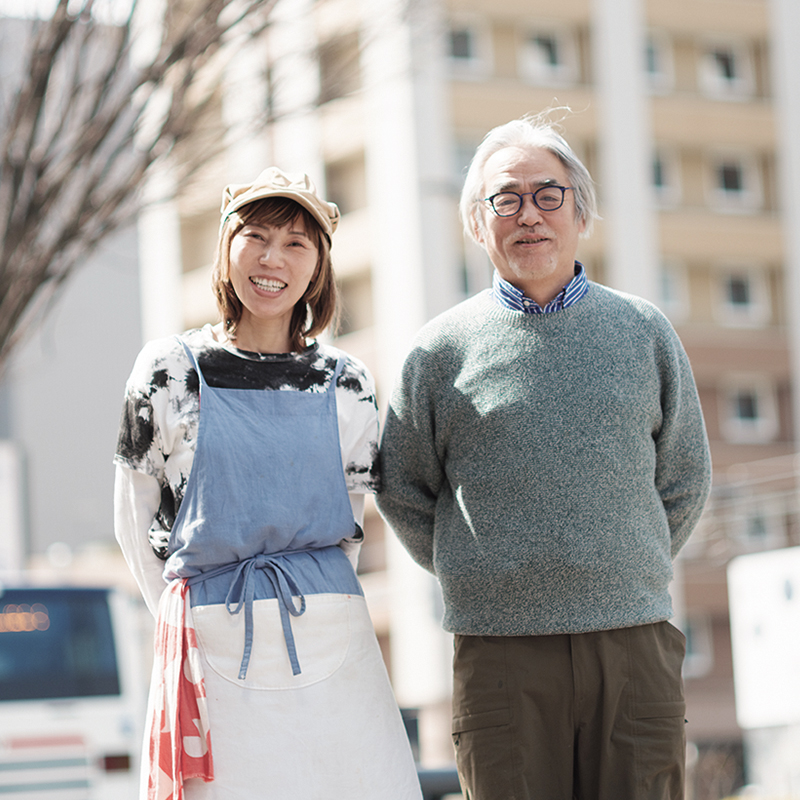
(Left) Mayumi Sakai, the owner of “Tarachine.” Born in Kumamoto Prefecture. She has experience studying abroad in the United States and communicates with customers from overseas in English.
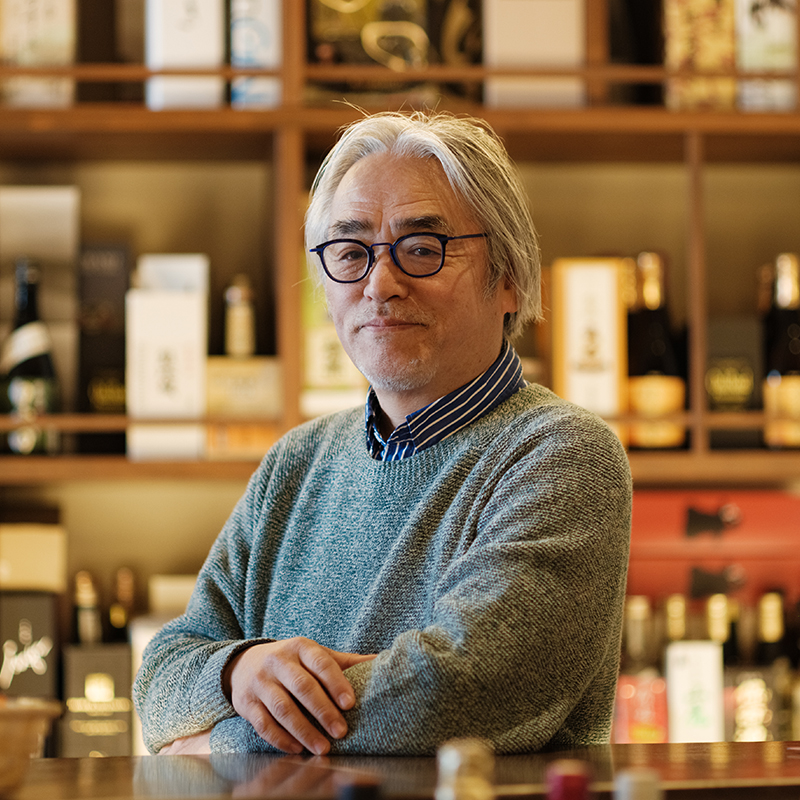
(Right) Tatsuma Tokunaga, the 5th-generation owner of “Tokunaga Saketen.”
In May 2020, “Tarachine” opened. Then as now, there are three types of menus.
A Japanese-style set centered around a daily changing side dish. A tamago-kake-gohan (rice with raw egg) set topped with eight types of ingredients. And a French toast and coffee set.
In addition, around ten types of small side dishes are prepared, and since side menu items such as fried eggs and soup are also plentiful, it is also possible to customize it to your own liking.
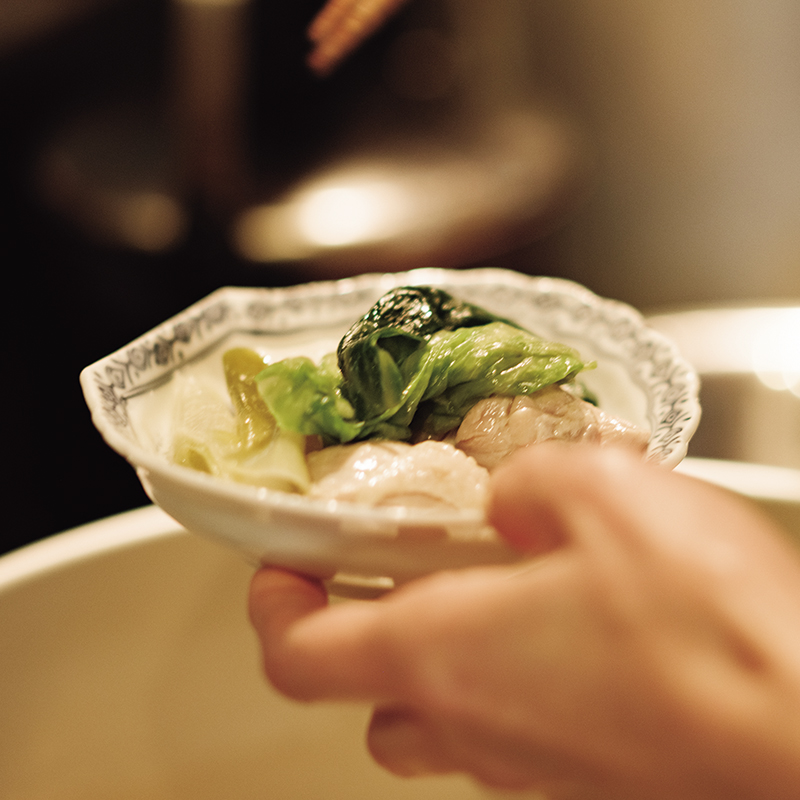
The daily small side dish, “Chicken Thigh and Hot Tofu with Egg Yolk Sauce.” The sauce, made with soy sauce, mirin, bonito flakes, and egg yolk, is Ms. Sakai’s special creation.
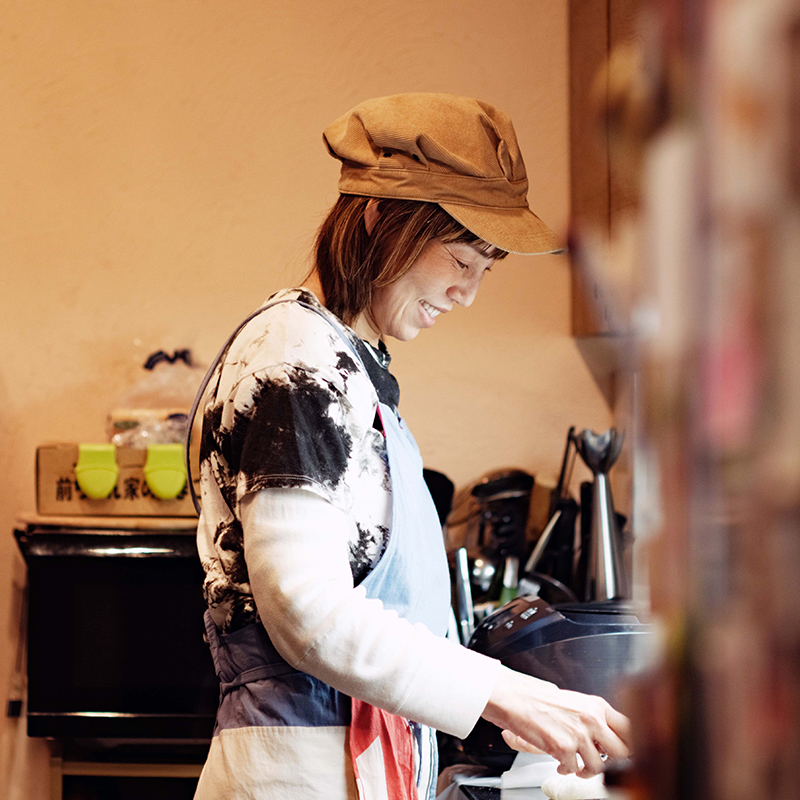
The daily small side dishes are handmade by Ms. Sakai every morning from 5 a.m.
The most popular is the tamago-kake-gohan (rice with raw egg) set. It is a visually delightful menu adorned with salted kombu (kelp), tororo kombu (shredded kelp), seaweed, salmon flakes, pickles, pickled takana greens, bonito flakes, and handmade ginger tsukudani (simmered ginger).
For the egg, “Top Run Egg” is used. These are eggs laid by chickens raised eating a plant called saffron. In poultry farming, fish meal is often used as feed, and that is also the cause of the egg’s fishy odor. On the other hand, Top Run Eggs have no fishy odor, and the color of the yolk is also vibrant. Furthermore, the yolk and the ingredients harmonize well, creating a flavor that you will never tire of, no matter how many times you bring it to your mouth.
“The key to enjoying it deliciously is not to mix it too much. Since each of the eight types of ingredients creates a different flavor, I hope you can enjoy each and every one of them.”
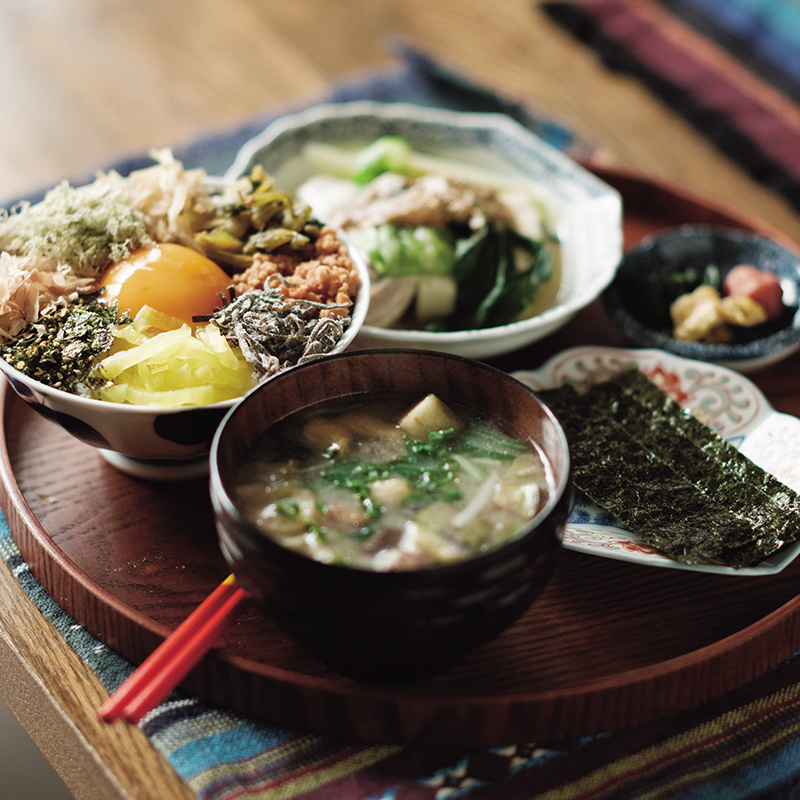
Tamago-kake-gohan Set: 1,100 yen (tax included)
Comes with a small side dish and seaweed. You can enjoy tamago-kake-gohan topped with eight types of ingredients, a daily small side dish, miso soup, and pickles.
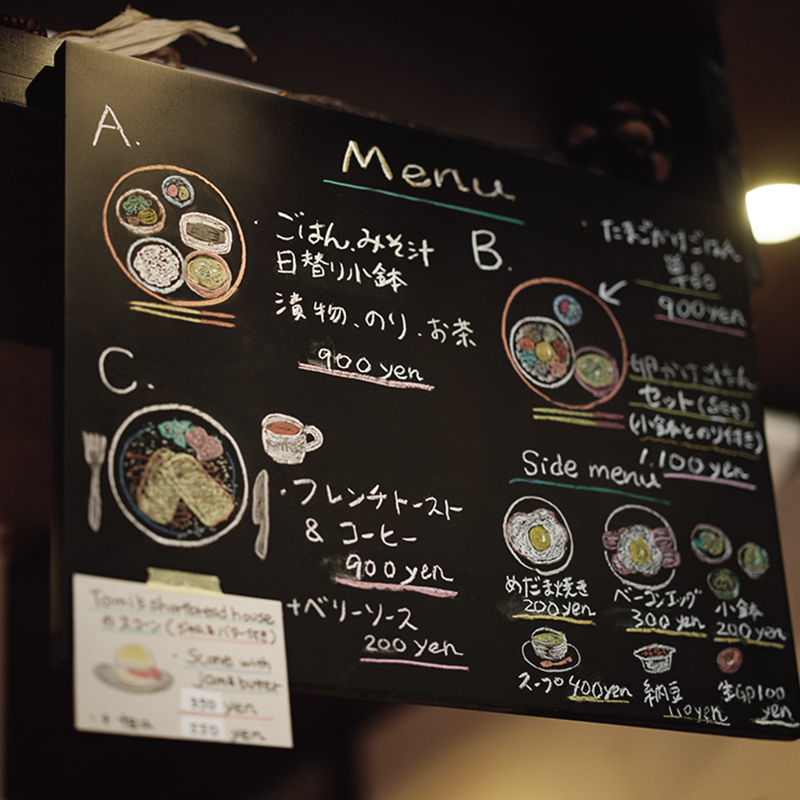
The menu board. It is easy to understand with illustrations, and cute.
Seeing and choosing with one’s own eyes.
Commitment to the selection of ingredients.
“Every day, I visit farm-direct shops and greengrocers to source seasonal vegetables and novel items. Since I want to see and choose with my own eyes, I do not request deliveries from suppliers.” Ms. Sakai does the prep work from 5 a.m. every morning, and when business hours end at 11 a.m., she heads out right from there to shop for the next day’s ingredients. Due to the location, there are many customers from outside the prefecture, so while she keeps in mind a menu characteristic of Kumamoto, she also incorporates rare vegetables and devises ways so that local people can enjoy it as well.
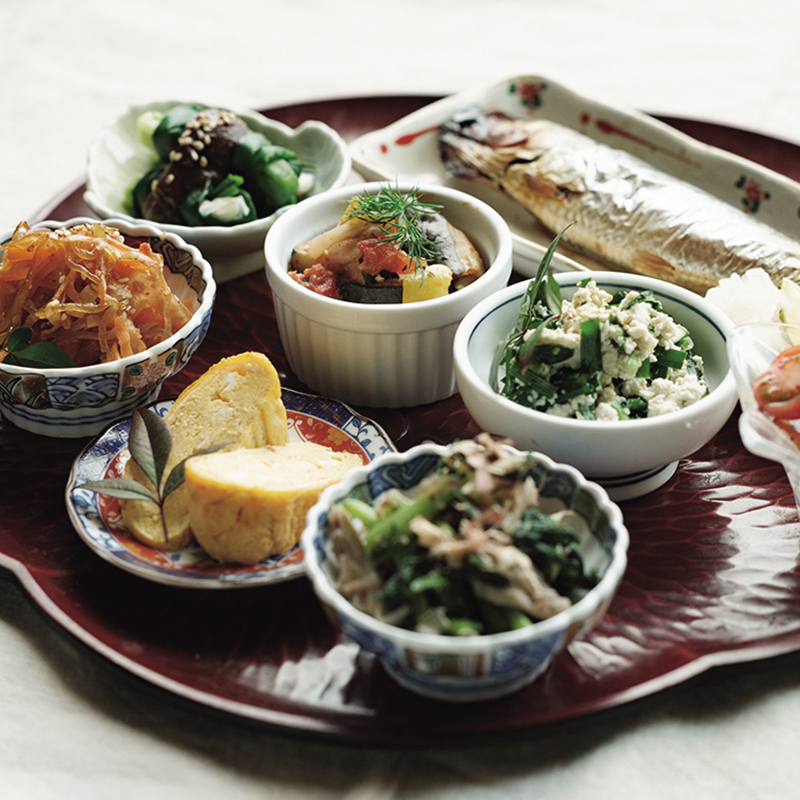
“Tarachine’s” small side dishes, where you can savor the unique character of Kumamoto and the flavors of the season.
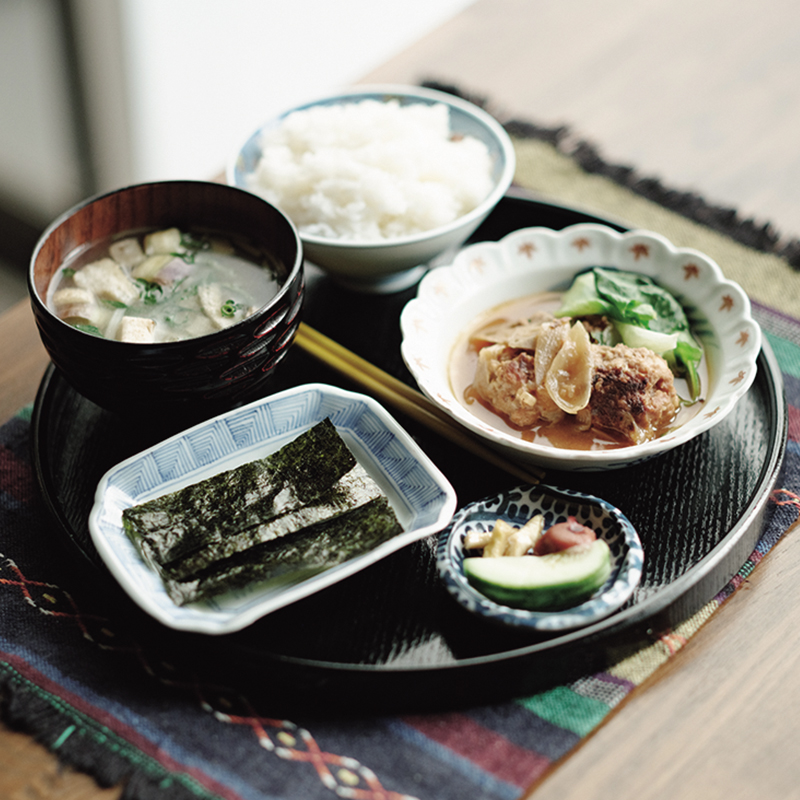
Japanese-style set. The main dish is meatballs simmered in tomato sauce. They are fluffy with oatmeal inside.
What Ms. Sakai focuses on in this way is the rice and seaweed. “What we use at our shop is ‘Renge-mai’ harvested in Tamana City. This is because I think it is a rice of unparalleled deliciousness, where you can firmly feel the original aroma and sweetness inherent to rice. As for the seaweed, we source it from ‘Higoya’ in Kumamoto City. It has a wonderful aroma, is packed with umami, and goes very well with the rice.”
When you try the Renge-mai, the grains of rice stand out and have a distinct presence in your mouth. Above all, it was excellent in flavor and sweetness. How is this deliciousness created? We asked the secret to the rice farmer from whom “Tarachine” sources their Renge-mai.
Renge-mai, nurtured by Chinese milk vetch and celebrated water.
The person who shared the secret behind the deliciousness of Renge-mai is Junichi Tokuyama, a rice farmer in Yokoshima-machi, Tamana City.
Renge-mai is rice that uses a plant from the legume family called renge-so (Chinese milk vetch) as fertilizer. Chinese milk vetch absorbs into its roots the nitrogen components necessary for the initial growth of rice plants, becoming an excellent fertilizer. Rice paddies that use Chinese milk vetch as fertilizer give strength to the soil and produce strong rice plants. In this way, Renge-mai, which requires no chemical fertilizers, is grown.
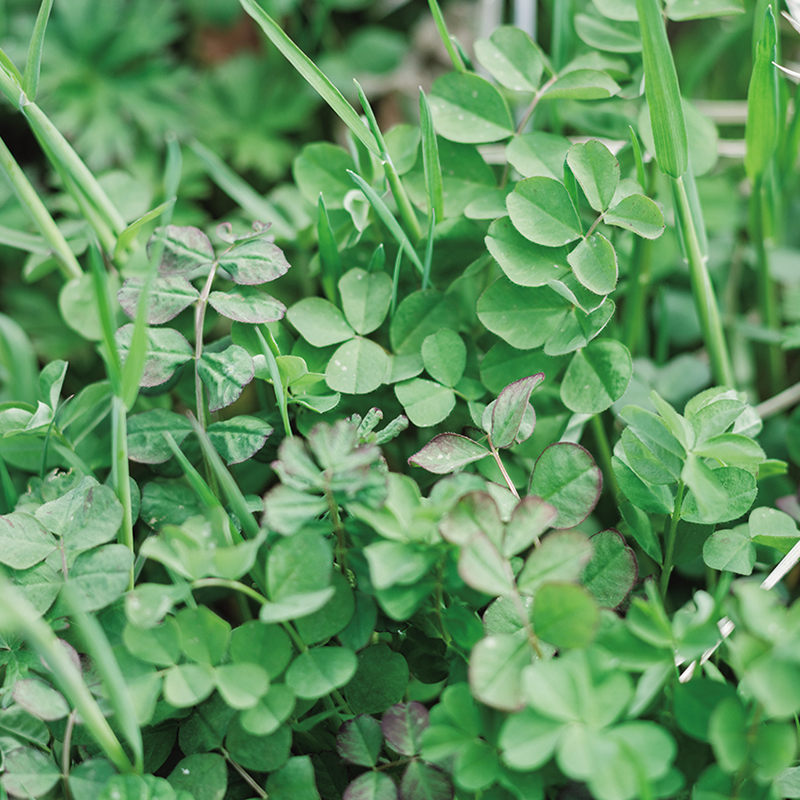
Rice cultivation using Chinese milk vetch as fertilizer is called the “Renge farming method.”
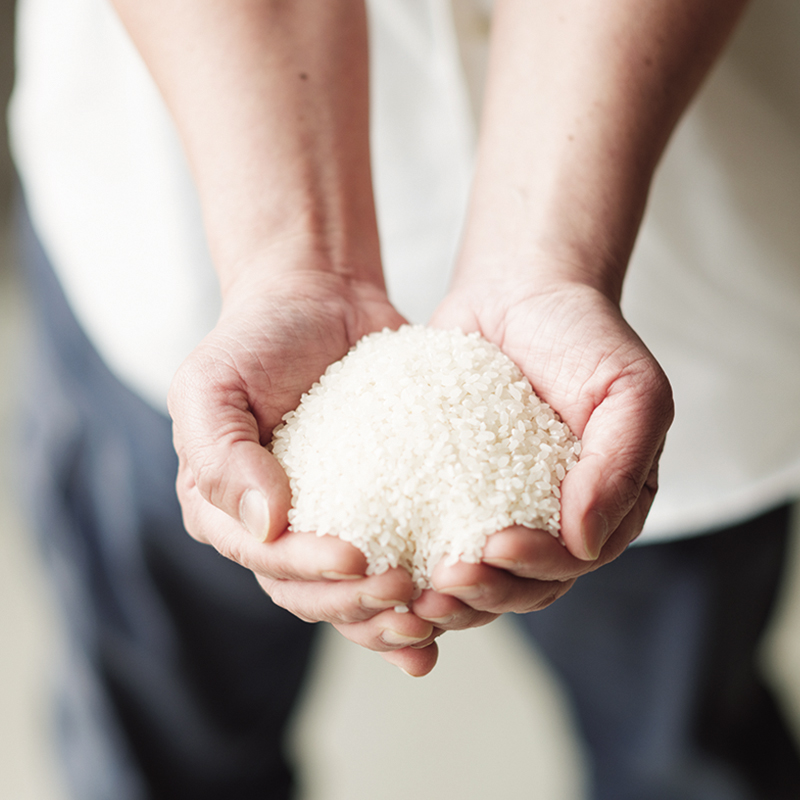
Mr. Tokuyama’s Renge-mai. When freshly cooked, it is fluffy.
Also, he said, “The source of the Kikuchi River that flows through Yokoshima-machi is the Kikuchi Water Source, which was selected as one of the Ministry of the Environment’s 100 Exquisite Waters. Because the water is rich in minerals, we can grow highly nutritious rice.”
When asked about the background of how he came to grow Renge-mai, Mr. Tokuyama said, “It started six years ago when I heard that a nearby farmer was growing it, so I got some seed rice to try planting it. When I harvested and ate it, I was shocked by how delicious it was.” Since then, he came to focus his rice cultivation mainly on Renge-mai. In order to keep a watchful eye on every corner and to be able to devote time and effort, he does not expand his rice paddies and cultivates carefully.
“In rice cultivation, the amount of water is more important than anything else. We till the rice paddies in early May and plant the rice seedlings in mid-June. From there until mid-July, we manage it so that the water does not run out. Then, in late July, we drain all the water once to let the roots of the rice plants take firm root in the ground. Kumamoto is a land with many typhoons. By doing so, the rice plants grow strong against high winds.”
“After that, we continue to grow them while repeatedly filling and draining the water, and we harvest the rice in early October. Nowadays, the work that can be done by machinery has increased, and compared to the past, rice cultivation on flat land has become much easier,” he shared with a smile.
To the farmer who delivers smiles.
Mr. Tokuyama has a defining event that triggered his desire to pursue deliciousness.
“In 2016, the Kumamoto Earthquake occurred, and food was in short supply in various parts of the prefecture. Wondering if there was anything I could do as a farmer, I brought tomatoes cultivated at my home to an evacuation center, and the people who ate them were so happy they cried. I cannot forget that sight. I want to make something that makes the people who eat it smile. With that thought, I came to pursue deliciousness for that reason.”
The Renge-mai was lovingly created by Mr. Tokuyama, wishing to bring smiles to the people who eat it. Ms. Sakai of “Tarachine,” who received that baton of the heart, further layers her own feelings and cooks it deliciously. Today as well, the people who ate “Tarachine’s” breakfast left the shop with smiles on their faces.
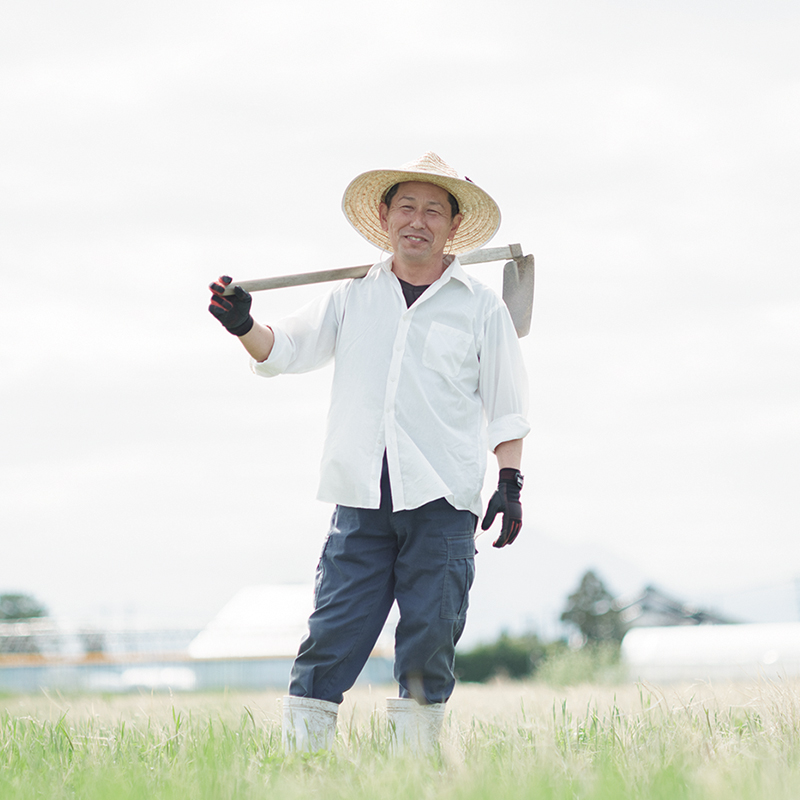
Junichi Tokuyama
Born in Tamana City, Kumamoto Prefecture in 1972. In 2017, with the motto of delivering smiles to the people who eat, he established Egao Factory Co., Ltd., which conducts mail-order sales of food ingredients.