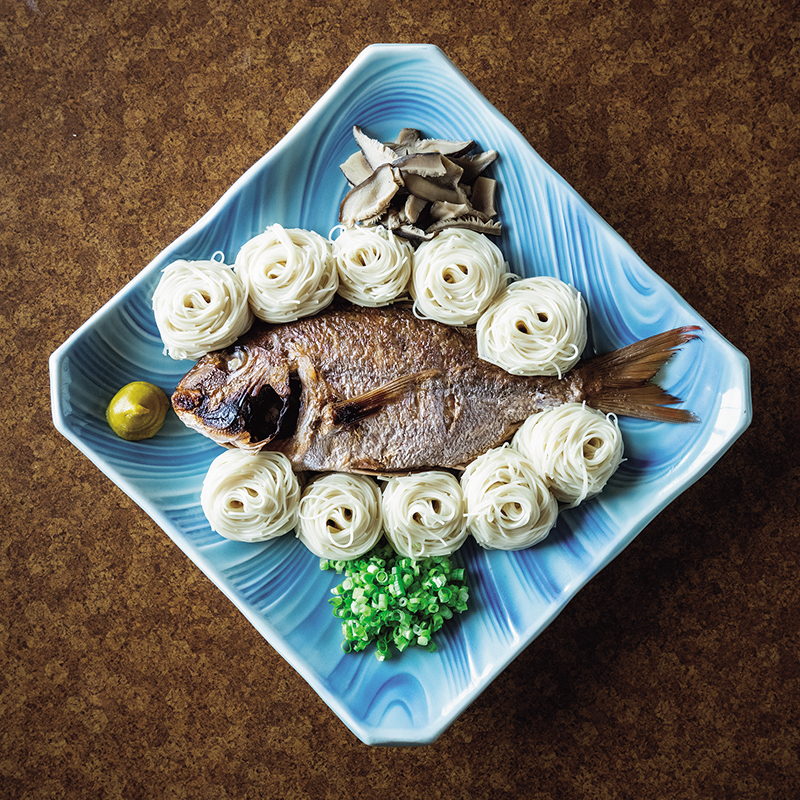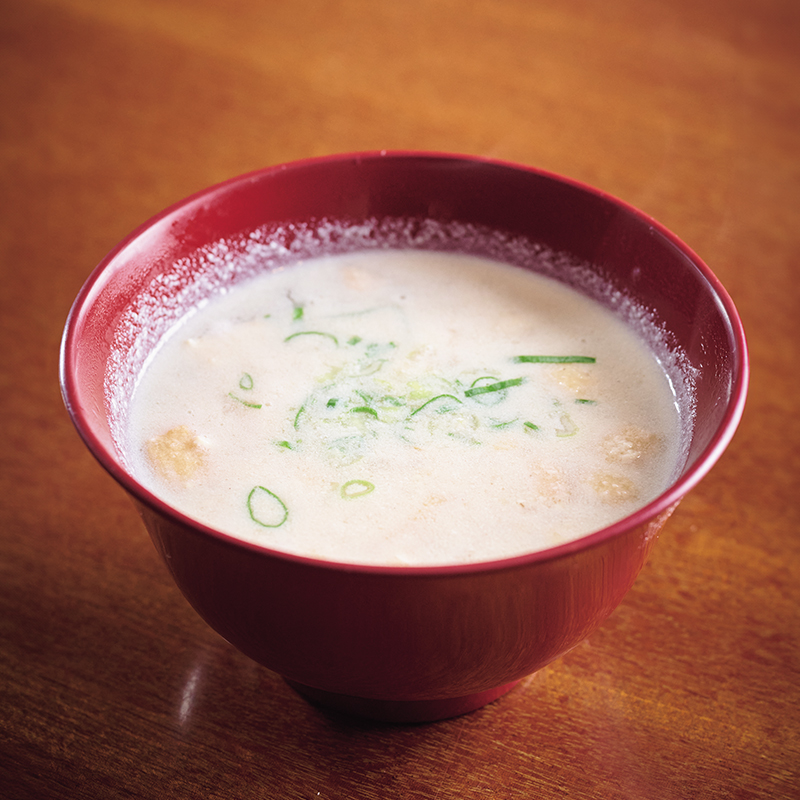



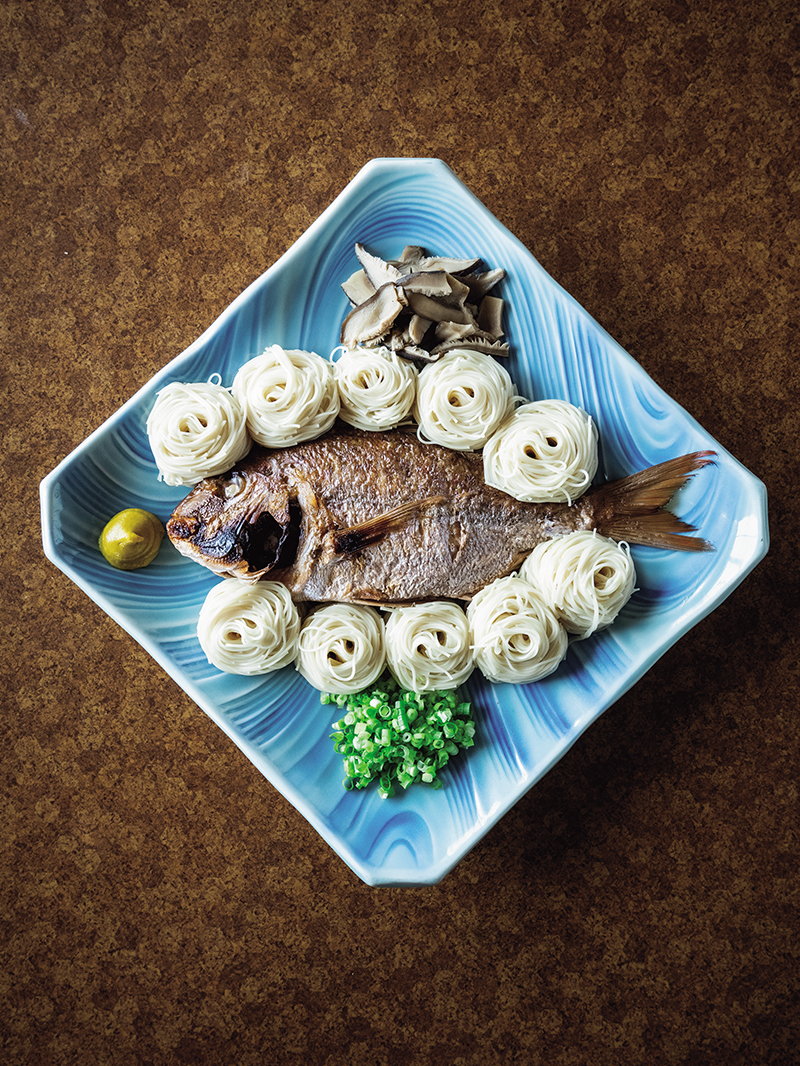
Tai Somen, a local dish of Amakusa.
Many of you may be seeing the name of this dish—where somen noodles are eaten with the broth of simmered sea bream—for the very first time.
“If you want Tai Somen, Kawacho is the place to go.”
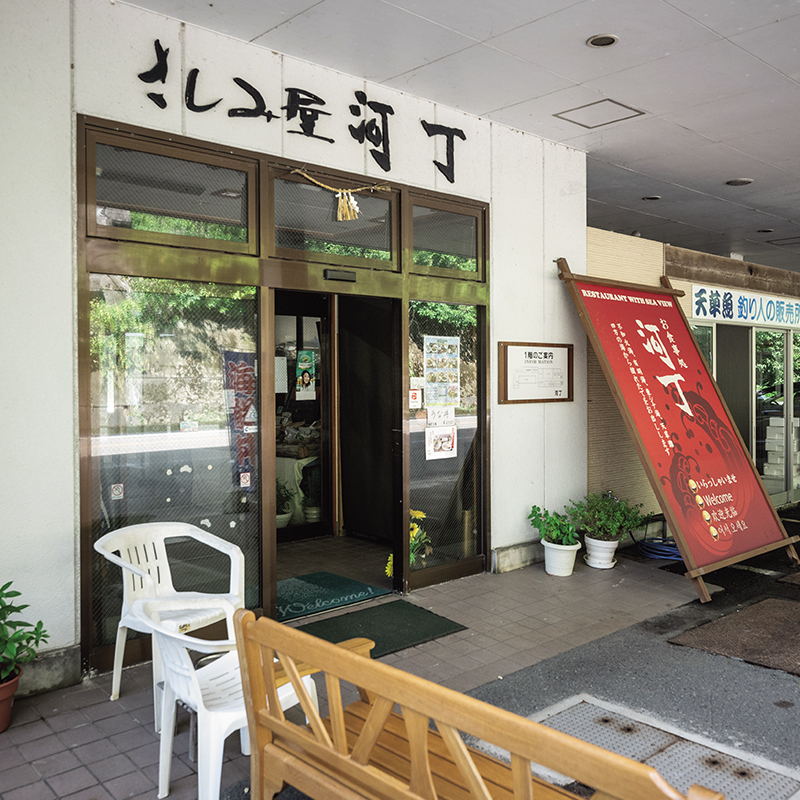
When we visited “Sashimiya Kawacho,” the restaurant that locals readily recommend, the owner, Takatoshi Kobayashi, shared the story of this regional specialty with us.
Making local cuisine even more delicious.
“In Amakusa, when many people gathered for celebrations and other occasions, they would eat the flesh of the sea bream as sashimi, and simmer the remaining meat and bones to eat as aradaki. Furthermore, so as not to waste the delicious broth into which the umami of the sea bream had seeped, they dipped somen noodles into that cooking liquid—and that is Tai Somen.”
The one who told us this was Takatoshi Kobayashi, the owner of “Sashimiya Kawacho,” located in the central part of Amakusa, on the border between Kamishima and Shimoshima. At this restaurant, they use not just the ara (fish head and bones) but a whole sea bream, serving this dish under the name “Taimen.”
“The only ingredients are sea bream and shiitake mushrooms. It is seasoned more lightly than typical simmered fish so that you can drink and savor the umami-packed broth directly.” This was a refinement made about 35 years ago by the previous owner, Terukazu Kawakami. Today, the second-generation owner, Kobayashi, carries on that flavor.
After graduating from high school, Mr. Kobayashi left his hometown of Amakusa to study cooking, and later, with the desire to “learn fish cuisine,” he returned home at the age of 20 and started working at “Kawacho.” There, he met Mr. Kawakami’s daughter, Ms.Tsukiko, and married her. He took over the restaurant about 10 years ago.
“I want to carefully preserve this regional dish, which has been eaten since old times, by adding our own touch to it in our own way. I would be happy if people visiting from outside the prefecture would eat it and help spread the word. I continue my work with that sentiment in mind.”
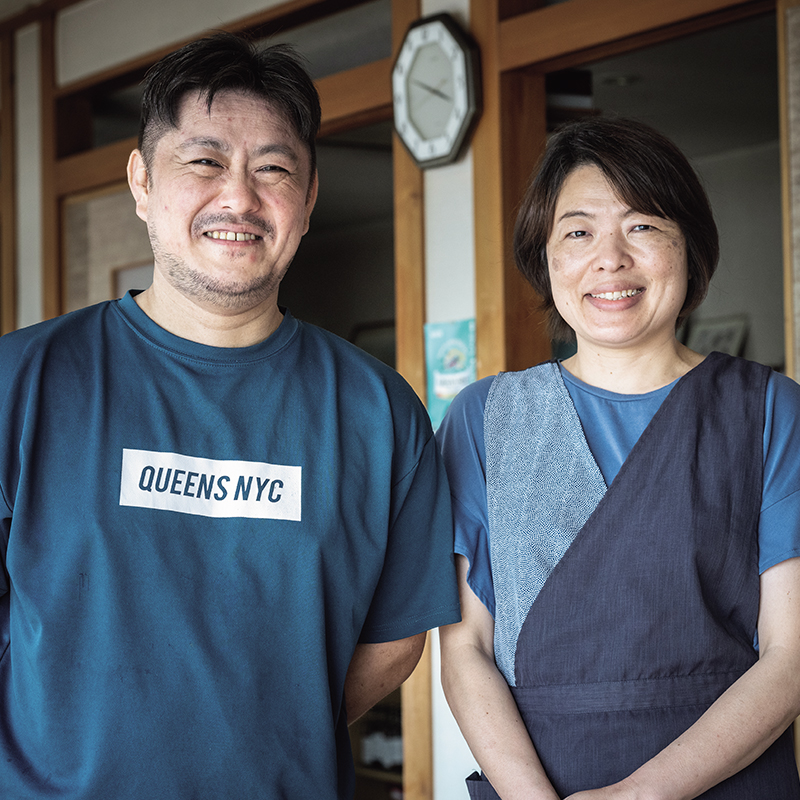
The owner of “Kawacho,”Takatoshi Kobayashi (left).
His wife, Ms. Tsukiko, who is the daughter of the previous owner, Terukazu Kawakami.
The reason to choose wild-caught.
When we were shown the kitchen, they were in the middle of simmering sea bream in a large pot. “We procure the sea bream on the morning of the day before it is served, and after grilling it, we let it rest for a while to let the flavor settle. Then, along with dried shiitake mushrooms, we season it with soy sauce, mirin, sake, and other ingredients, and simmer it for three to four hours to bring out the flavor of the sea bream.”
When you dip the flaked sea bream meat into the broth along with the shiitake mushrooms and green onions and eat it, you can notice the savory aroma that comes from grilling. When you slurp the white, plump sea bream meat together with the somen noodles coated in the broth full of dashi, the umami of the sea bream spreads through your mouth. It is a deliciousness that surprises you, making you realize how much the flavor of the sea bream can be brought out by taking time and effort.
“We use wild-caught sea bream as much as possible,” says Mr. Kobayashi. In Amakusa, there are also farmed sea bream that have been branded, such as Amakusa Sakura Tai. However, Mr. Kobayashi says, “Farmed fish are fatty and delicious, and the quality is stable. But when you think about savoring the broth, if it is too fatty, the taste becomes slightly different.” “Wild-caught fish make good broth. You can feel the traditional, unaltered taste of Amakusa sea bream as it has always been.”
It is said that Mr. Kobayashi goes to the local market and directly looks at the holding tanks to choose the sea bream he serves in his dishes. “I look at them swimming from above and choose sea bream that are roundish, plump, and thick. Well-fattened ones between one and two kilograms are best.”
In the early morning of late July, we visited Hondo Fishing Port, where Mr. Kobayashi procures his sea bream. It is a location about a five-minute drive from the restaurant. Before 7:00 a.m. when the market opens, the fish were all lined up inside the holding tanks. Before long, in time with the calls of the auctioneer managing the floor, the fish were put up for auction one after another.
According to Kosuke Mori of the Hondo Branch of the Amakusa Fisheries Cooperative Association, Amakusa is an excellent breeding ground for red sea bream about to spawn, and has been known as a great fishing ground. “Amakusa is a sea with fast currents. Sea bream raised in places with fast flows have firm flesh and become muscular. Furthermore, because food such as plankton and small fish is abundant, they become sea bream whose flesh is firm yet well-fattened.”
The catch volume of such Amakusa sea bream in fiscal year 2021 was reportedly about half of what it was 10 years ago. Mr. Mori says the causes are environmental, such as rising sea water temperatures, changes in water quality, and the occurrence of red tides.
To respond to the major changes occurring in the sea of Amakusa, the fisheries cooperative is reportedly working to prevent the sea bream from decreasing through initiatives such as releasing juvenile fish.
Tai Somen, which has been passed down through Amakusa’s long maritime history while overcoming numerous waves. Please try and savor it yourself in Amakusa during the summer.
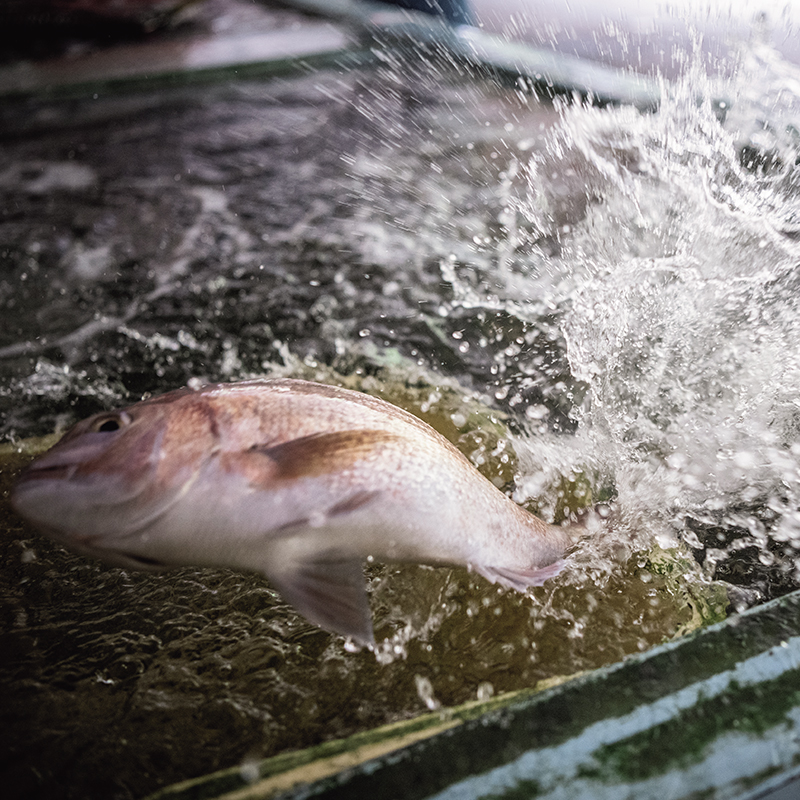
Large sea bream weighing over 1 kg have thick flesh, and their sashimi is also delicious.
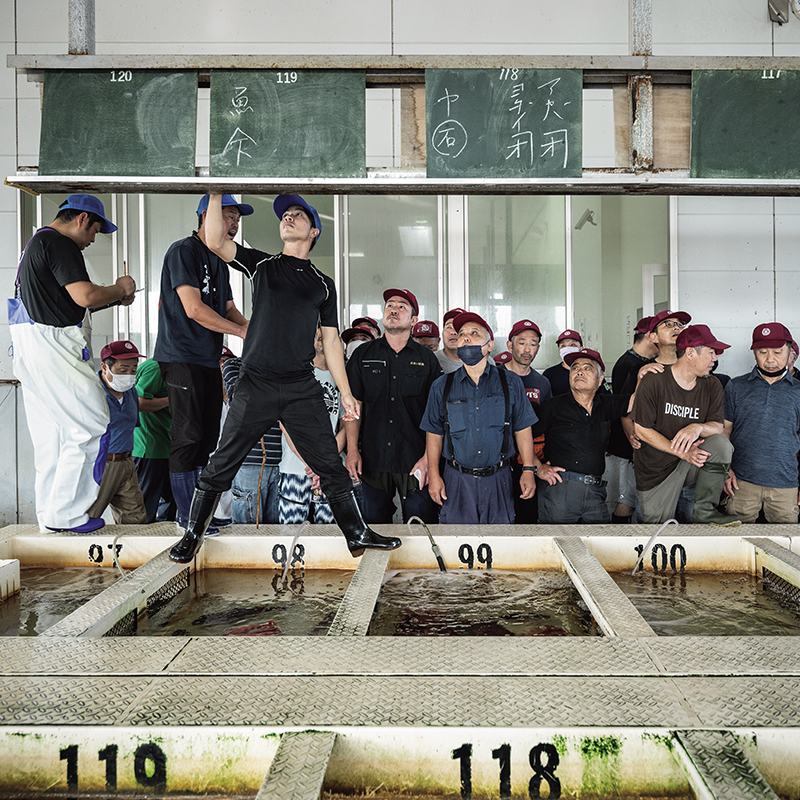
Sea bream caught with rods, rather than nets, fetch the highest prices.
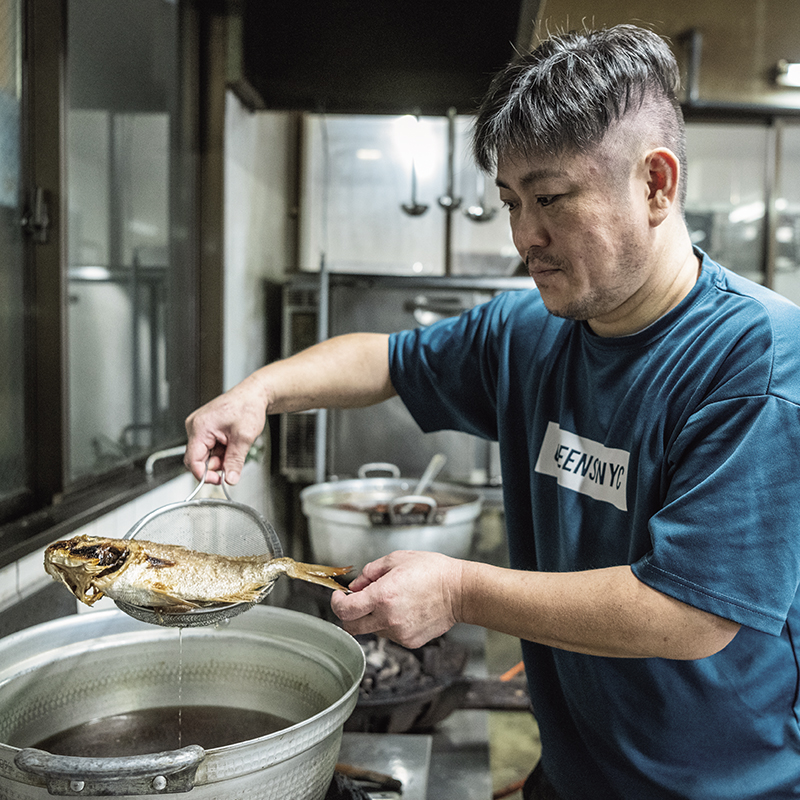
A whole sea bream is simmered along with dried shiitake mushrooms.
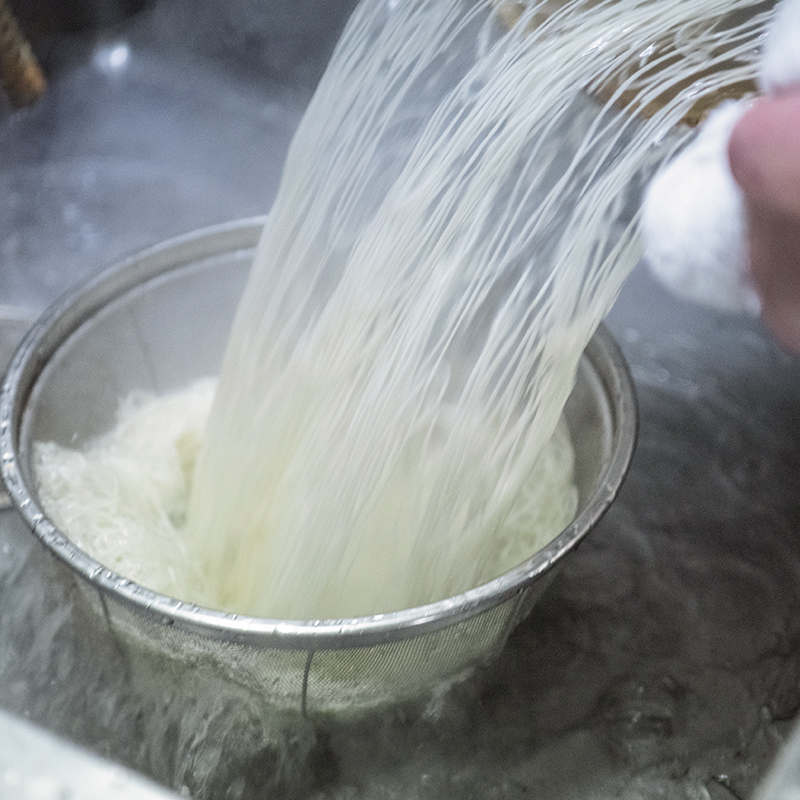
The somen noodles are from Shimabara, on the opposite shore of Amakusa.
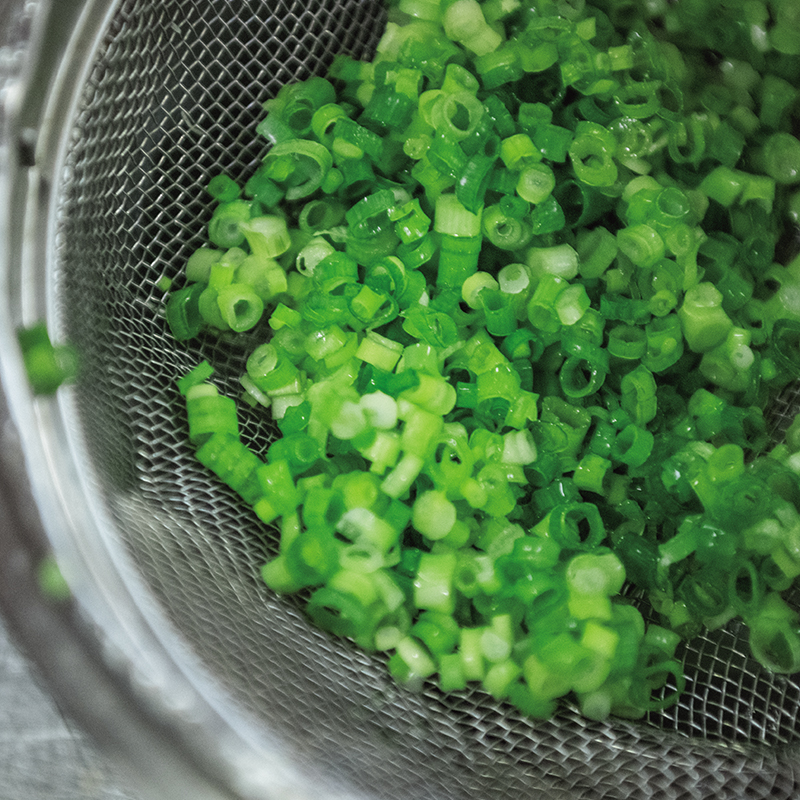
Green onions that add aroma and color.
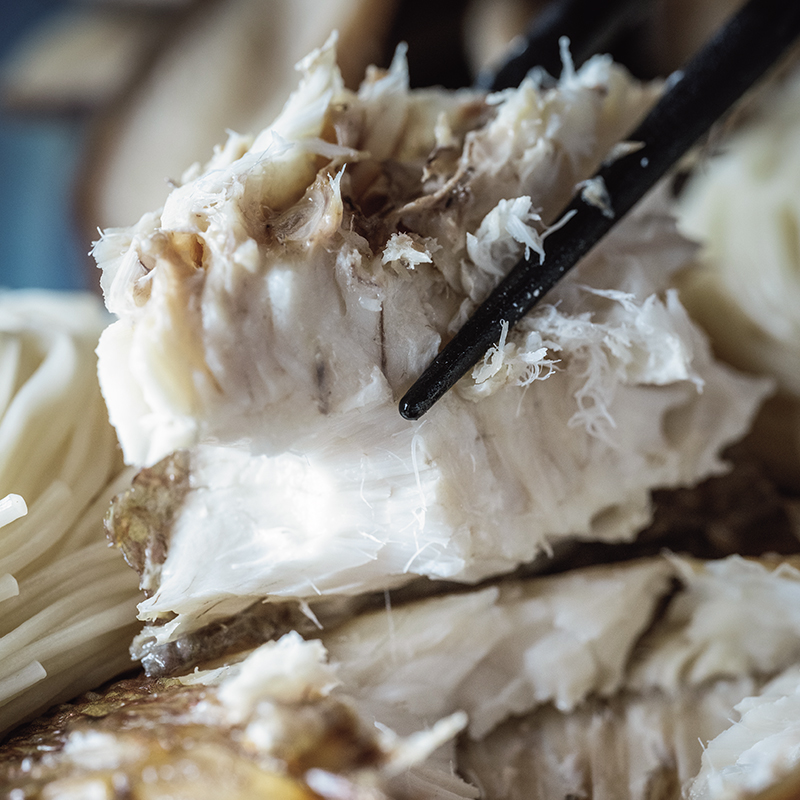
Savor the plump and pure white simmered flesh of the sea bream.
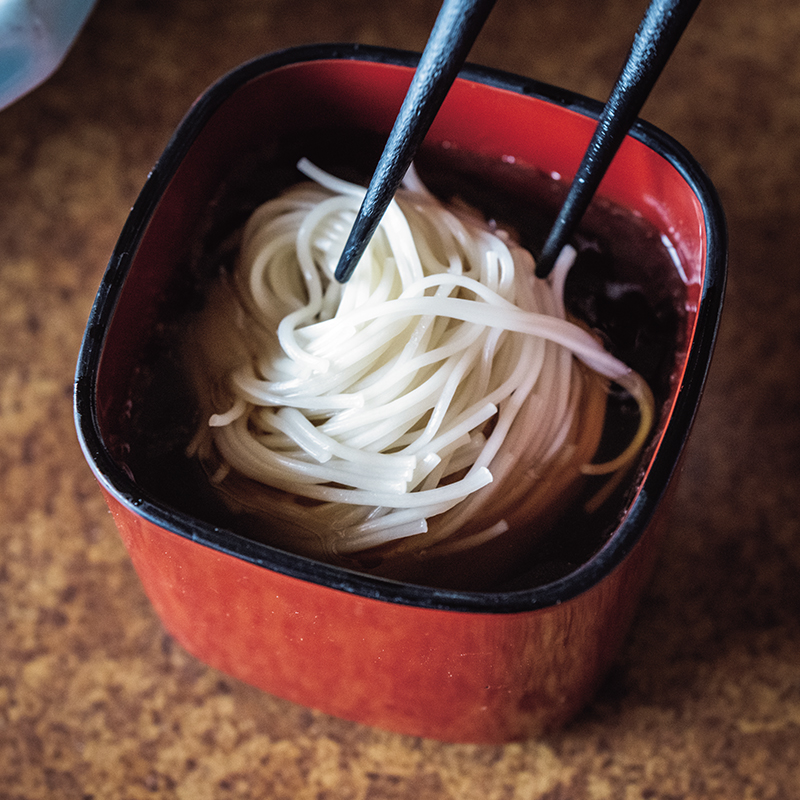
The broth is kept on the warmer side so that a fishy odor does not develop.
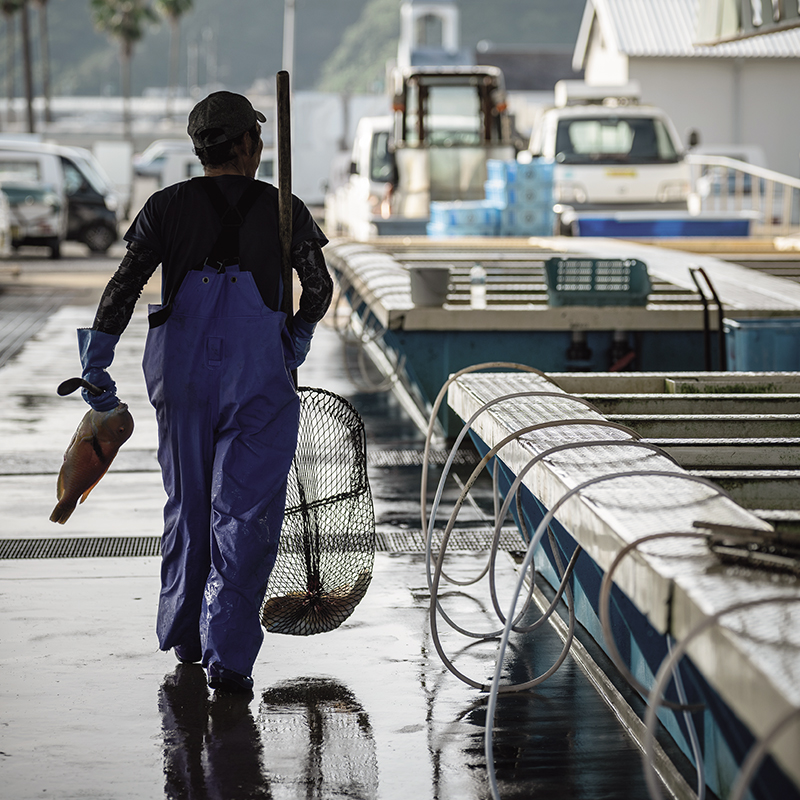
Before the liveliness of the auction dies down, the fish are taken to the restaurant.